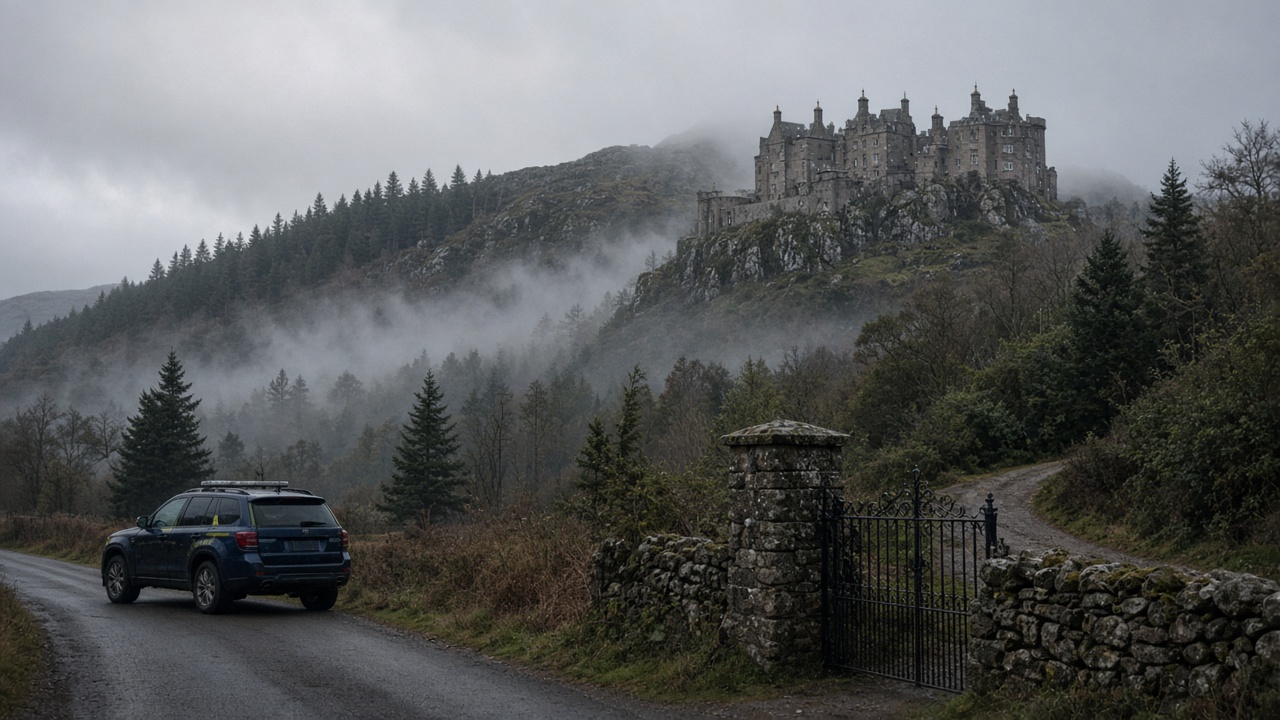
Police Scotland said Friday that it has received information and opened active inquiries into the time Andrew Mountbatten-Windsor spent with convicted sex offender Jeffrey Epstein and associate Ghislaine Maxwell at Balmoral Castle, the King’s private estate in Aberdeenshire. A spokesperson described the work as being at a “very early stage” and said the force would not confirm details of ongoing investigations.
The statement followed reporting that the probe examines allegations that women were trafficked to the royal residence while Epstein and Maxwell were guests of the former prince. Mountbatten-Windsor has repeatedly denied wrongdoing; representatives contacted by news organizations did not immediately add new comment on Friday.
What is publicly known about the visits
Epstein, who died in 2019 while awaiting trial on federal sex-trafficking charges, and Maxwell, who is serving a prison sentence in the United States for recruiting minors for Epstein, are understood to have stayed at Balmoral with Mountbatten-Windsor on more than one occasion. U.S. prosecutors released a photograph during Maxwell’s trial that appears to show Epstein and Maxwell at the estate in 1999, when Mountbatten-Windsor reportedly invited the pair.
Flight logs cited in British media show Mountbatten-Windsor and Maxwell traveling from Luton to Edinburgh on Epstein’s private jet with two other passengers on 1 September 2006. Police Scotland said in February that it wanted to speak to anyone with information about Epstein’s aircraft using Edinburgh Airport but noted then that it had not received complaints linked to that trip.
How Scotland fits into wider probes
Friday’s disclosure adds a Scottish dimension to a web of UK investigations touched off by the release of Epstein-related documents and renewed scrutiny of associates. The National Police Chiefs’ Council has said multiple forces, including Thames Valley Police, the Metropolitan Police and Surrey Police, have live inquiries connected to the material.
Mountbatten-Windsor was interviewed under caution and released under investigation in an earlier probe, which he has contested. Police Scotland emphasized that its inquiries are evidence-led and that “the needs of victim survivors” sit at the center of how detectives proceed, language the force has used as it balances public interest against the risk of compromising witnesses.
What officials will not say yet
Because the Balmoral work remains nascent, prosecutors have not indicated which statutes officers are reviewing or whether any survivor has made a fresh complaint tied specifically to the estate. The Crown Office and Procurator Fiscal Service typically take charge once Scottish detectives assemble a file, a step that could be months away if leads require overseas cooperation with U.S. authorities who hold extensive Epstein archives.
Balmoral remains a working royal residence where the King and Queen spend part of the summer; any criminal finding would carry constitutional as well as legal repercussions, though Police Scotland’s brief statement steered clear of palace politics. For now, the force’s public message is limited: information has arrived, detectives are acting on it, and further comment would be inappropriate while inquiries continue.