RMIT University researchers released an open-weights speech model tuned for Aboriginal English dialects on Friday, targeting accredited interpreters who need faster draft transcripts in health and legal settings without sending sensitive audio to overseas cloud APIs.
The model, named Wiradjuri-AE after the pilot community partners who recorded training phrases, runs on a laptop GPU and was trained only on consented speech from volunteer speakers in New South Wales and Victoria. Lead researcher Dr. Priya Natarajan said the team rejected a general-purpose large model fine-tune because it hallucinated legal terms when speakers code-switched between Standard Australian English and Aboriginal English markers.
What the model does
Wiradjuri-AE transcribes continuous speech into text with confidence scores flagged when dialect particles fall outside its training set. It does not translate into Standard Australian English automatically; instead it highlights segments where an interpreter should slow down or ask a clarifying question. Natarajan said that design choice keeps the tool inside National Accreditation Authority for Translators and Interpreters guidelines, which treat machine output as assistive rather than authoritative.
The release includes evaluation notebooks and a red-team dataset of synthetic adversarial audio designed to probe whether the model invents statements about land rights or criminal admissions. External auditors from the Australian Human Rights Commission observed the tests and signed off on publication conditions, including a ban on commercial resale without community consent renewals every two years.
Where it might deploy
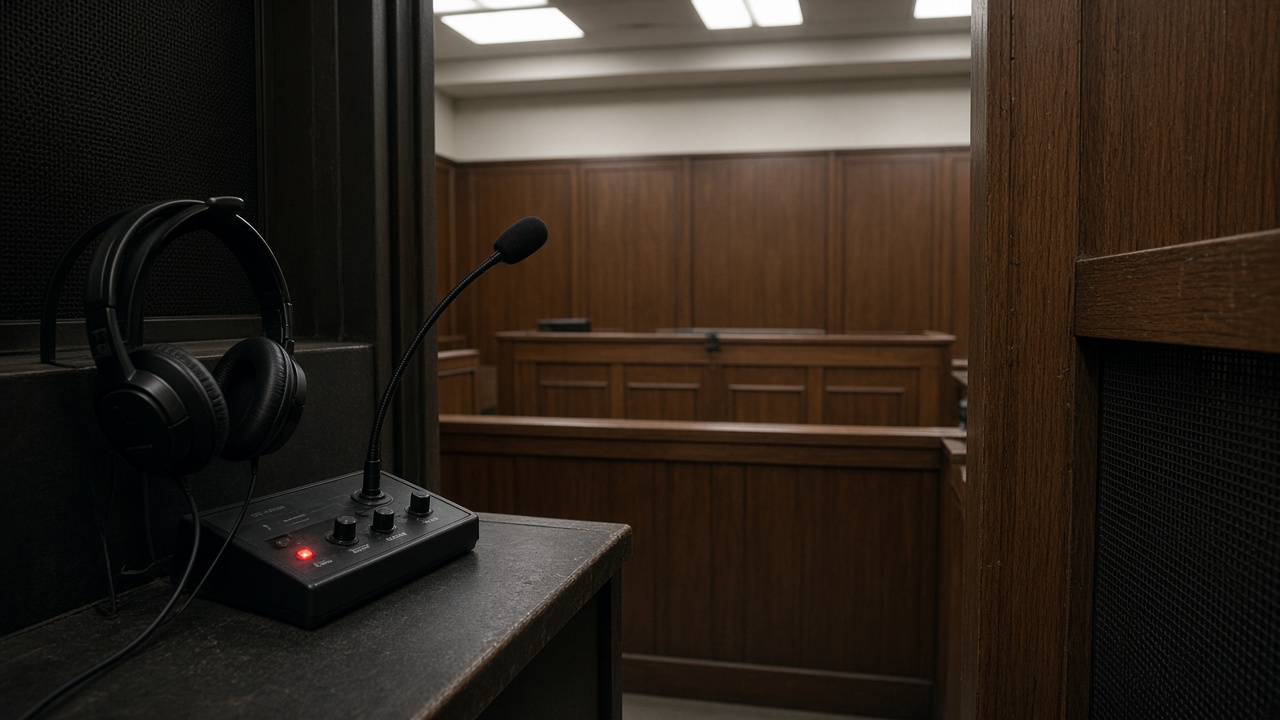
Pilot sites include a community-controlled health service in Dubbo and a Victorian magistrates court program that schedules Aboriginal interpreters for family violence mentions. Court officials stressed that judges will not see raw machine transcripts on the record; interpreters use the drafts privately to prepare, then speak the accredited interpretation into the court audio system.
Telehealth providers are interested but cautious. Rural doctors said even assistive transcription could leak patient stories if laptops are not encrypted; RMIT bundled a reference deployment using on-device encryption keys stored on hardware tokens supplied by a Melbourne cybersecurity nonprofit.
Limits and community governance
The model covers only a slice of Aboriginal English diversity. Speakers from remote Northern Territory communities reported higher error rates in early community testing, and the team posted those failure tables publicly rather than hiding them in an appendix. Governance sits with an interim council of language custodians who can revoke the licence if downstream apps misuse the weights for surveillance or marketing.
Federal AI safety advisers welcomed the release as an example of small, auditable models beating general cloud transcription for high-stakes settings. They also warned hospitals not to treat the tool as a cost-cutting substitute for interpreter bookings, citing existing penalties when patients misunderstand medication instructions.