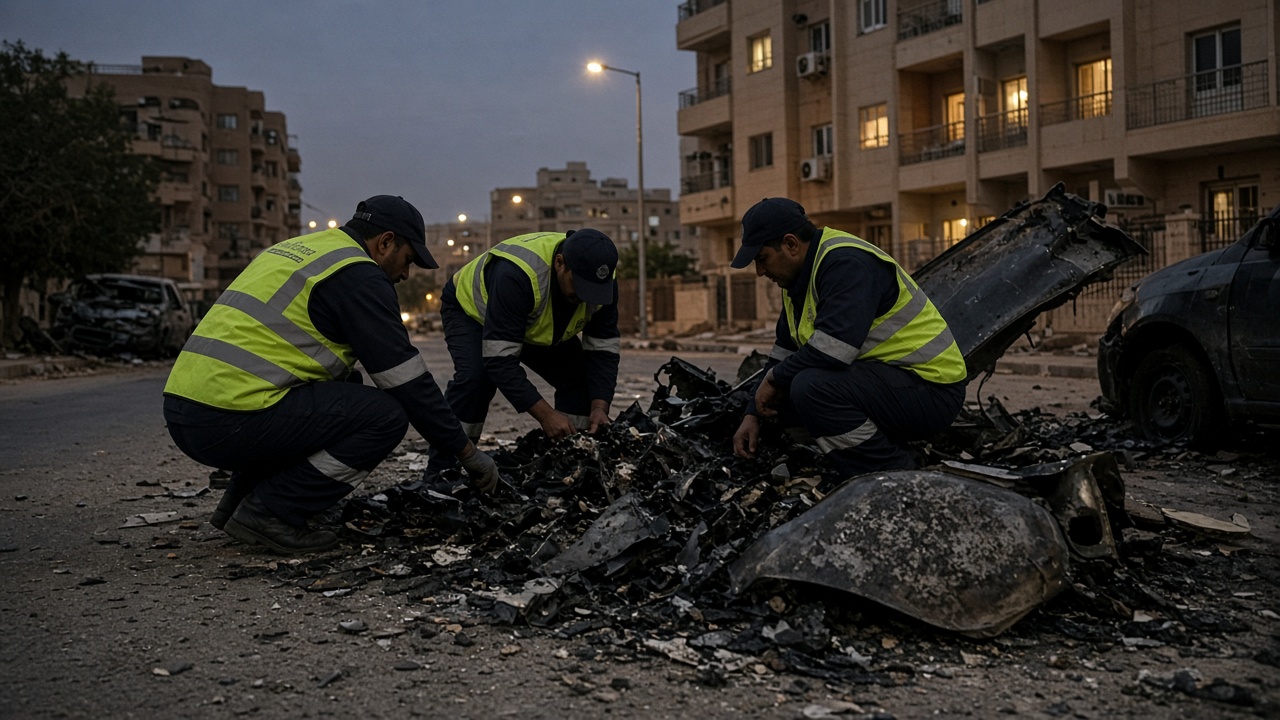
Saudi Arabia’s General Directorate of Civil Defense said Friday that falling debris from an air-defense intercept over Riyadh caused a minor injury to one resident and material damage to a house and a vehicle. The statement did not identify the resident or the neighborhood, but it confirmed that emergency teams responded under established procedures after fragments reached the ground in the capital.
The injury report landed a day after loud blasts and mobile alerts rattled Riyadh as the Saudi-led coalition said it destroyed two ballistic missiles the Iran-backed Houthi militia had fired toward the city. Coalition spokesperson Maj. Gen. Turki Al-Maliki said the intercepts succeeded, yet civil-defense officials warned that successful kills can still scatter metal across populated areas.
What the coalition reported
On Friday the coalition said it also intercepted and destroyed a drone launched toward the Mecca region and, on Thursday, a cruise missile aimed at the kingdom’s western sector plus a separate ballistic missile bound for the Eastern Province. The Houthis claimed a broader wave of strikes against energy sites and airports, including Ras Tanura and Rabigh refineries and facilities linked to Saudi Aramco, assertions Riyadh has often contested with its own damage assessments.
The capital has been a repeated target since the Houthis escalated cross-border attacks amid renewed fighting inside Yemen. A missile strike on King Khalid International Airport on Oct. 10 killed at least 13 people and injured more than 300, according to Saudi authorities, and an attack on King Fahd International Airport in Dammam last week killed two people. Thursday’s intercepts did not produce comparable casualty figures, but they underscored that debris risk persists even when warheads are destroyed in the sky.
Humanitarian and economic backdrop
Separately, Houthi officials said Saudi airstrikes killed 27 people in areas they control, a toll the coalition did not immediately address in the same detail. The exchange of fire has coincided with wider Gulf security concerns, including disruptions to shipping through the Strait of Hormuz that have helped push up insurance and fuel costs for carriers serving Asian and European markets.
Saudi Civil Defense urged residents to heed official alerts and avoid handling unknown fragments, noting that missile components can remain hazardous. The force said its teams in Riyadh completed on-scene treatment for the injured person and documented property damage for follow-up.
What happens next
Officials gave no timeline for repairs to the damaged home or vehicle, and the coalition did not link the Riyadh intercept to a specific launch site. Diplomatic efforts to reduce Houthi strikes have made little public progress in recent weeks, leaving air-defense batteries and civil-defense units as the primary shield for Saudi cities. Analysts said even high intercept rates cannot eliminate ground impact when interceptors and targets break apart over dense neighborhoods, a pattern Riyadh residents have learned to recognize through phone warnings and the sound of detonations.