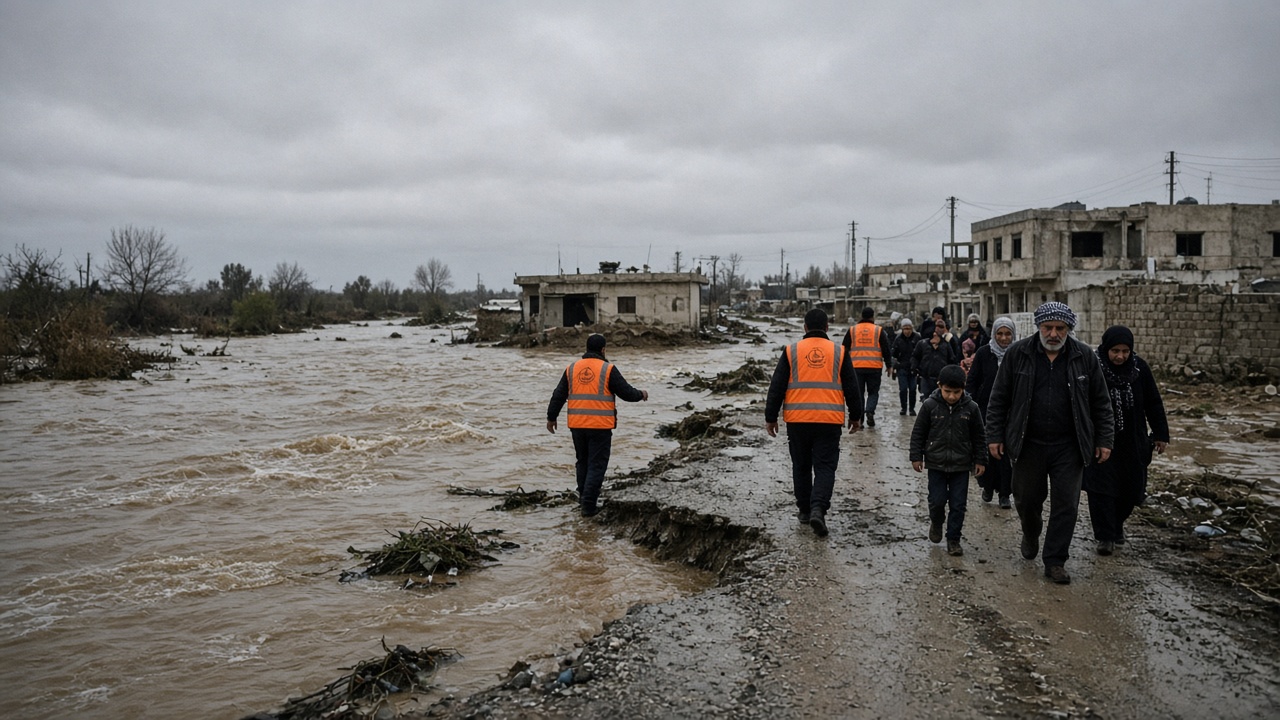
Seven people, including five children, died and seven others were injured after three days of torrential rain turned dry wadis in eastern Syria into flash floods, Emergency and Disaster Management Minister Raed al-Saleh said Friday. Four people remained missing as rescue teams searched submerged neighborhoods and cut-off roads.
Children drowned in standing water
Al-Saleh said in a statement on X that the five children drowned in pools of water that collected after the storms. Another victim died in a traffic accident linked to the weather, he said, without detailing the seventh death. The minister’s tally matched a Reuters report from Damascus citing his social-media updates and civil-defence briefings.
The deaths landed in a region still rebuilding power grids, housing and drainage after years of conflict. Forecasters warned unsettled weather could continue into Saturday, keeping emergency crews on alert across the Euphrates valley.
Provinces cut off and camps flooded
Flooding hit Raqqa, Deir al-Zor and Hasakah provinces and parts of Aleppo, damaging infrastructure, severing roads and pushing families from their homes. State news agency SANA reported that heavy rain collapsed seven culverts in Deir al-Zor alone, disrupting transport and telecommunications.
Civil-defence teams said they had conducted more than 550 field operations since the storms began, rescuing 60 people trapped in vehicles or buildings and answering more than 900 distress calls. Crews evacuated more than 350 students from two schools, helped 375 families leave camps in Raqqa and pumped water from about 250 homes and public buildings, according to the minister’s account carried by Reuters.
Classes suspended as searches continue
Authorities suspended classes in Raqqa, Hasakah and Deir al-Zor on Thursday while teams worked in rural Aleppo, Idlib and camp sites that still house displaced Syrians. Al-Saleh said search operations were intensifying for the four missing people, without naming locations.
The toll adds to a difficult autumn for Syrian disaster agencies, which have been juggling flood response with longer-term recovery projects in cities scarred by war. International aid groups have not yet published independent fatality counts, and hospital officials in Deir al-Zor did not immediately release patient lists.
What happens next
Forecasters expect additional rain bands through the weekend, which could re-flood low-lying farmland and camps near the Euphrates. Al-Saleh said civil defence would keep pumping teams and evacuation buses on standby, and provincial governors were coordinating road repairs once waters recede.
Humanitarian workers said the priority is locating the missing, restoring phone networks in Deir al-Zor and preventing waterborne illness in temporary shelters. Saleh did not request foreign military assistance, describing the response as a civilian-led operation under Syria’s post-war government structures.