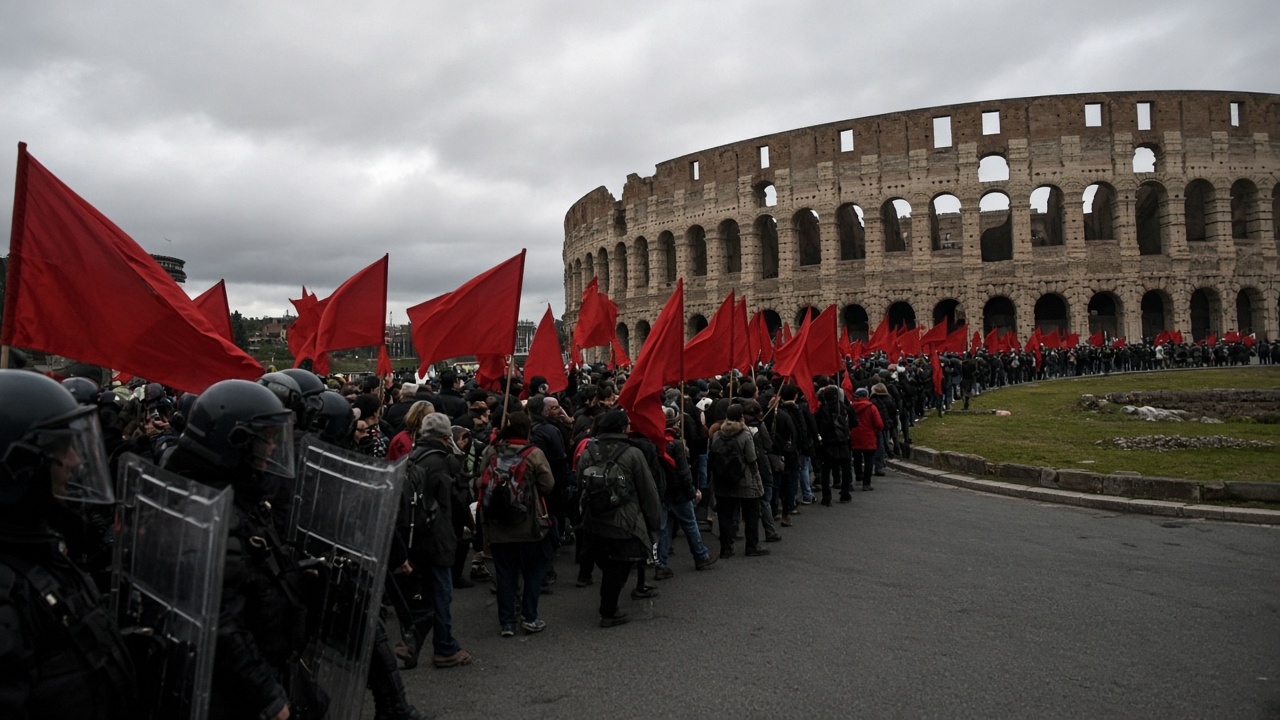
Italy’s grass-roots trade unions turned Friday into a nationwide test of Giorgia Meloni’s majority, staging a general strike that filled piazzas in more than 60 cities while police deployed in numbers meant to prevent the looting and clashes that scarred Milan two weeks earlier. The Unione Sindacale di Base, backed by Cobas, ADL, CLAP, SIAL and CUB confederations, said the action drew at least 1.5 million people; student organizers claimed twice that figure, and authorities did not publish an official head count.
The strike excluded most public transport after the coordinating unions agreed to keep buses and trains running, but Rome still reported traffic disruption as a procession left Termini station, passed the Colosseum and the economy ministry, and carried farmers, taxi drivers and truck operators who have protested fuel prices for weeks. Protesters waved union flags and chanted slogans that linked Meloni’s defence spending to household bills; AFP reporters heard one group sing, “We need more houses, not bombs!”
What the unions want
USB framed the day as a rejection of what it calls Italy’s “war economy,” pairing domestic demands—lower energy tariffs, rent relief, higher wages and pension protections—with a global port-workers’ action against weapons shipments. Cobas spokesperson Piero Bernocchi told Il Sole 24 Ore that turnout exceeded last autumn’s Palestine solidarity marches because anger now centers on “exorbitant energy prices” and school and health funding. The Ministry of Education and Merit, by contrast, measured school strike participation at 7.57 percent nationwide in a survey that had reached just over half of institutions by late afternoon.
Police lines and a few clashes
Authorities treated the demonstrations as a security exercise after sanctioned cost-of-living protests in Milan on 16 October ended with vandalism downtown. Milan’s march on Friday started at Centrale station but routed outside the city center, away from the shops that were looted last time. AFP said most rallies stayed peaceful, with riot police on the sidelines from Turin to Palermo; in Turin officers used batons and a water cannon to keep protesters away from the prefecture. Rome’s turnout was among the largest, with tractors and a taxi leading the column under heavy police watch.
What happens next in Rome
Meloni’s government had tried to limit the strike’s impact through mandatory work orders and warnings about economic damage, rhetoric USB dismissed in an ANSA statement as fear tactics that “cannot stop us.” Bernocchi said union leadership would decide quickly whether to schedule another general strike. For now the immediate political question is whether Friday’s crowds translate into parliamentary pressure on the 2026 budget, where defence outlays and energy subsidies remain the flashpoints USB named on placards from Bologna to Naples.