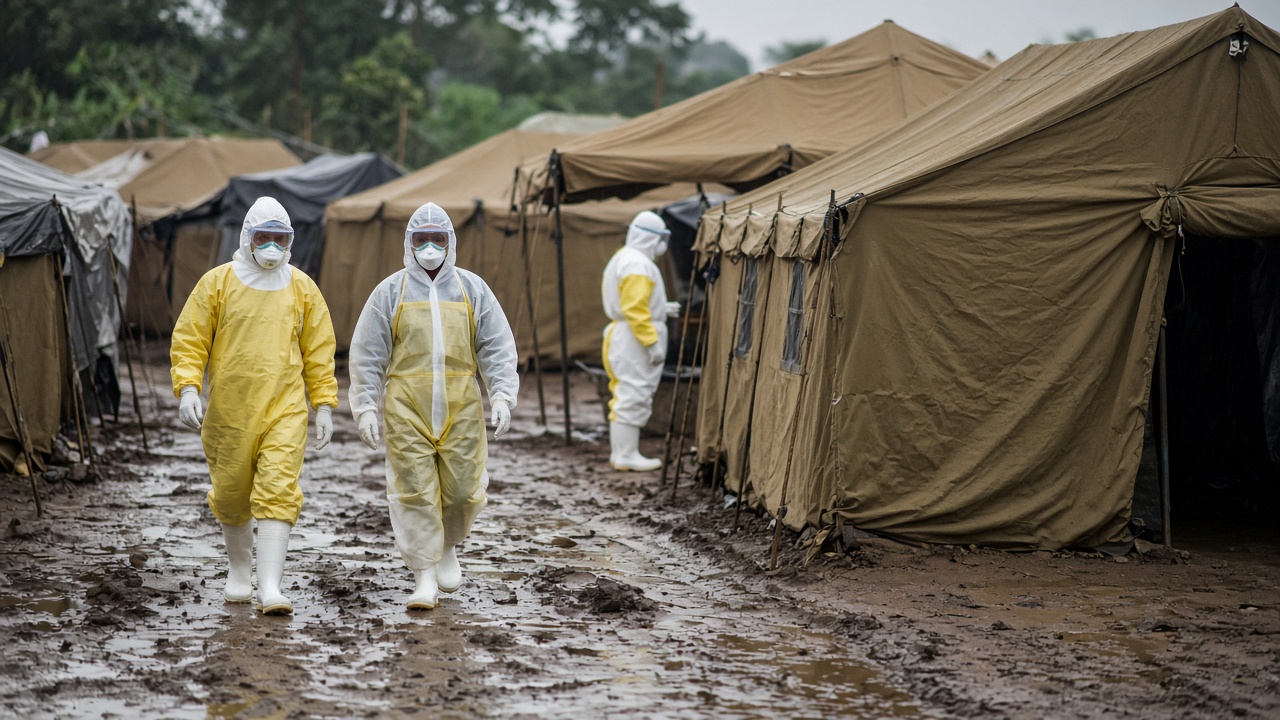
The Democratic Republic of the Congo’s National Institute of Public Health added 78 confirmed Ebola cases and 32 deaths in its SitRep 167 bulletin for 28 October, pushing the outbreak’s laboratory-confirmed toll to 10,274 infections and 4,992 fatalities since May.
The institute published the figures on 29 October. They show a case fatality rate of 48.6 percent, with 2,766 people discharged after recovery and 1,052 still isolated in treatment centres. The seven-day average stood at 72.7 new cases and 37.9 deaths per day, slightly above the prior week’s pace.
Yakoma becomes the 67th affected zone
Friday’s international coverage highlighted a geographic shift as much as the headline numbers. Yakoma, in Nord-Ubangi province, appeared for the first time in the daily map, bringing the count of affected health zones to 67 across eight of the DRC’s 26 provinces. Ituri remains the epicentre, accounting for roughly seven in ten confirmed cases since officials notified the outbreak on 8 May and declared it on 15 May.
Of the 32 deaths recorded for 28 October, 18 occurred in the community rather than inside a treatment unit — a pattern responders watch closely because bodies outside centres raise transmission risk. INSP attributed community deaths to Ituri, Nord-Kivu and Haut-Uélé, while treatment-centre fatalities were concentrated in Nord-Kivu and Ituri.
Frontline worker deaths draw Africa CDC tribute
Independent trackers compiling INSP bulletins noted that contact follow-up coverage reached 87.2 percent in the latest report, up from earlier weeks but still short of the near-total tracing responders want during Ebola surges. Xinhua’s world summary on 30 October said the Africa Centres for Disease Control and Prevention had paid tribute to Dr. Marie-France Shogogo, who died of Ebola in Beni, North Kivu, calling for stronger protection of clinicians and burial teams.
The Bundibugyo strain driving this epidemic has made the outbreak the second-largest Ebola event on record by case count, behind only the 2014–2016 West Africa crisis. Vaccination and therapeutic use have expanded since that earlier wave, yet the eastern DRC’s insecurity and long distances to labs continue to delay confirmations in some zones.
What health officials watch next
INSP did not publish a SitRep for every calendar day in the series; gaps in the public archive mean daily comparisons sometimes skip a date. Even so, the steady four-digit daily caseload through late October keeps pressure on the WHO and donor governments to sustain surge staff rather than rotate them out as if the curve had broken.
With confirmed deaths just under the 5,000 mark, the next bulletins will test whether Yakoma’s inclusion signals spread westward or an isolated import. Either way, the 78-case daily increment shows the outbreak is still accelerating on a weekly average, not coasting toward control.
Donor governments meeting on global health security this week will face renewed questions about whether vaccine doses and laboratory reagents are reaching Nord-Kivu fast enough to cut the community-death share that SitRep 167 recorded for 28 October.