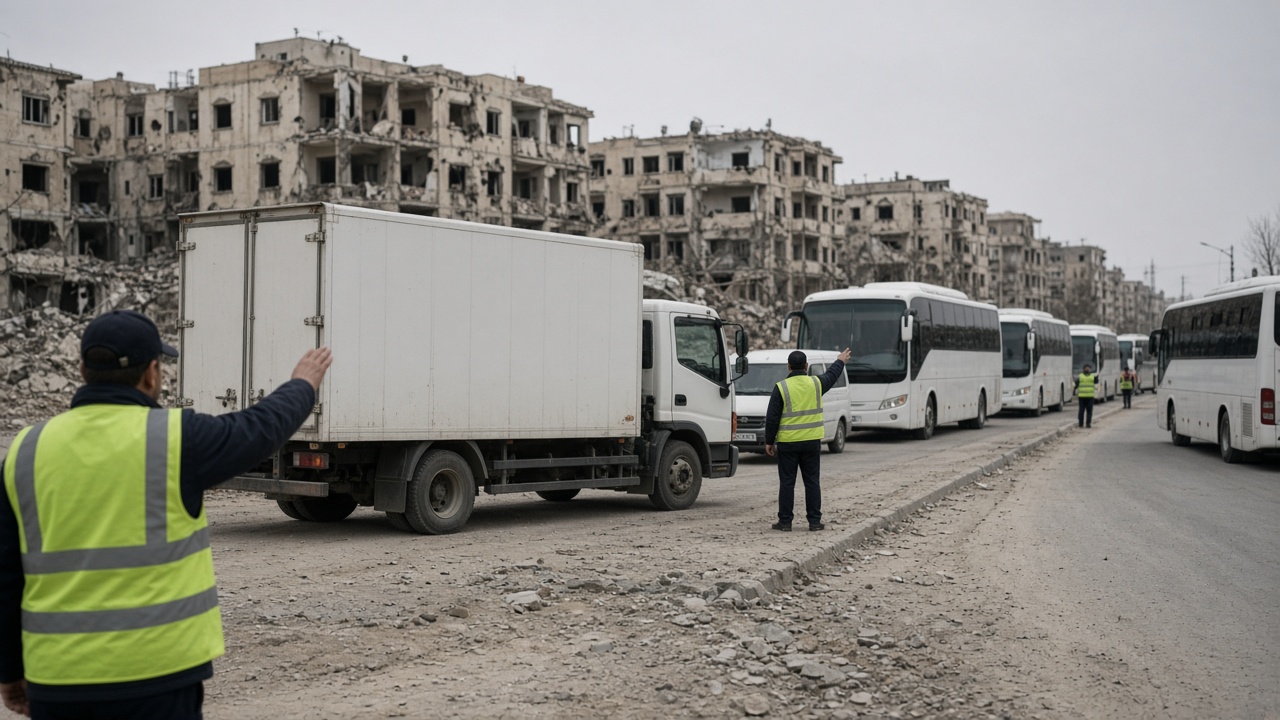
Humanitarian trucks began moving into Oleshky on Friday after demining teams cleared access routes, extending a localized ceasefire in Ukraine’s Kherson region into a fourth day with no reported violations from either army.
Ukrainian human rights commissioner Dmytro Lubinets said 25 buses with 750 seats and ambulances for residents with limited mobility were ready to evacuate anyone who wanted to leave the Russian-held town by 2 p.m. local time. Russian counterpart Yana Lantratova confirmed tens of tons of aid were en route and said a separate bus would carry people traveling with pets.
What changed on the ground
The arrangement, first announced after US mediation including First Lady Melania Trump, took effect at 4 a.m. Moscow time on 27 October and is scheduled to run through 1 November. Lubinets and Lantratova met overnight in Armyansk to coordinate the mission, joined by journalists from Ukraine, Russia and the United States.
Lubinets wrote on Telegram that civilians who stay would receive food, hygiene kits, medicines and fuel after the evacuation window closes. Lantratova told Russian media that bedridden patients would have dedicated transport if needed and that distribution would follow the departure cutoff.
The pause sits in sharp contrast to fighting elsewhere. Russia said it struck energy infrastructure around Kyiv on Friday, and Ukrainian officials reported a drone attack on a Dnipro railway platform on Thursday that killed at least 14 people. Those strikes did not appear to interrupt the Oleshky mission, which both sides described as the first sustained, wide-front local ceasefire since 2022.
Who is watching
Delegations from Ukraine, Russia and Belarus have been involved in logistics, with Belarusian officials saying a flight from Gomel carried negotiators on 29 October. An independent US media organization is documenting movements on the ground, according to Russian state reports.
Palestinian President Mahmoud Abbas, speaking in Nicosia on Thursday, said he hoped Israel’s inconclusive election might eventually reopen space for diplomacy; that parallel track does not affect the Kherson corridor but underscores how rare any localized pause has become in the wider war.
What happens next
Officials on both sides must decide whether to extend the truce beyond 1 November if evacuations or aid distribution run long. Residents who leave can choose destinations in Ukraine or Russia, according to US statements at the outset of the deal.
Any single incident along the demined routes could collapse the arrangement, and previous ceasefire attempts in the full-scale war have failed quickly. For now, negotiators are treating uninterrupted hours without gunfire as the metric that keeps convoys rolling.