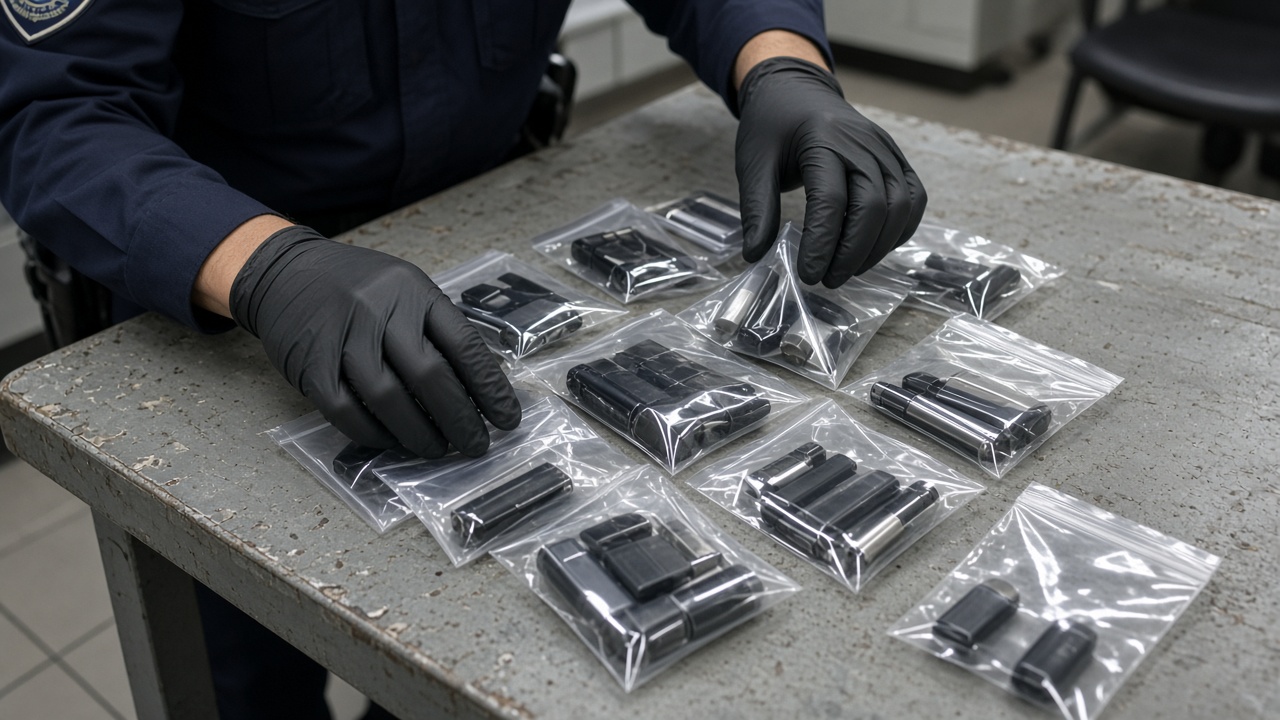
Singapore’s Health Sciences Authority charged a 38-year-old delivery rider with trafficking etomidate vaporiser pods after police seized 124 cartridges during an enforcement stop in Jurong East, underscoring how illicit “Kpod” supplies are moving through ordinary courier routes.
Ong Zhiyong Jeremy was detained on Oct. 20 during a Singapore Police Force operation in the western suburb. Officers first recovered three pods from an envelope he carried, then found another 121 cartridges in his pouch and motorcycle during a vehicle search, according to HSA. Laboratory tests confirmed etomidate in the seized pods, and investigators said the load was meant for delivery to customers.
From street seizure to court
HSA took over at the scene and charged Ong on Oct. 22 under the Tobacco and Vaporisers Control Act, which lists etomidate and its analogues as specified psychoactive substances. He was remanded for a week to assist inquiries and appeared again on Oct. 29, when the case was adjourned to Dec. 10.
The authority released photographs of the confiscated hardware, part of a broader push to warn couriers that vape trafficking carries mandatory caning ranges alongside prison terms. Media reports on the latest mention did not indicate additional arrests tied to the same parcel batch, but HSA said it treats vaporiser and etomidate offences seriously regardless of whether sellers operate online or through gig-economy deliveries.
Why etomidate pods alarm clinicians
Etomidate is a hospital anaesthetic; when vaporised in illegal pods it has been linked to rapid sedation and loss of motor control, earning the street label “zombie cartridges.” Health officials worry that users may not know they are inhaling a sedative rather than nicotine, increasing overdose and injury risks in public spaces.
Because the substance is scheduled under the TVCA, penalties escalate sharply from possession to importation. Traffickers face two to 10 years’ imprisonment and two to five strokes of the cane upon conviction, while importers can be jailed three to 20 years and caned five to 15 times. Those ranges are published on HSA’s site to deter couriers who assume small parcels will draw only fines.
Enforcement pattern
The Jurong East case fits a recent pattern of multi-agency stops: police detain riders during traffic or enforcement sweeps, HSA tests pods on the spot or in labs, and prosecutors move quickly to remand suspects while tracing chat orders. Delivery platforms were not named in the charge sheet, but investigators said Ong was working as a rider when arrested, raising questions about how buyers schedule hand-offs.
Authorities have not disclosed the intended recipients or whether the three-pod envelope was a test drop ahead of the larger motorcycle stash. HSA urged the public to report suspicious vape sales through existing channels and warned that purchasing Kpods exposes buyers to the same strict liability framework as sellers.
What happens next
Ong returns to the State Courts on Dec. 10, when prosecutors may expand charges if digital evidence links him to suppliers. HSA said it will continue joint operations with police ahead of the year-end festive season, when courier volumes spike.
For residents, the immediate takeaway is operational: a single rider carried more than a hundred sedative-laced pods through a dense housing estate. Until the December hearing, regulators are using the case to remind gig workers that carrying anonymous vape parcels can trigger trafficking charges even if they claim they were merely completing an app job.