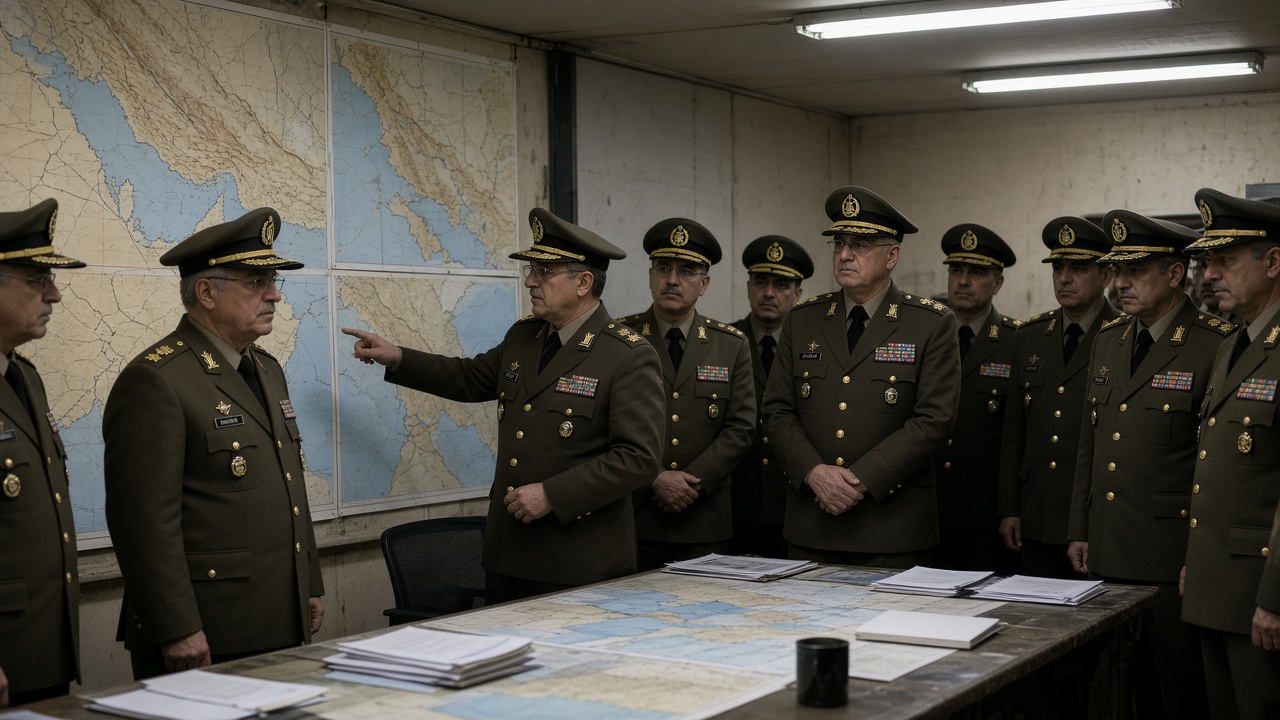
Iran's Supreme Leader Mojtaba Khamenei convened the country's senior uniformed leadership on Friday and ordered preparations for an immediate, geographically unrestricted counterstrike if the United States or Israel attacks again, according to statements from his office and state media. The meeting included Armed Forces Chief of Staff Gen. Ali Abdollahi, Army Commander Maj. Gen. Amir Hatami and Islamic Revolutionary Guard Corps Commander Maj. Gen. Ahmad Vahidi — the first publicly disclosed gathering of all three with Khamenei since the regional war escalated earlier this year.
What the orders change
IRNA quoted Khamenei directing "intelligent combat readiness" aimed at "maximum deterrence." He told commanders that if enemies launch military or terrorist attacks, "it is the armed forces of the Islamic Republic and the Iranian nation that will determine the time and conditions for their end." That language widens the scope of retaliation beyond purely military sites and aligns with recent Iranian messaging that non-military U.S. and Israeli assets could be struck.
Commanders briefed Khamenei on readiness along the Gulf coastline, the Strait of Hormuz, the Gulf of Oman and Iran's northwestern and southeastern borders. They reported what the statement described as a several-fold increase in production of ammunition and reconnaissance, support and combat systems. Khamenei also ordered an update to Iran's "target bank" so that material and non-material American and Israeli assets fall within reach of Iranian forces — a directive that Gulf capitals have read as a signal that energy infrastructure, ports and financial networks could again be in play.
Timing against diplomacy and U.S. politics
The military session landed one day after Qatari mediators held more than twelve hours of talks in Tehran. Diplomatic sources told Axios that discussions would continue in Doha on Saturday as mediators try to restart direct U.S.-Iran negotiations and head off a new war cycle after the U.S. midterm elections. Foreign Minister Abbas Araghchi told Al Jazeera that senior officials have reviewed a proposal linked to Vice President JD Vance's outreach and called Washington's effort to open talks a "positive step," while insisting on sanctions relief, a reduced U.S. military footprint and recognition of an Oman-coordinated Hormuz shipping arrangement.
Reporting from Washington and the Gulf has pointed to a possible U.S. strike window immediately after the November 4 midterms, with allies told to brace for Iranian retaliation across the region. Khamenei has not appeared publicly since being wounded on the first day of the war; Friday's written statement is among the most detailed strategic guidance his office has released, and it explicitly praised proxy groups' "intelligent steadfastness" and the "unity of fronts" as a strategic asset.
What analysts and neighbors watch next
Independent analysts caution that expanded targeting lists raise the cost of miscalculation for Gulf states that already absorbed Iranian strikes earlier in the year. Eric Brewer, a nuclear-policy specialist at the Center for Strategic and International Studies, argued on social media that remaining strikes on nuclear or energy sites are unlikely to produce capitulation and would likely prolong regional conflict. For now, the juxtaposition is stark: marathon mediation in Doha and Tehran, and a supreme leader telling his top commanders to prepare an unrestricted response if talks fail.