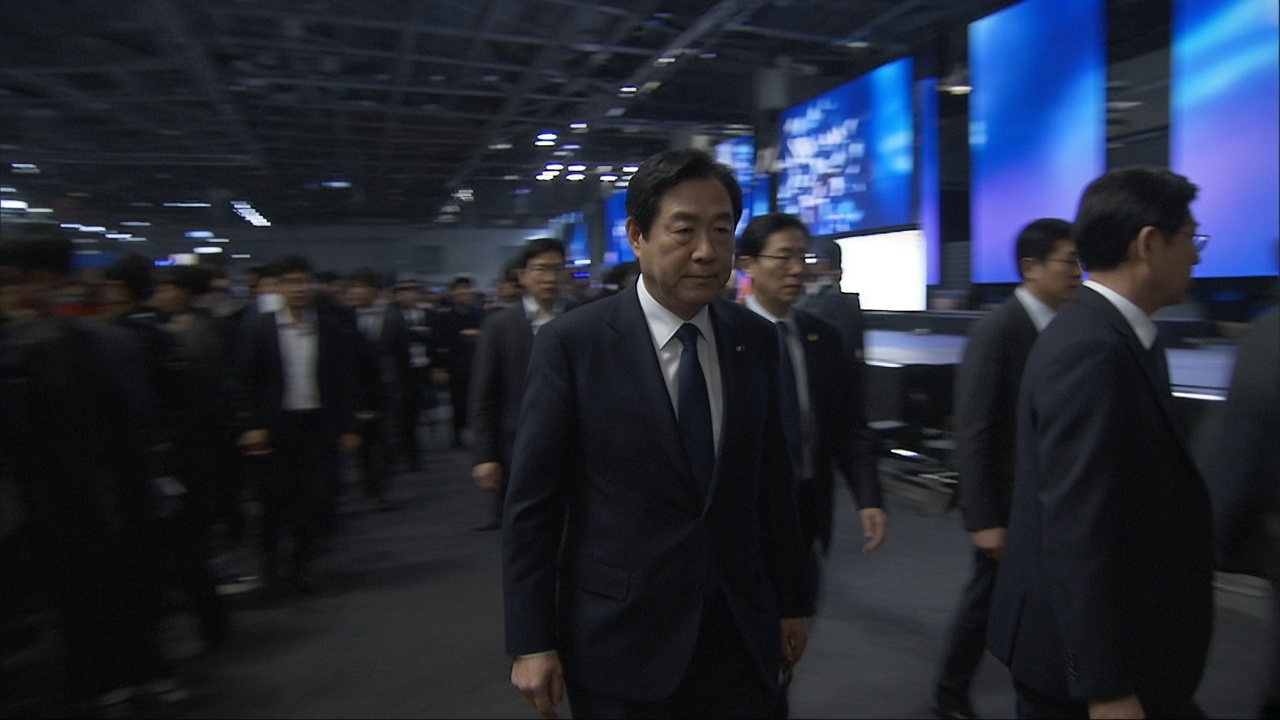
Nvidia said Friday it will supply more than 260,000 of its Blackwell artificial-intelligence graphics processors to South Korea's government and major companies, framing the commitment as the backbone of new "AI factories" on the peninsula. The announcement landed as President Lee Jae Myung hosted Asia-Pacific Economic Cooperation summits in Gyeongju and as Chinese President Xi Jinping made his first visit to South Korea in 11 years.
Who signed on and what they get
Reuters reported that partners include Samsung Electronics, SK Group affiliates, Hyundai Motor, and Naver, alongside public-sector projects that Seoul has pitched as a counterweight to U.S. and Chinese chip restrictions. Nvidia did not publish a dollar value for the hardware bundle, but the scale—more than a quarter-million of its most advanced GPUs—signals that Korean conglomerates intend to keep training and inference capacity at home rather than renting exclusively from U.S. cloud regions.
For Samsung, the timing matters: the company is racing SK hynix in high-bandwidth memory while trying to defend foundry orders. Hyundai's inclusion points to automotive and robotics models that require on-premise inference for factory floors and autonomous research. Naver, operator of the domestic search and cloud stack, gains silicon it can place inside sovereign data halls that Korean regulators scrutinize for cross-border data flows.
Markets read the headline before lunch
Seoul's KOSPI opened lower, tracking overnight weakness in U.S. megacap tech after Microsoft and Meta reported heavy AI spending, and after Nvidia's own U.S. shares slipped about 2 percent. The index reversed once the Korean deployment plan circulated, closing up 0.5 percent at 4,107.5—a third straight record finish, according to Yonhap.
Samsung Electronics rose 3.27 percent to 107,500 won and Naver gained 4.74 percent, while SK hynix, which does not depend on Nvidia GPUs for memory sales, fell 1.58 percent. Foreign investors were net sellers on the day, offloading about 598.8 billion won in shares, a reminder that the rally rested on domestic institutions and headline-driven retail flows rather than fresh overseas buying.
Politics around the chip stack
Lee used the APEC week to meet Xi for the first time since taking office, welcoming him at the Hwabaek International Convention Center while trade and supply-chain security dominated side conversations. A U.S. senior official told reporters Washington remains "very committed" to APEC even after President Donald Trump left the leaders' program early, a reassurance aimed at partners worried about U.S. attendance.
Nvidia's pledge fits that diplomatic backdrop: it keeps American silicon at the center of Korea's AI build-out while letting Seoul show industrial policy results to both Washington and Beijing. The open question is execution—how quickly fabs, power grids, and cooling plants can absorb 260,000 new GPUs without the bottlenecks that have delayed other national AI clusters.