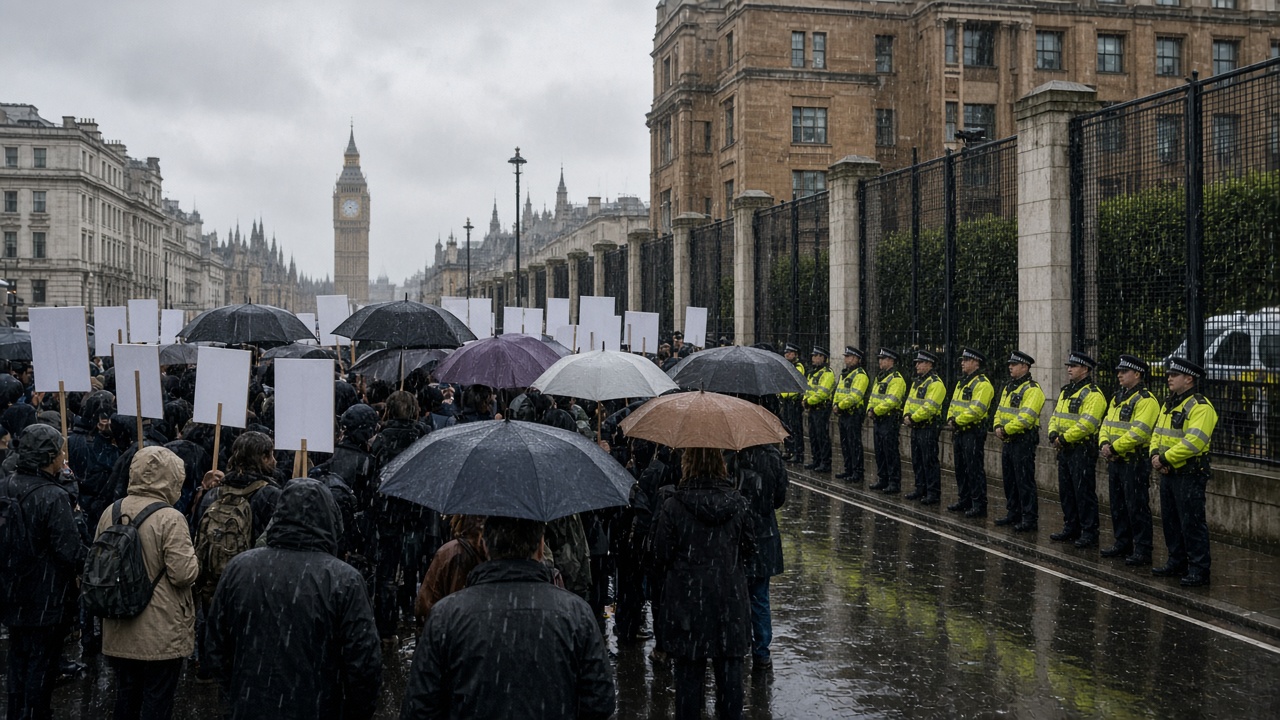
Almost fifty people were arrested Saturday at a London demonstration opposing the proscription of Palestine Action, as hundreds gathered outside the United States embassy in Battersea in one of the first large tests of how police enforce the ban under Prime Minister Andy Burnham’s government.
The Metropolitan Police said officers carried out a large-scale operation and warned beforehand that participants risked arrest because organizing or supporting a gathering linked to the proscribed group can amount to a terrorism offence. Demonstrators carried signs reading “I oppose genocide, I support Palestine Action,” while a separate vigil took place outside the U.S. consulate in Edinburgh in solidarity.
What police allege
Scotland Yard said arrests included people it believed were “meeting to purposefully commit a crime” under the proscription regime, not merely passive bystanders. Before the march, the force warned that anyone “playing a key role in organising the event, giving instructions to others and/or providing logistical support” would likely commit an offence—language that pushed legal observers to the pavement to document custody decisions.
Campaign groups counter that the breadth of the ban criminalizes political speech that names the group, setting up a Supreme Court challenge: Palestine Action supporters expect an appeal hearing on 4 November to scrutinize whether the proscription order complies with human-rights law. Similar gatherings in other cities have stayed smaller since the ban took effect, making London’s headcount a benchmark for how many people are willing to test arrest risk.
Political stakes for Burnham
The turnout landed early in Burnham’s premiership, when his Labour government is defending the proscription decision taken under prior ministers while facing pressure from backbenchers and civil-liberties groups to narrow how the Terrorism Act is applied. Ministers argue the group’s direct actions against military suppliers justify the ban; opponents say Saturday’s arrests show the state is willing to sweep up peaceful protesters who declare support on placards.
Downing Street has not indicated it will revisit the order before the Supreme Court hearing, leaving police forces to interpret guidance in real time on streets that still attract global media whenever the U.S. embassy is the backdrop. Conservative and Liberal Democrat MPs have split along familiar civil-liberties lines, but the immediate question is custody volume: whether nearly fifty arrests deter the next march or supply fresh defendants for the appeal.
What happens next
Those arrested will move through custody and charge decisions while lawyers prepare for the imminent Supreme Court appeal. Police may face further protests if the court narrows enforcement powers, or doubled-down operations if judges uphold the ban’s breadth. For U.S. diplomats in Battersea, the scene was another weekend of heightened security around the embassy compound as British courts and streets simultaneously debate where protest ends and terrorism law begins.