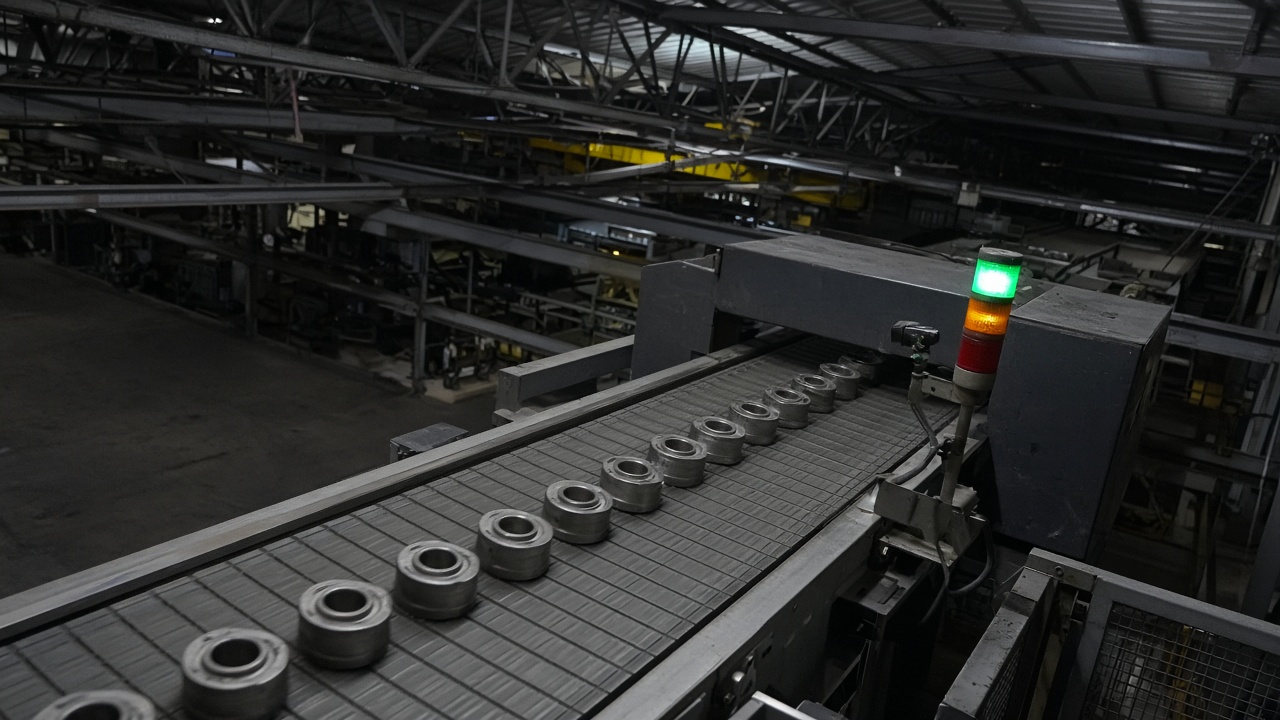
The Ministry of Economy, Trade and Industry logged about 85,000 AI-assisted defect flags in a 2026 survey of Japanese manufacturing plants, roughly twice the tally recorded in the same period last year as machine-vision tools spread across automotive and electronics lines. METI emphasized that the figure counts algorithmic detections reviewed by human inspectors, not shipped faulty products.
How the survey works
Participating plants report monthly statistics through METI’s smart-factory promotion portal, aggregating hits from cameras, acoustic sensors and inline test rigs that use trained models. The 85,000 count covers April through September 2026 submissions from roughly 1,200 sites, weighted toward Tier-one suppliers in Aichi, Fukuoka and Gunma prefectures.
Officials said growth reflects wider deployment rather than deteriorating quality, noting that final reject rates at assembly gates fell slightly year on year when plants paired AI with rework stations.
Automotive and electronics drivers
Automotive suppliers added vision models to weld-bead and paint-surface checks after OEM customers tightened traceability rules. Electronics assemblers use similar tools for solder paste and micro-scratch detection on smartphone components, where human eyes fatigue on high-speed lines.
Small and midsize enterprises accessed subsidized cloud inference credits METI expanded in spring 2026, lowering upfront costs for firms that cannot build on-premise GPU clusters.
False positives and labor impact
Plant managers told METI workshops that false-positive rates on new models often exceed 15 percent until retrained with local lighting data. Maintenance teams hired data technicians to label images, a skill mix traditional quality departments lacked.
Union representatives asked for training guarantees when AI tools reduce manual sampling hours. METI guidance encourages redeployment to rework and root-cause analysis rather than headcount cuts, though implementation varies by company.
Security and data governance
Models trained on proprietary part images raised questions about cloud vendor access. METI referenced cybersecurity checklists aligned with the Personal Information Protection Commission after several unrelated corporate breaches this autumn.
Export control screens apply when inspection data includes defense-related dimensions; surveyed plants in aerospace clusters anonymized submissions accordingly.
Comparison with global peers
German and Korean industry surveys show similar adoption curves, though Japan’s aging workforce makes automation politically easier to sell as augmentation. METI plans to publish benchmark false-positive bands by sector in December to help buyers evaluate vendors.
Domestic start-ups selling edge AI boxes compete with global cloud providers; the survey does not break out vendor share but notes rising use of on-device inference to cut latency.
Policy next steps
METI will fold the statistics into its next monozukuri competitiveness white paper, arguing that AI inspection is a productivity pillar alongside robot density. Budget requests for fiscal 2027 include grants for semiconductor packaging lines adopting multi-modal defect models.
Manufacturers should expect customers to request AI audit trails in supplier scorecards, extending the survey from a ministry exercise into commercial contract language.
Vendor market and standards
Global vision vendors compete with domestic start-ups offering edge boxes priced for midsize factories. METI’s survey does not rank suppliers, but plant managers cited shorter deployment times when models shipped pre-trained on common weld and solder defect libraries.
Standards bodies under the Industrial Value Chain Initiative plan interoperability tests so factories can swap models without rewiring entire lines. Export customers in Europe already ask for documentation tying AI flags to human rework sign-offs; Japanese suppliers who automate that paper trail win audit points during OEM visits.
METI will host a December webinar for prefectural manufacturing extension centers so regional plants not yet in the survey understand reporting obligations if they adopt subsidized vision kits next fiscal year.
Training pipelines
Technical colleges in Nagoya and Hamamatsu added machine-vision modules to mechatronics curricula this autumn, feeding hiring pipelines for suppliers serving Toyota and Honda lines. Graduates who can label training images command starting salaries above generic IT help-desk roles, a labor-market signal METI highlighted in the survey release.
Older quality inspectors attending retraining sessions said AI tools reduce repetitive strain injuries from microscope work, an occupational health benefit plants cite when unions ask about job security.
Export-oriented suppliers in Kyushu said vision adoption helped them pass European automotive audit checklists without adding headcount, a competitiveness argument METI will reuse in trade talks next quarter.