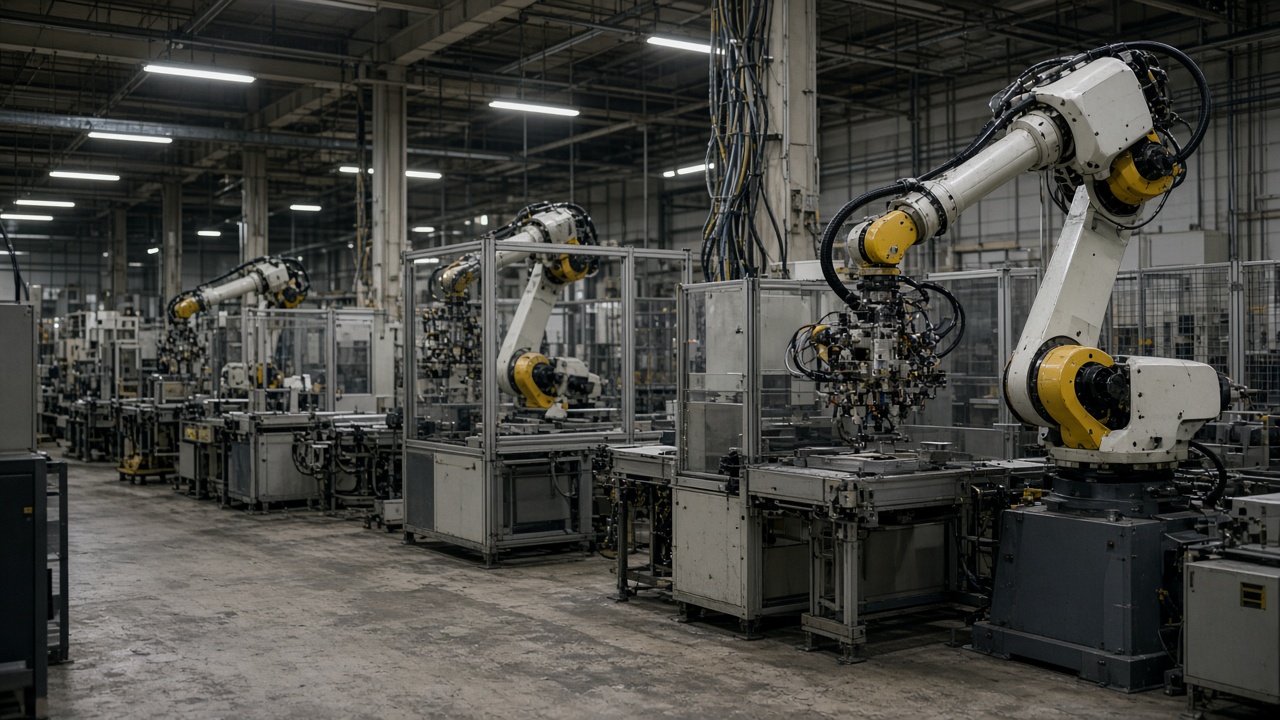
Mitsubishi Electric Corp. raised its fiscal-year adjusted operating profit forecast to 710 billion yen on Thursday after first-half revenue and profit hit company records, driven by factory-automation orders, chip-production gear and residential air-conditioning demand in Japan and overseas. The Tokyo manufacturer also decided to repurchase up to 200 billion yen of its own shares, signaling confidence even as peers watch yen moves and slower China industrial spending.
What the revised guide contains
Management lifted the adjusted operating profit outlook from an earlier band near 650 billion yen, citing stronger-than-expected shipments of programmable controllers, servo systems and inverters used in battery and semiconductor plants. Semiconductor and flat-panel production equipment contributed as customers in Korea and Taiwan expanded capacity, while the air-conditioning division benefited from a hot Japanese summer and replacement cycles in Southeast Asia.
Net profit guidance moved in the same direction, though the company cautioned that pension accounting and one-time items could still swing the statutory line. Investors focused on the operating number because it strips restructuring noise that has colored Mitsubishi Electric earnings in prior years.
First-half momentum by segment
Factory automation posted double-digit revenue growth in yen terms as automotive and electronics customers restored capex delayed during prior chip shortages. Mitsubishi Electric’s Nagoya-area plants ran overtime on large orders tied to electric-vehicle battery lines, according to supplier channels. Semiconductor equipment bookings remained lumpy quarter to quarter but trended above internal plans when memory makers restarted tool purchases.
Building systems recovered in Japan as office retrofits resumed and heat-pump demand rose under decarbonization subsidies. Defense-related radar and electronic warfare programs added backlog in the aerospace segment, though export rules limit detail in public filings.
Buyback and balance sheet
The 200 billion yen repurchase authorization runs through March 2027 and follows net cash accumulation after debt paydowns. Mitsubishi Electric has historically used buybacks to offset stock compensation rather than aggressive borrowing, which credit analysts view as conservative relative to European automation peers.
Capital expenditure plans for the full year were left broadly unchanged, with emphasis on digital twin software for service contracts and energy-efficient compressor lines. R&D spending as a share of sales ticked up on power-semiconductor modules aimed at datacenter power supplies.
Competitive read-through
Keyence Corp. and Fanuc Corp. shares trade on similar automation exposure; Mitsubishi Electric’s broader portfolio smooths cyclicality but can dilute multiples when air-conditioning margins compress. Thursday’s guidance revision helped the stock outperform the electrical machinery sub-index on a day when the broader Nikkei fell on Bank of Japan and global chip sentiment.
Analysts at domestic securities houses said the upgrade validates management’s turnaround narrative after quality scandals in the early 2020s forced governance overhauls. Orders still depend on China capex and yen levels near 157 to the dollar, both flagged as swing factors in the outlook statement.
What investors watch next
Third-quarter orders for factory automation will show whether battery-related demand is front-loaded. Semiconductor equipment customers may pause if memory prices soften into calendar 2027. The buyback execution pace matters for earnings per share; treasury stock purchases were modest in the first half.
For industrial policy watchers, METI subsidies for heat pumps and grid equipment remain tailwinds for building systems. Export control updates on chip tools could affect equipment segment bookings without changing the profit guide immediately.
Workforce and supply chain
Mitsubishi Electric continues hiring engineers in Nagoya and Kyoto for automation software roles while consolidating some legacy appliance lines. Component lead times for power modules have normalized, reducing expedite costs that hurt margins last fiscal year.
Union negotiations this spring focused on base pay increases aligned with shunto wage trends, which the company absorbed in guidance. Further yen weakness would inflate imported materials but also translate overseas sales upward, a hedge the finance team highlighted on the results call.
Disclosure and governance follow-through
Investor relations officials said quarterly segment slides will break out automation order intake separately from air-conditioning shipments starting next release, answering analyst requests after governance reforms. External directors asked for clearer China exposure metrics following prior inspection scandals; the company added a regional risk footnote without changing numerical guidance.
Retail shareholders attending the annual meeting in June had questioned whether buybacks would resume; Thursday’s authorization answers that concern while keeping debt ratios conservative enough for rating agencies to maintain investment-grade outlooks on domestic bonds.