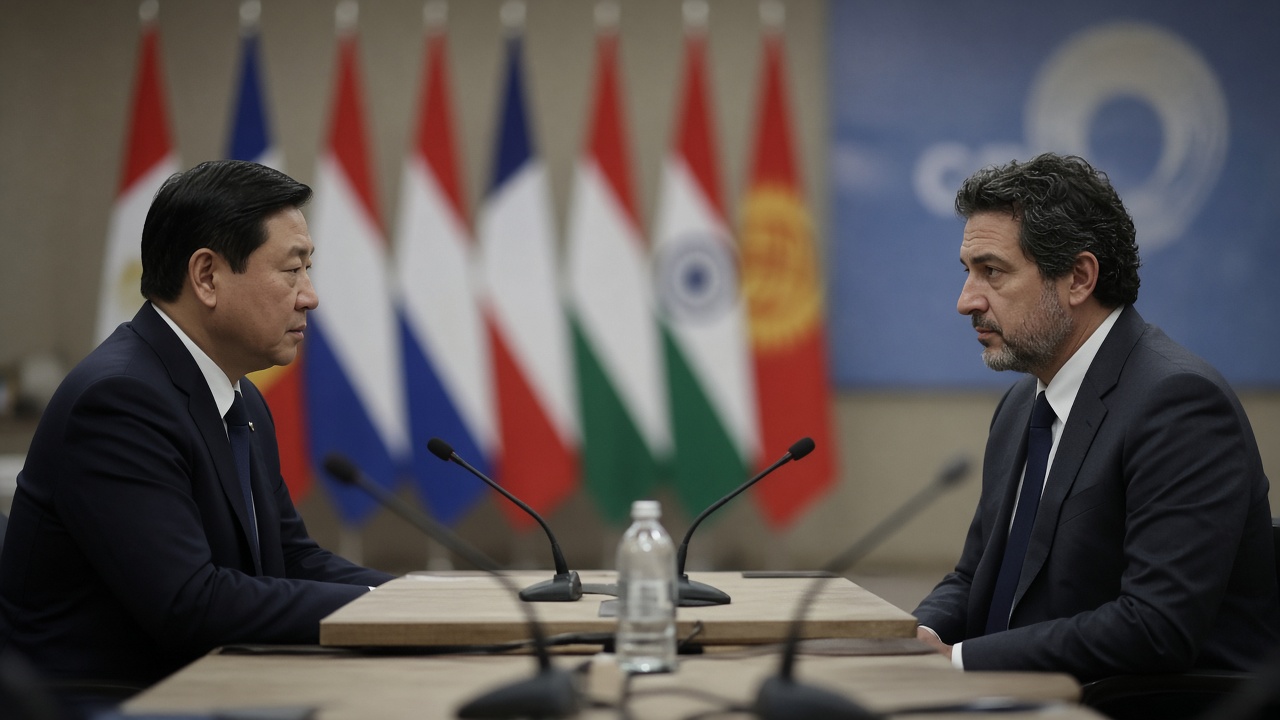
Japanese Foreign Minister Toshimitsu Motegi pressed Russia to release a detained Hokkaido Shimbun reporter during a bilateral meeting with Sergey Lavrov on the sidelines of the Group of 20 foreign ministers session in Atlanta, the Foreign Ministry said Friday. Motegi “strongly demanded” immediate freedom for the journalist, whom Russia’s Federal Security Service arrested on 13 October in the Sakhalin region on suspicion of gathering defense-related information.
The encounter came two days after a Japanese Embassy official conducted a consular visit with the reporter in Moscow, fulfilling Tokyo’s request for access that had been delayed since the detention became public. Ambassador Akira Muto had already raised the case with Russian Deputy Foreign Minister Andrey Rudenko on 28 October, repeating Tokyo’s insistence that a working journalist should not be held on espionage charges.
What Moscow alleges
Russian authorities have not released the reporter’s name in official statements reviewed by AP and Kyodo, but Japanese outlets identify him as a Hokkaido Shimbun staff member covering the Russian Far East. The FSB said he collected and stored information touching Russia’s defense capabilities, a standard formulation Moscow has used against foreign reporters since the full-scale invasion of Ukraine tightened security laws. Sakhalin Governor Valery Limarenko appeared alongside President Vladimir Putin on Iturup in August, underscoring how sensitive Moscow treats military movements in the Kuril chain near Japan’s claimed Northern Territories.
Why Atlanta mattered
With Japan and Russia lacking a peace treaty and direct flights still suspended, high-level face time is rare; Motegi used the U.S.-hosted G20 ministerial—chaired by Secretary of State Marco Rubio ahead of a December summit in Florida—to raise the case where cameras and allied ministers could witness the dispute. Ministry readouts said the two foreign ministers also exchanged views on Ukraine, but provided no sign Lavrov offered concessions. Nikkei reported the conversation through the Japanese Embassy in Washington, which briefed reporters traveling with Motegi.
What Tokyo can do next
Japan has few diplomatic tools beyond protest and consular support while it continues to align with G7 sanctions on Russia’s war economy. Motegi’s public demand keeps the detention on the same agenda as energy security talks that dominated the Atlanta session amid high oil prices and the parallel Iran war. Unless Moscow shifts course, the reporter remains in pretrial custody while Japanese lawyers press for regular consular access and a transparent court schedule—steps Tokyo says are minimum obligations under bilateral agreements even when political relations are frozen.