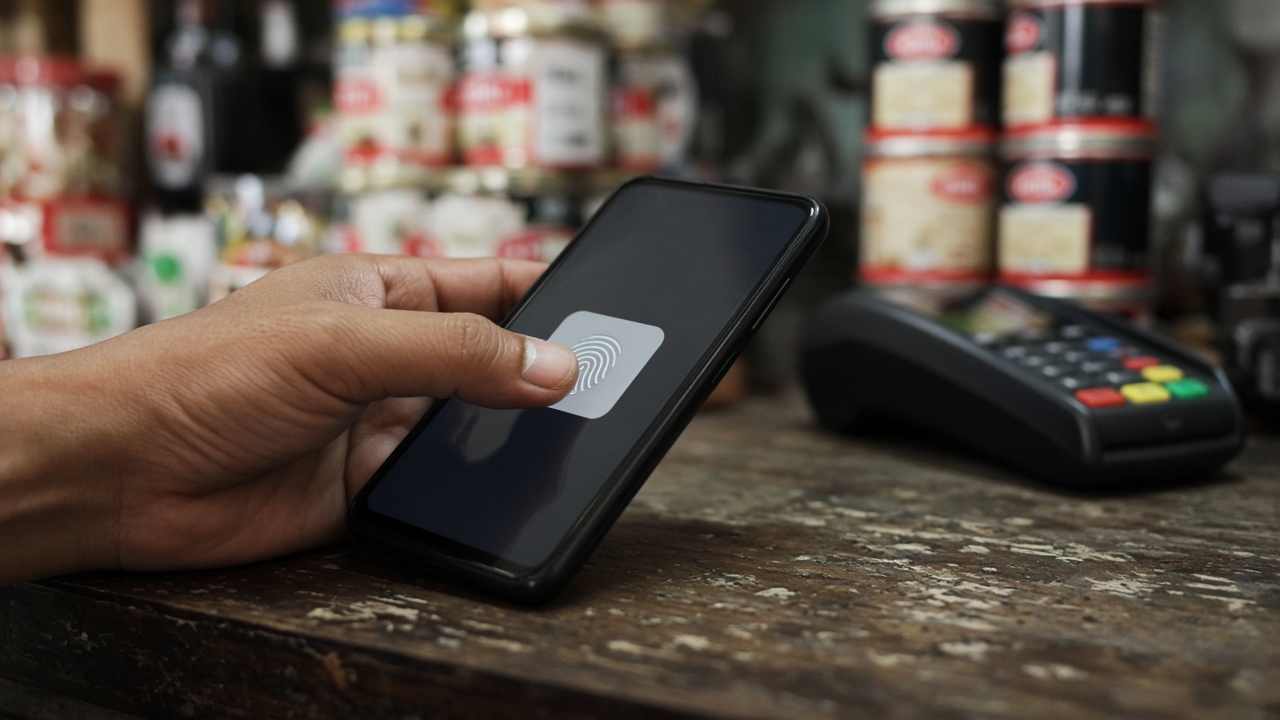
India’s Unified Payments Interface will gain an optional checkout path that uses the phone’s own fingerprint or face unlock for transfers up to ₹5,000, alongside a separate Aadhaar-based face step for setting or resetting a UPI PIN, under rules National Payments Corporation of India issued on 7 October 2025.
What OC-226 changes at the counter
Operational Circular OC-226 keeps the existing UPI PIN as the default for most payments but allows member banks, payment service providers, and apps to offer on-device biometric authentication instead for small tickets. The ₹5,000 per-transaction ceiling will be reviewed after performance data accumulates; NPCI has signaled a higher limit in a follow-on circular for 2026, but the launch window starts at five thousand rupees. Issuers must validate customer eligibility, obtain explicit opt-in consent, and disable biometric checkout if a user changes or resets the PIN until fresh consent is captured.
The circular explicitly references the Reserve Bank’s 2025 directions on authentication for digital payment transactions, which encourage issuers to adopt risk-based checks beyond minimum two-factor rules. That policy backdrop matters because UPI already clears the majority of retail digital payments; any new factor must not weaken device binding or issuer authorization checks that keep SIM-swap losses in check.
PIN setup without a debit card
The same circular introduces UIDAI face authentication as an alternative when creating or recovering a UPI PIN, reducing reliance on debit-card details or Aadhaar OTP alone. Department of Financial Services secretary M. Nagaraju unveiled the feature at the Global Fintech Festival in Mumbai on the circular’s effective date, framing it as a way to onboard seniors and first-time users who lack easy access to physical cards. Apps must block rooted or jailbroken devices, enforce key rotation within a year of enablement, and mark accounts inactive if no biometric transaction occurs for ninety days until the user confirms again.
For rural agents and business correspondents, the PIN change is as important as checkout speed: field staff have long watched customers struggle to remember card details when activating UPI on a new handset. Face-based PIN reset, if implemented uniformly across issuers, could shrink activation time at camps without skipping issuer validation steps.
Customer education will need to stress that biometrics replace PIN entry only for users who opt in; regulators have been clear that silent enrollment is not permitted. Issuers must send SMS or in-app notices when the feature is enabled, disabled, or reset after PIN changes.
Security checks banks must wire in
NPCI’s checklist reads like a device-integrity audit: validate OS versions, confirm biometric enrollment, restrict unsupported hardware, and share specific decline codes when authentication fails. PSPs need fresh consent after each device binding, and issuer banks must push customer communications when biometric payment is turned on or off. Issuers also disable biometric methods across all UPI apps linked to an account whenever a PIN reset occurs, declining transactions until the customer opts in again—a rule meant to prevent stale permissions on lost phones.
Member banks are expected to roll out features gradually rather than in a single switch flip, because each app must certify compliance with NPCI’s operating guidelines and UIDAI face protocols. Large issuers will likely pilot with staff accounts before marketing toggles inside settings menus, mirroring how UPI Lite rolled out city by city.
For merchants, the practical effect is shorter checkout times on low-value groceries and transit fares once banks enable the feature app by app—without removing PIN fallback for larger purchases or for users who opt out. NPCI said limits will be revisited after it studies adoption, error rates, and customer complaints, the same iterative approach it used when raising UPI Lite caps in prior years. Until then, the ₹5,000 cap keeps biometric checkout in the everyday spending lane rather than rent or tuition payments, preserving PIN entry for high-value transfers where customers expect an explicit second factor.