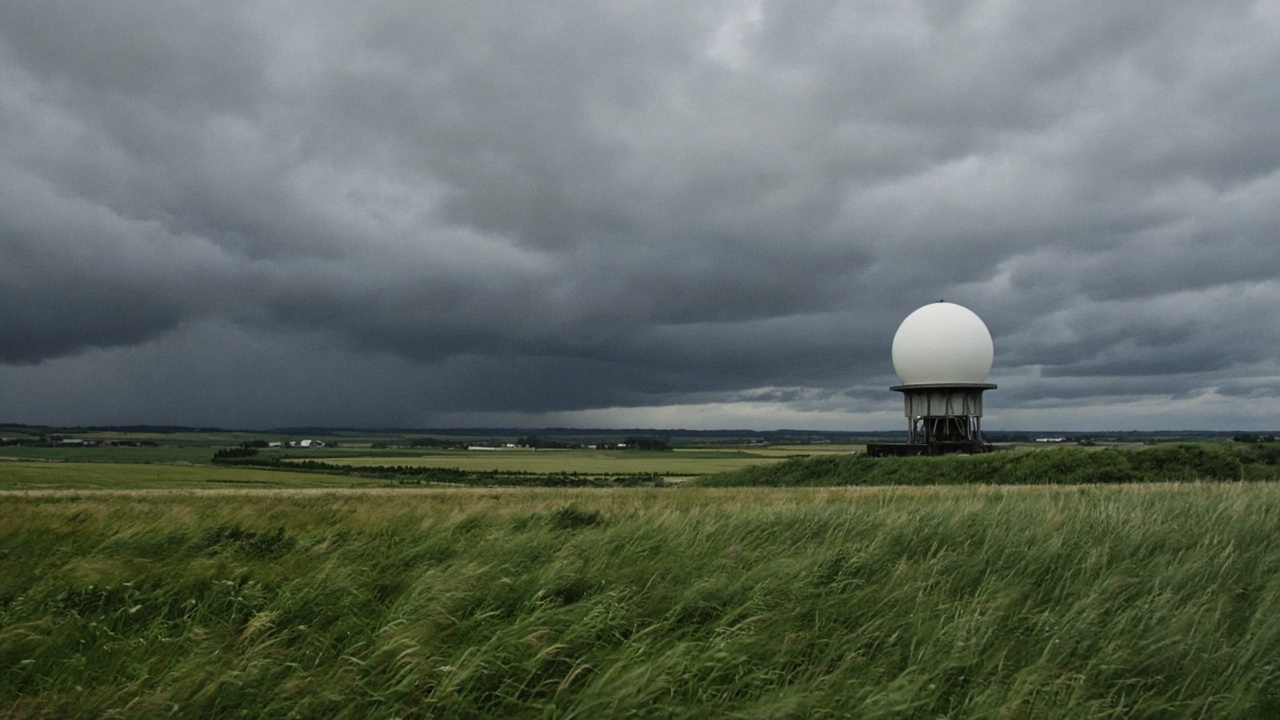
The Central Weather Administration switched on a compact radar near Pingtung’s coastal plain Friday to detect low-level squall lines that satellite loops often miss before they dump sudden rain on winter onion and rice fields.
The C-band unit fills a gap between the administration’s long-range network and mountain stations blocked by Taiwan’s central ridge. Pingtung farmers lost millions of dollars in ready-to-harvest onions last season when thunderstorms formed in less than an hour, too fast for county text alerts tied to slower satellite refreshes.
Why this site
Meteorologists chose a coastal industrial park because elevation stays under thirty meters while prevailing winds funnel moist air from the Bashi Channel. Test runs in September caught three squall lines that legacy radar depicted only as weak echoes until they reached shore.
The dome feeds data every six minutes into the administration’s new nowcasting model, which Pingtung County will use to trigger automated sirens in Fangliao and Donggang townships. County officials said they will not send phone alerts until the model holds false alarms under five percent for a full month.
Harvest calendar pressure
Onion cooperatives begin cutting fields in late November; rice straw burning season overlaps, complicating visibility. Farmers asked for soil moisture sensors to pair with radar cues so they can delay irrigation when storms approach. The Council of Agriculture said it will subsidize twenty pilot sensor kits if cooperatives share data openly.
Limits
Compact radars cannot see over mountains, so eastern Pingtung still relies on rain gauges. Researchers at National Cheng Kung University warned that climate change may shift squall tracks northward, eventually requiring another unit near Kaohsiung.
The administration plans public web maps in December after calibrating clutter from wind turbines near the coast. Until then, data go only to county emergency operations and agricultural extension offices.
Coordination with fishermen
Offshore fishing associations asked the weather service to push VHF bulletins when radar detects gust fronts beyond thirty knots, a threshold that can flip small boats near the Liuqiu ferry route. The administration agreed to test voice broadcasts in November before formalizing the protocol.
Insurance adjusters said better nowcasts could lower crop claim payouts if farmers document preventive harvests triggered by official alerts rather than ad hoc WhatsApp groups.
University meteorology students will intern on the radar console in January, logging false alarms for thesis projects approved by the weather service.