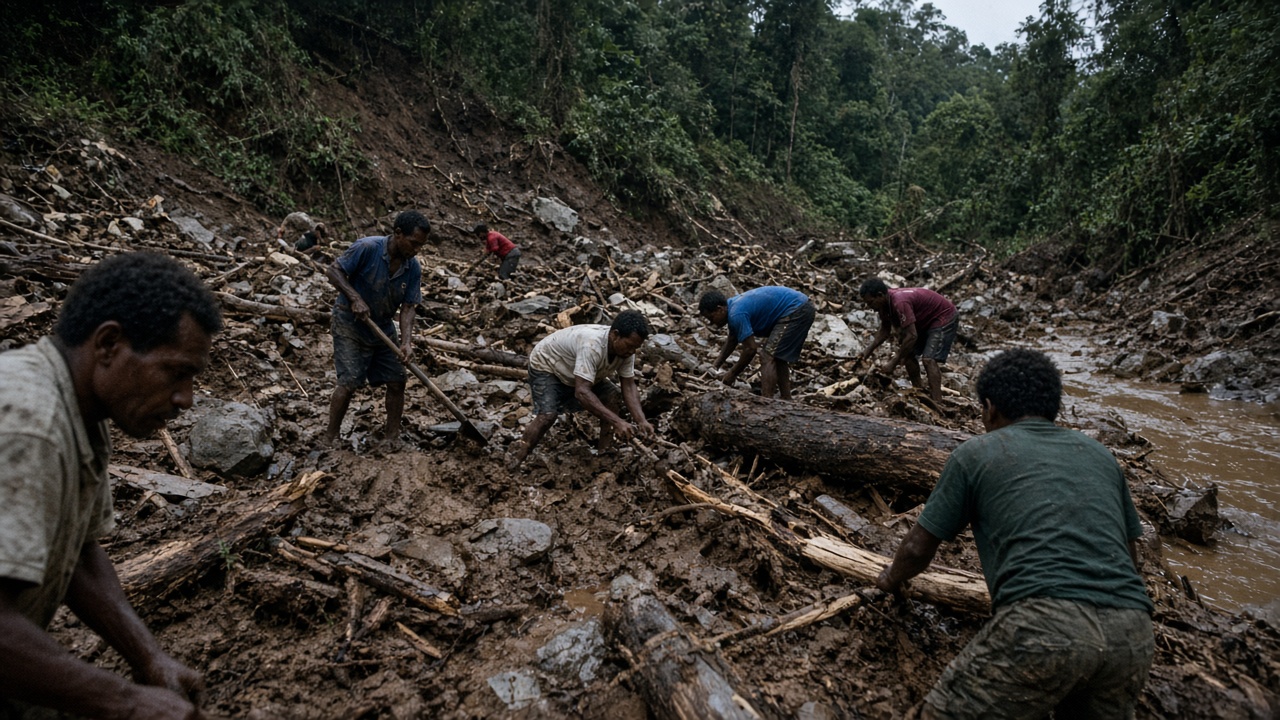
A landslide struck Kukas Village in Enga Province at about 2 a.m. local time on Friday, burying a large communal house where families were sleeping after a funeral and killing 21 people, provincial officials and an International Organization for Migration assessment team said. Seven people survived, five of them with injuries, and community members later recovered all of the bodies from the debris.
What responders recorded on the ground
The disaster hit Unda Ward 30 in the Minamb Valley, part of Wapenamanda Rural Local Level Government. An IOM emergency tracking report published the same day said 45 people were affected in total. Twenty-eight had been staying temporarily in the communal house for the funeral; the structure stood a few minutes' walk from the Highlands Highway and near the Minamb River.
Among the dead were 17 men and four women, including two children and a pregnant woman, according to the assessment. Police told Australia's national broadcaster that the slide flattened the building while people were inside. Simon Tumu, a deputy principal at a nearby school who visited the site, told reporters he counted 22 victims during the morning recovery effort; provincial governor Sir Peter Ipatas said local reports had suggested higher figures before police settled on 21.
History on a fragile mountainside
Most of the victims belonged to the Yabalekin community from Lower Lai in Wapenamanda and had traveled to Kukas for the service. Community leaders told assessors that smaller slides had occurred in the area over the past five years but that no homes had previously been built on the affected spot and no major damage had been recorded until now. The communal house had been recently constructed where the slope gave way.
Enga sits in the same province where a massive landslide at Mulitaka in May 2024 killed more than 160 people, a toll that still shapes how Port Moresby and donors treat highland disasters. Sir Peter said the mountainous terrain remains vulnerable during heavy rain and that immediate needs included body bags, tents, and blankets for survivors who may now be homeless.
What happens next
A joint team from the Enga Provincial Disaster Centre, district administration, IOM, and United Nations security staff carried out the first formal assessment on Friday. Field observations indicated the site could slide again because of unstable soil and continuing rainfall. Local leaders warned that more than 300 people live along the same stretch of hillside and may need relocation if geotechnical checks confirm ongoing risk.
Prime Minister James Marape's office has not yet published a national relief package figure, but provincial disaster officials said recovery would focus on shelter, medical care for the injured, and mapping safer ground before the wet season intensifies. For Kukas, the immediate task is dignified burial and support for families who lost multiple relatives in a single night.