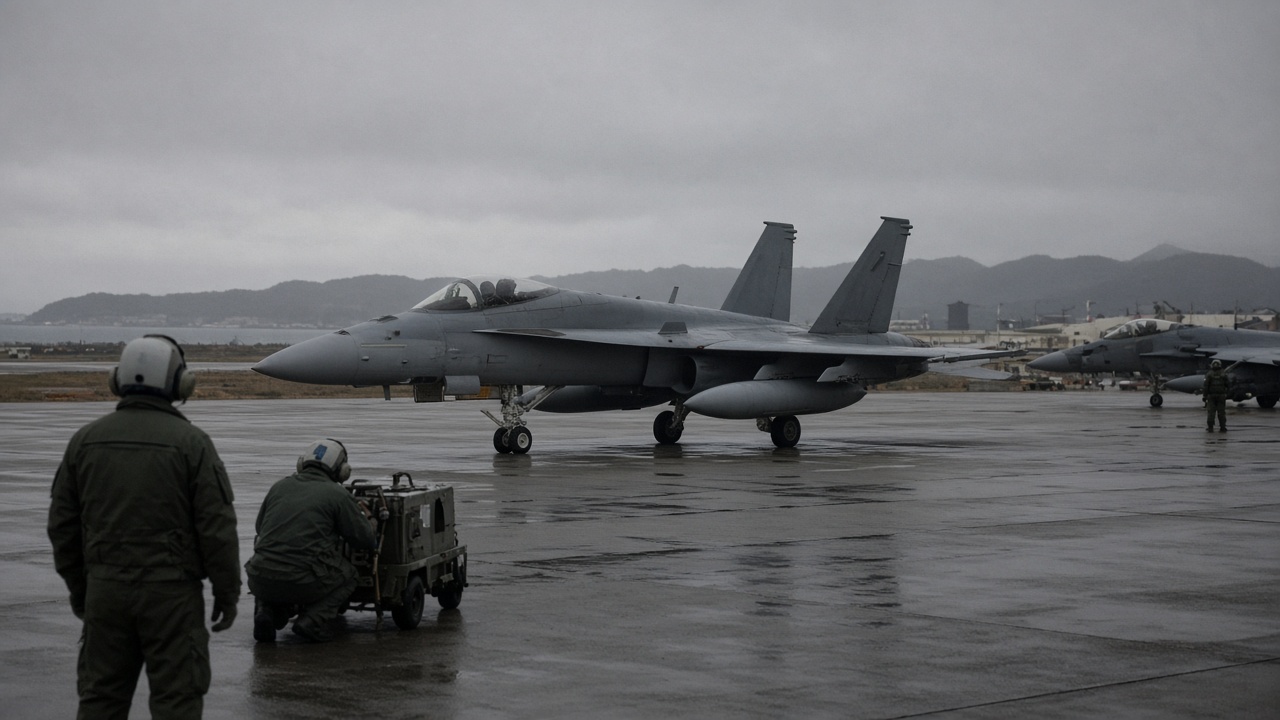
Taiwan’s Ministry of National Defense said the People’s Liberation Army sent twenty-two aircraft into the island’s air-defense identification zone starting at 1:15 p.m. Saturday, with eighteen sorties crossing the median line and its extensions into northern, central, southwestern and western Pacific sectors while PLA ships operated nearby under what Beijing calls a joint readiness patrol.
The ministry identified J-10 and J-16 fighters, a KJ-500 airborne early-warning aircraft, a Y-20 tanker and drones among the tracked packages. Taiwan’s military said it used joint intelligence, surveillance and reconnaissance to follow the activity and dispatched aircraft, ships and land-based missile units in response—the standard public wording Taipei uses when large PLA packages approach during sensitive domestic moments.
Timing and political backdrop
The sortie count landed on the same day Taipei’s mayoral candidates held a televised debate in a compressed local election season. Taiwan media linked the PLA activity to a pattern of pressure during high-visibility political events, though the ministry’s statement did not speculate on motive. Cross-strait analysts noted that Beijing has branded similar packages as readiness drills rather than full exercises, keeping the label flexible while still testing Taiwan’s scramble times and radar coverage.
Separately on Saturday, Taiwan’s Coast Guard reported a Chinese coast guard vessel entered restricted waters near Dongsha with its automatic identification system switched off, prompting a parallel standoff at sea. The defense ministry release focused on air activity, but the simultaneous maritime probe underscored how Taipei is managing multiple pressure points in one news cycle.
What Taiwan’s commanders say they did
Officials emphasized that every track was monitored and that responses followed existing rules of engagement. Taiwan does not publicly detail every intercept altitude or weapon cue, but releases of this scale typically coincide with F-16 and indigenous fighter launches from western bases. The ministry repeated that the PLA activity “harassed” surrounding air and sea space—a word Taipei uses to reject Beijing’s framing of routine training in international airspace.
Previous spikes in median-line crossings have prompted briefings for foreign delegations visiting Taipei and added talking points in legislature sessions on asymmetric defense and reserve mobilization. Saturday’s numbers were large enough to register in Washington’s daily readouts even when broader U.S.-China channels remain focused on other theaters.
What to watch
Defense planners will watch whether Beijing repeats joint readiness patrols at similar strength after the weekend election events, and whether median-line crossings become a weekly baseline rather than a spike. For Washington and Tokyo, the package offers another data point on PLA naval-air coordination without a declared live-fire zone. Taiwan’s voters, meanwhile, will hear the sortie numbers folded into debate questions about conscription, budgets and crisis messaging—whether officials want that linkage or not.