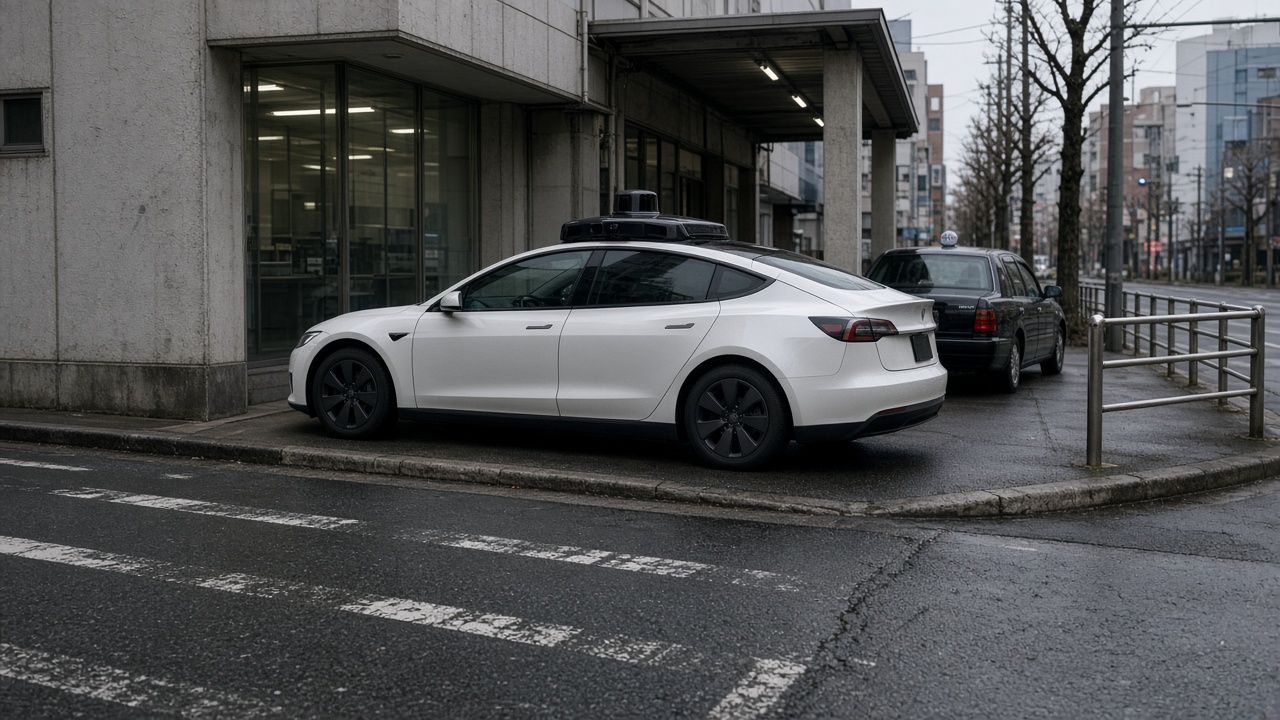
Toyota Motor Corp. outlined a target to run level-four autonomous taxis on Japanese public roads by 2027, expanding domestic electric-vehicle pilot routes that already shuttle passengers with safety drivers in selected cities. The announcement on October 30 ties into ministry discussions on remote monitoring staffing and liability when operators remove in-vehicle attendants for paid rides.
Level-four scope in Japan
Japan’s road traffic framework treats level-four automation as limited to predefined operational design domains—geofenced districts with low speeds and mapped hazards. Toyota said its first commercial service would connect airport-adjacent zones to transit hubs before expanding to suburban corridors where demand forecasting is stable.
The company will use battery-electric platforms adapted from existing taxi fleet models, paired with lidar, radar and camera suites validated in Toyota’s Woven City testbed in Shizuoka Prefecture. Software stacks incorporate maps updated daily for construction zones, a requirement metropolitan police emphasize in permit hearings.
Regulatory milestones
The Ministry of Land, Infrastructure, Transport and Tourism is revising guidelines for remote assistance centers that must intervene when vehicles encounter edge cases. Toyota pledged to staff monitoring rooms in Japan with licensed operators meeting new training hours proposed in draft rules released this month.
Insurance carriers and taxi industry associations asked for clarity on fault assignment when remote operators override autonomy. Toyota said it is co-developing policy templates with domestic insurers ahead of 2027 launches.
Competitive and partner map
Domestic rivals and startups operate smaller robotaxi pilots in Tokyo Bay and central Nagoya with safety drivers. Toyota’s scale in fleet maintenance and dealer networks could lower unit economics if regulators approve driverless revenue service. Mobility joint ventures with telecom firms supply connectivity for over-the-air software updates mandated after cybersecurity incidents elsewhere in the industry.
Export ambitions remain secondary; Toyota executives emphasized Japan-first deployment to align with aging-driver mobility goals in rural towns losing bus service.
EV and infrastructure needs
Autonomous taxis require depot charging and redundant wireless links. Toyota is negotiating with electric power companies on time-of-use rates for overnight fleet charging and with municipal governments on curbside pickup zones that do not block trams.
Battery supplier relationships stay unchanged from mass-market EV launches, though autonomous fleets cycle vehicles more intensively, shortening replacement intervals.
Economic and labor questions
Taxi unions asked for retraining programs for drivers shifting to remote monitoring roles. Toyota said it expects hybrid staffing models through 2028, with human drivers remaining in complex downtown districts even after level-four permits expand.
Local governments facing driver shortages view autonomous taxis as a way to maintain late-night service without importing foreign workers, a politically sensitive topic in transport policy debates.
What investors watch
Capital expenditure for autonomy remains a fraction of Toyota’s battery and hybrid spending, but successful 2027 launches would support the stock’s mobility narrative beyond cyclical auto margins. Failures or delayed permits would reinforce skepticism after U.S. peers scaled back robotaxi timelines.
Near-term earnings still depend on hybrid sales in North America and yen translation; autonomy revenue is unlikely before fiscal 2028. Toyota shares traded with the broader auto basket on October 30 rather than reacting sharply to the target date alone.
Pilot routes and data collection
Existing pilots in Chiba and parts of Tokyo collect intersection conflict data shared with police traffic labs. Toyota said it will publish anonymized safety statistics quarterly once driverless tests expand, mirroring disclosure practices U.S. operators adopted under state-by-state rules.
Mapping partners scan construction zones nightly; missed updates caused two non-injury disengagements in pilots last month, events Toyota disclosed to regulators within 24 hours. Those incidents shape training data for remote operators who must intervene within seconds when models hesitate.
Dealer networks asked for service manuals on sensor calibration intervals because taxi fleets will cycle vehicles faster than retail owners; Toyota responded with a draft maintenance schedule shared at an October industry forum in Nagoya.
Municipal taxi regulators in Fukuoka said they will observe Tokyo pilot metrics before issuing their own level-four permits, keeping national rollout staggered even if the 2027 target holds.