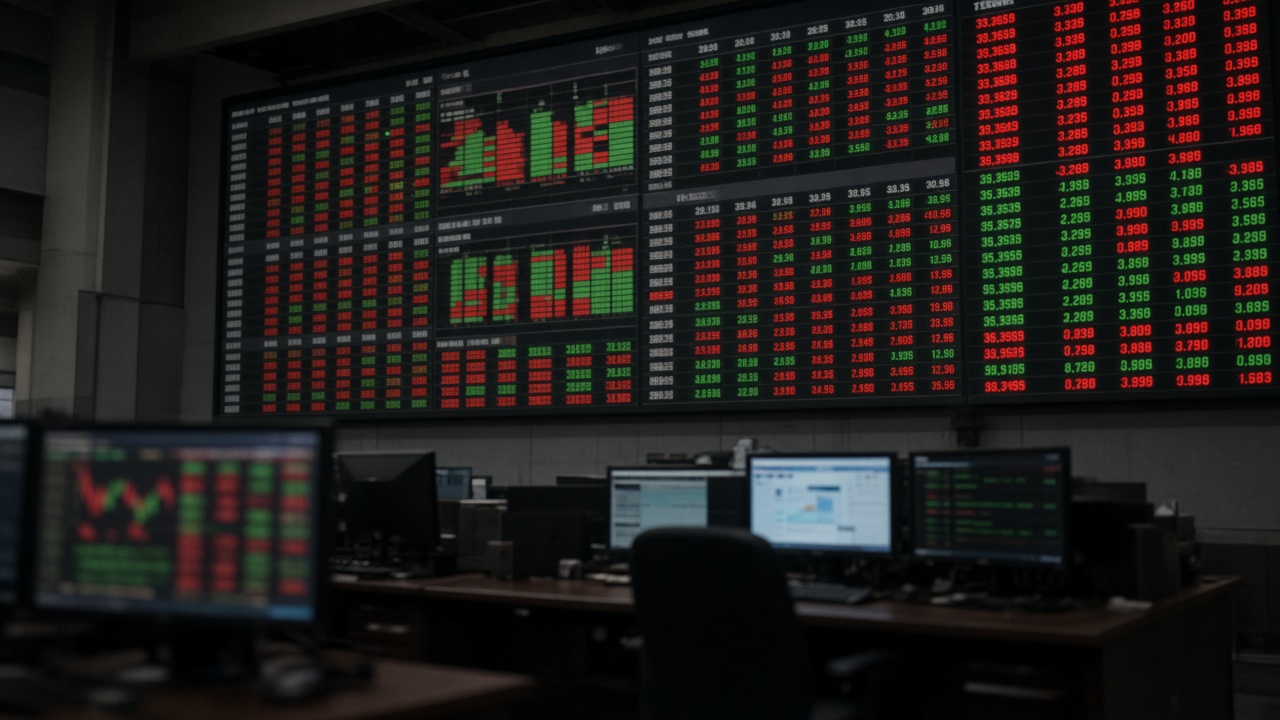
Taiwan’s cap-weighted index finished October at 28,233.35 on Friday after Taiwan Semiconductor Manufacturing Co. briefly traded at NT$1,525, an intraday record that failed to keep the broader gauge in the green once dealers squared books for the month.
The Taiwan Stock Exchange said in its monthly bulletin that October turnover on listed securities reached about NT$10.9 trillion across twenty sessions, with daily value averaging NT$544.8 billion. Foreign investors were net sellers on the final session, a pattern fund managers said reflected hedge funds reducing Taiwan exposure after U.S. megacap earnings whipsawed Asia tech multiples.
How TSMC moved the last hour
TSMC shares opened firm on follow-through from strong October revenue reported earlier in the week. The stock tagged NT$1,525 mid-session, lifting the cap-weighted gauge toward its monthly high of 28,294.74 set on October 29. Profit-taking emerged in the last ninety minutes, pulling TSMC back to NT$1,500 and leaving the chipmaker slightly lower on the day while still up sharply for the month.
Market makers said the late fade was typical for month-end windows when banks adjust derivative hedges tied to MSCI rebalancing flows. Retail participation rose to 392,400 active accounts in October, up 5.1 percent from September, according to the exchange bulletin — a sign domestic traders stayed engaged even as offshore funds trimmed.
Breadth and sector splits
Memory and packaging names outperformed on the month, with ASE Technology Holding and Novatek among the top contributors after AI server demand lifted testing and driver IC orders. Traditional telecom and utility names lagged as yield-focused investors rotated toward semi equipment.
Dealers noted that forty-nine listings still trade above NT$1,000 per share, a concentration that keeps index moves sensitive to a handful of mega caps. Any pause in TSMC’s rally quickly shows up in index futures traded after hours on the Taiwan Futures Exchange.
What November opens with
Strategists at Cathay Securities said November seasonality favors cautious positioning until U.S. tariff headlines around heavy trucks and software exports clarify. They expect export-order data due from the Ministry of Economic Affairs to matter more than local politics for the first week of trading, given how tightly Taiwan’s order book tracks AI capex cycles.
Index futures settled slightly lower after cash closed, suggesting offshore accounts entered the weekend with light short hedges rather than aggressive risk reduction.