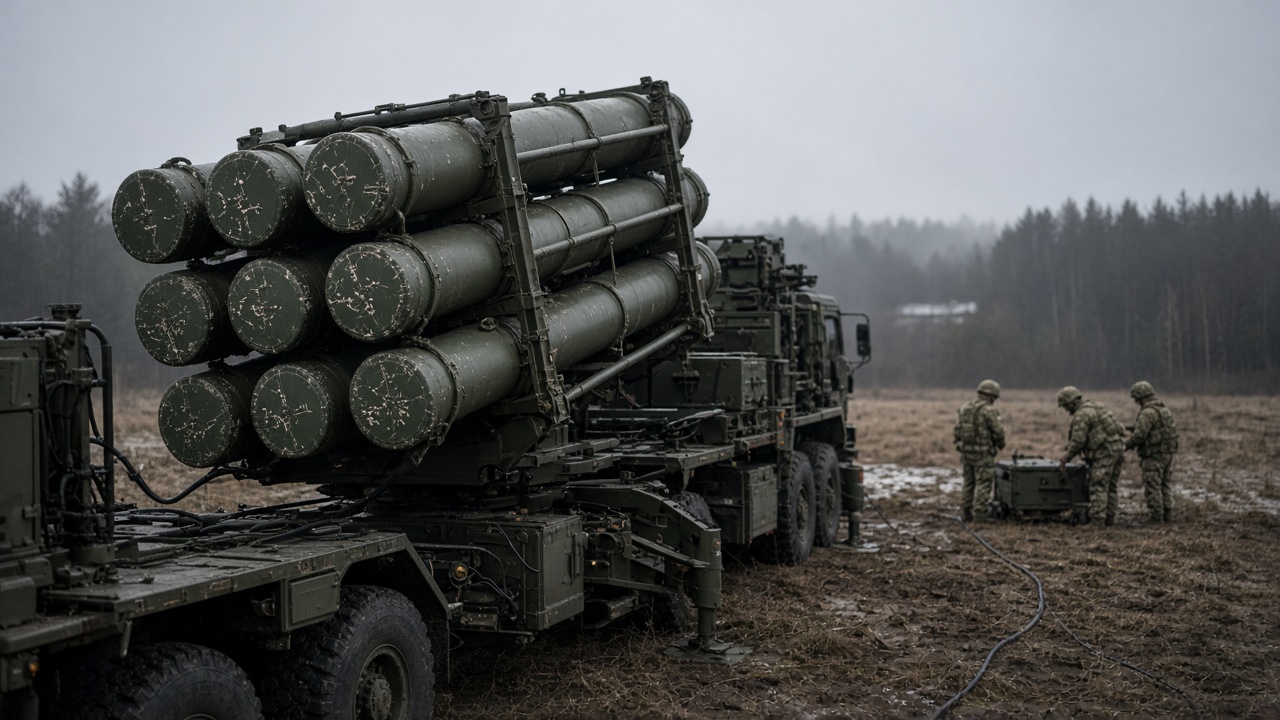
The U.S. State Department on Friday approved a proposed foreign military sale to Ukraine of five hundred Patriot Advanced Capability-3 Missile Segment Enhancement interceptors and related equipment, valued at roughly $2.1 billion, according to the agency’s notification to Congress. The package is described as fully funded by partners and allies, with no U.S. government dollars attached to the transaction.
What the package contains
The proposed sale covers PAC-3 MSE missiles, launcher-related components, spares, training and logistics support needed to keep Ukraine’s existing Patriot batteries supplied during sustained Russian missile and drone campaigns. Lockheed Martin is listed as the principal contractor. The interceptors are the same variant NATO allies use to engage ballistic and cruise missiles at shorter ranges than the older PAC-2 guidance-enhanced munitions.
Ukraine has operated Patriot systems since early 2023, and Ukrainian officials have repeatedly said interceptor stocks were running down faster than replenishment flights could arrive, especially as Moscow shifted toward mixed salvo attacks combining Shahed-type drones with ballistic weapons. The Friday clearance is an export-policy step; it does not by itself put missiles on a runway.
Who is paying
According to the State Department summary circulated to reporters, Ottawa, Berlin and Oslo are contributing through the Jumpstart mechanism, while additional financing flows through national funds backed by the European Union’s Ukraine support loan facility. That structure matters for Capitol Hill review: lawmakers see a sale that does not draw on the Pentagon’s own procurement accounts, but still requires notification under the Arms Export Control Act because U.S.-origin technology and industrial capacity are involved.
Canadian, German and Norwegian officials had already signaled expanded air-defence donations this autumn as Iran-related energy shocks and front-line pressure converged. Bundling five hundred interceptors into one tranche gives Kyiv a single replenishment target rather than a drip of smaller allied packages that are harder to synchronize with battery rotation schedules.
Timing and political friction
President Volodymyr Zelenskyy welcomed the decision in public remarks but cautioned that manufacturing and delivery timelines could stretch over years unless allies accelerate production lines, a recurring complaint since Patriot batteries first arrived in Ukraine. U.S. officials counter that allied-funded sales can jump the queue compared with purely Ukrainian-paid orders, yet physical production of PAC-3 MSE remains concentrated at Lockheed’s Camden, Arkansas, facility alongside demand from Poland, Germany and the Middle East.
Congress has thirty days to review the proposed sale under standard notification rules. No formal hold had been announced by late Friday Washington time, but several lawmakers have pressed the administration to pair interceptor transfers with clearer stockpile accounting for U.S. units in Europe and the Indo-Pacific.
Why interceptors matter now
Russia’s autumn campaign has combined mass drone launches with ballistic strikes aimed at grid nodes and cities far from the front, forcing Ukraine to expend interceptors on cheaper threats. Patriot batteries are among the few assets that can engage short-range ballistic missiles with acceptable probability of kill; without replenishment, commanders face the choice of conserving rounds for ballistic tracks or accepting damage from drones that cheaper guns might otherwise handle.
Allied officials framing the sale emphasized winter preparation: damaged transformers and rolling blackouts already shape civilian morale, and air-defence coverage is part of keeping repair crews working. Whether five hundred interceptors arrive before the heaviest winter strikes depends on production slots, transport security and Ukraine’s ability to distribute rounds across batteries spread from Kyiv to the Donetsk approach—details the export approval does not resolve on its own.