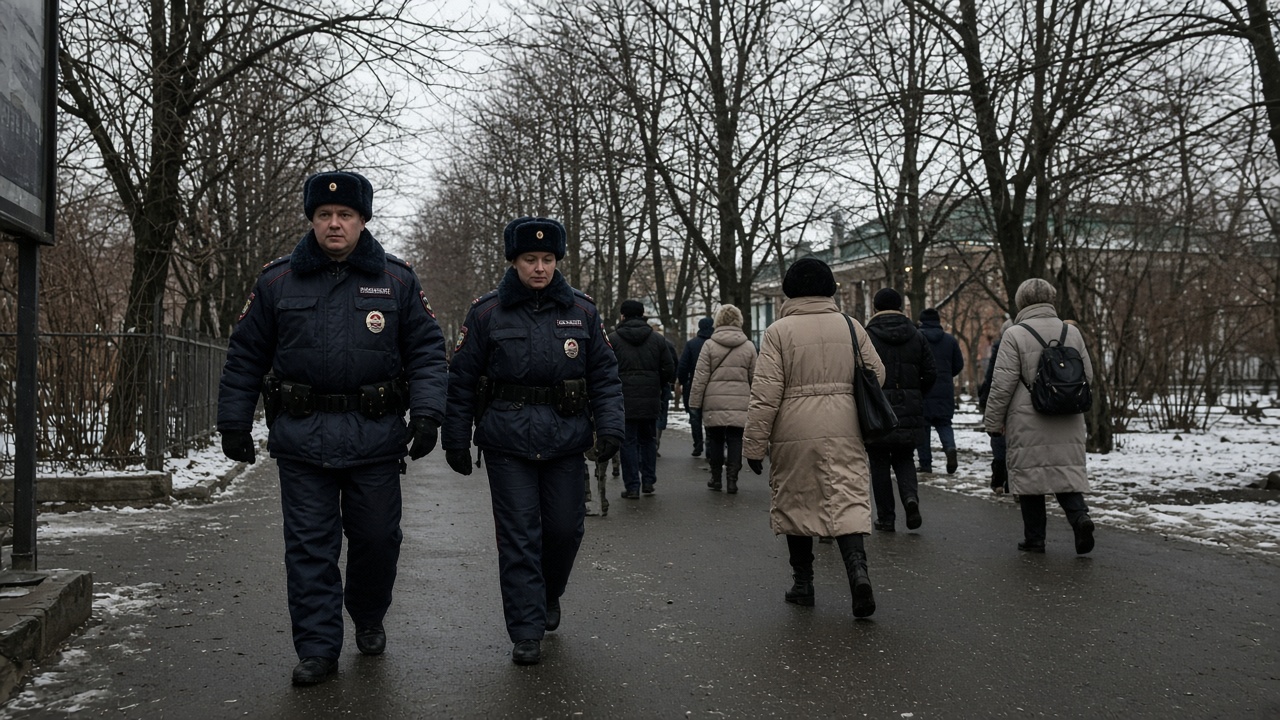
Russia’s Federal Security Service said Saturday that the United States had passed information about preparations for a possible mass-casualty attack in Moscow, a rare public acknowledgment of intelligence cooperation between the two governments even as the war in Ukraine grinds on.
In a short statement carried by Russian media, the FSB said the material arrived through established partner channels and that “relevant work is underway.” The agency did not describe the nature of the plot, name individuals, or describe any arrests.
Embassy alert names Tsaritsyno
Hours later, the U.S. embassy in Moscow posted a security alert on social media warning of the possible threat of a mass-casualty event on Saturday at the Tsaritsyno Museum Reserve, a sprawling palace-and-park complex in the south of the capital popular with weekend visitors.
The embassy said the U.S. government was coordinating with the appropriate Russian authorities in response to the threat. It did not publish further details about timing, methods, or the organization the embassy linked to the threat.
What Moscow has not confirmed
Russian officials have not said whether Tsaritsyno was closed, whether crowds were cleared, or whether a specific operation was launched. State television and major news agencies on Saturday focused heavily on domestic security messaging but offered little beyond the FSB’s one-paragraph confirmation.
Independent verification of the underlying intelligence remains impossible from outside the two governments. Previous U.S. warnings in foreign capitals have sometimes led to visible security buildups; in other cases the threat passed without a public resolution.
A narrow channel in a wider rupture
Washington and Moscow have maintained sporadic counterterrorism contacts for years, including after the 2017 St. Petersburg metro bombing and during earlier Islamic State-related investigations. Those exchanges have never restored broader diplomatic normalcy, and most intelligence sharing related to Ukraine and European security remains frozen or adversarial.
Still, both capitals have an incentive to prevent mass-casualty attacks on civilians, regardless of the state of their bilateral relationship. Saturday’s dual statements — a terse FSB readout and a more specific embassy alert — suggest the United States judged the risk serious enough to warn Americans in Moscow and to loop in Russian security services.
What happens next
Visitors to major Moscow cultural sites should expect heavier police presence and possible bag checks through the weekend. The embassy typically updates or lifts alerts once it believes the immediate risk has passed; the FSB rarely follows up publicly unless it issues a further statement on enforcement.
For policymakers, the episode is a reminder that even hostile relationships can produce narrow cooperation when both sides face the same non-state threat — and that public warnings at iconic venues can move faster than political dialogue.