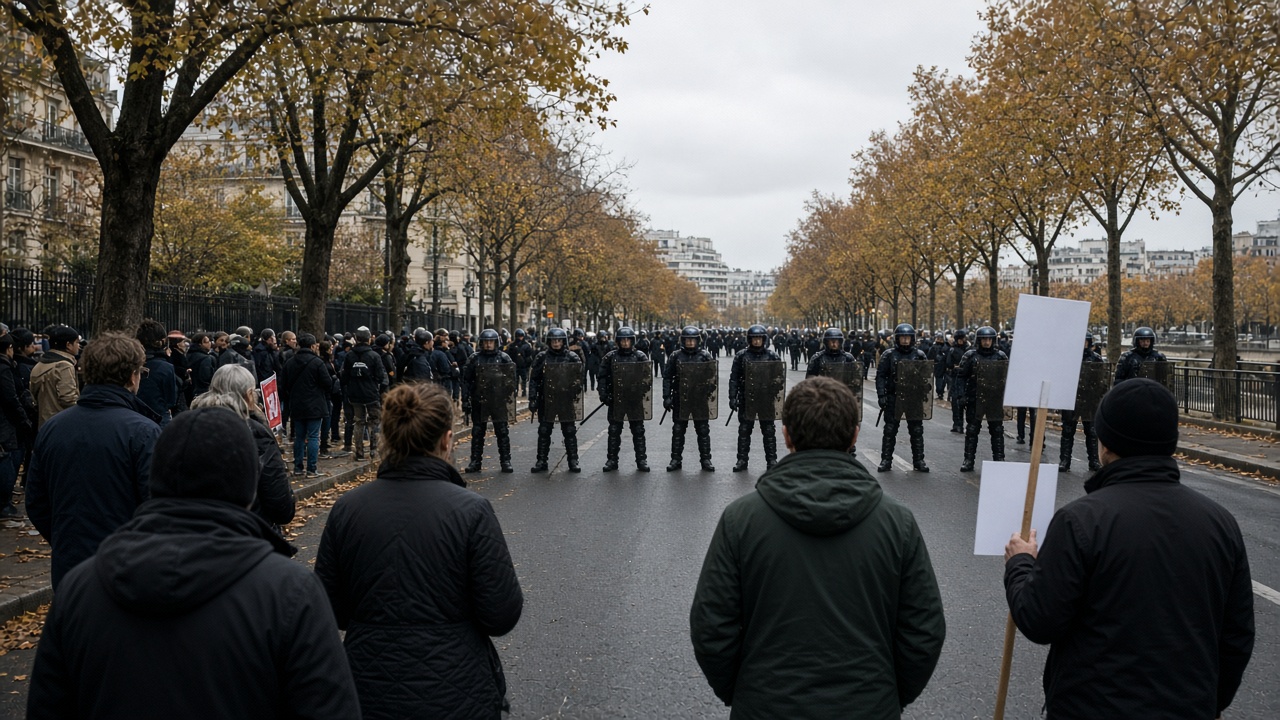
France's Conseil d'État upheld a police order on Friday that keeps the third nationwide cost-of-living demonstration out of central Paris, confining Saturday's procession to a belt of eastern boulevards from Porte de Bagnolet to Porte de Charenton. The ruling overturned a lower court decision that would have allowed a shorter march between Bastille and Nation, the corridor where looting and clashes overshadowed otherwise peaceful rallies on 17 October.
Interior Minister Laurent Nuñez had argued that another downtown route risked repeating that breakdown. Organizers from unions, high school and university groups, and yellow-vest networks still expect large crowds for what they call "Act III" of a movement that began over school conditions and purchasing power before widening into civil-liberty demands after injuries and arrests. Nuñez told broadcasters the risk of disorder remained "very high," especially after dark on Halloween, when social media posts have urged undeclared gatherings and costume-themed flash points.
Security footprint and transit cuts
Authorities are repeating many of the measures used on 24 October: more than 40 Paris Métro stations will close during the day, tram service will be disrupted, and officers on leave have been recalled. Paris police imposed overnight curfews from 11 p.m. to 6 a.m. on Saturday and Sunday in the République and Châtelet-Les Halles districts, which saw heavy damage two weeks ago. Nuñez said Halloween would not excuse face coverings in public spaces if they are used to hide identity during unrest, though police spokespeople said officers would distinguish costumed children from demonstrators.
Similar curfews for unaccompanied minors are in force in Marseille and other cities through Monday morning. Shopkeepers in several downtowns boarded windows again after the 17 October wave of vandalism. President Emmanuel Macron's government outlined student-focused concessions on Monday, but union federations called the package insufficient, leaving the political calendar tense six months before a presidential election in which far-right leader Marine Le Pen leads many polls.
What the court fight changed
The administrative tribunal had sided with organizers who wanted the Bastille-to-Nation path restored. The Conseil d'État reversed that on procedural and public-order grounds, endorsing the prefect's outer-boulevard plan. Protest leaders said the longer route punishes eastern neighborhoods and drains energy from symbolic sites, while Nuñez maintained that only marches on city peripheries would be tolerated after city-centre bans.
Demonstrations are also authorized or rerouted in Lyon, Bordeaux, Rennes and Marseille under prefectural orders that differ city by city. Nuñez warned that undeclared "wild" marches toward ministries or the Champs-Élysées would be blocked. More than a thousand municipal workers will be on standby in Paris to clear debris if stores or street furniture are targeted again.
What happens next
Saturday's march is scheduled to step off on the eastern belt in mid-afternoon Paris time, hours before Halloween events begin. Interior Ministry officials will watch whether union stewards can hold the official route together if splinter groups peel toward the centre. Any repeat of 17 October-scale looting would sharpen the already brittle debate over protest rights versus Nuñez's hard line on masks, curfews and peripheral-only routes.