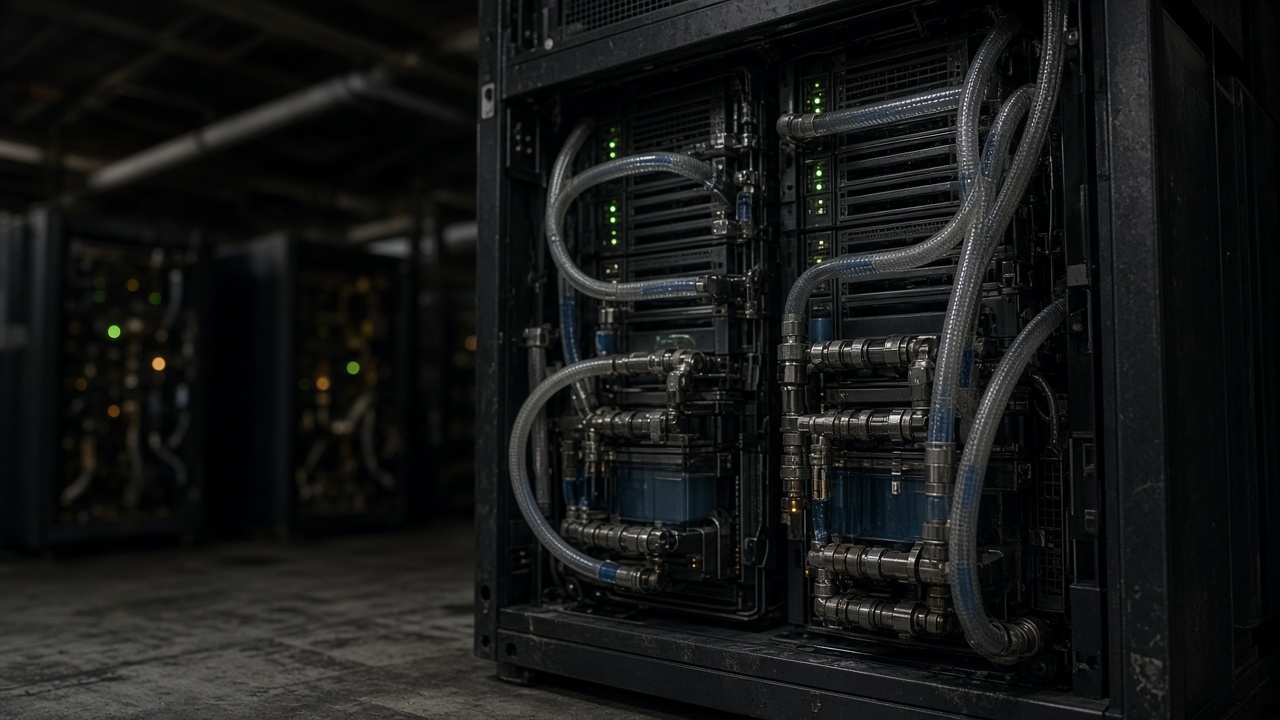
Acer Inc. said its Altos R380 liquid-cooled inference racks earned the Ministry of Economic Affairs’ highest energy label after independent lab tests showed power usage effectiveness below 1.25 in a configured four-rack pod aimed at regional cloud operators.
What the label certifies
Taiwan’s energy label program for data equipment scores products on idle draw, fan curves, and coolant pump efficiency. Acer submitted two configurations loaded with NVIDIA L40S accelerators and AMD EPYC host nodes, representing the bundles it sells to telecom and municipal cloud bidders.
Test reports filed with the Bureau of Energy show the liquid loop cut fan power by roughly thirty percent versus air-cooled Altos generations at the same inference throughput on ResNet-50 benchmarks. The ministry’s panel noted that leak-detection interlocks and quick-disconnect manifolds met updated safety checklists adopted in 2025.
Why liquid cooling matters locally
Taiwan’s chip-adjacent suppliers dominate server assembly, yet many legacy enterprise data halls in Taipei and Taichung still run air-only cooling. Power tariffs and carbon disclosure rules are pushing integrators to quote lower PUE figures when they pitch AI inference pods to banks and hospitals.
Acer’s server group, spun from the PC brand’s commercial division, targets mid-scale buyers that cannot build bespoke immersion tanks but still need credible efficiency paperwork for ESG committees. The energy label gives sales teams a government-backed slide in RFP decks.
Market positioning
Quanta Cloud Technology and Wiwynn Corp. remain larger in hyperscale custom racks, but Acer has found niches in Southeast Asian sovereign cloud projects that want turnkey inference with local service. The labeled SKUs ship from a Taoyuan integration floor where Acer also builds storage appliances.
Competitors noted that labels reflect lab conditions; field PUE still depends on aisle containment and ambient humidity. Acer executives acknowledged the gap but said labeled configurations include airflow guidance for raised-floor installs common in Taiwan financial data centers.
Customer pipeline
Acer declined to name launch customers, citing NDAs with a Taiwan insurance consortium piloting on-prem generative assistants. Industry sources said at least one county government AI sandbox requested quotes after the label announcement, though budgets remain tied to central subsidy approvals.
Maintenance contracts bundle quarterly coolant quality checks, addressing IT managers wary of operating liquid loops without vendor staff on site. Training modules for customer engineers are offered in Mandarin at Acer’s Zhongli service center.
Next steps
The company plans to submit a higher-density GPU configuration for label renewal in 2027 if next-generation accelerators exceed current thermal design power. For Acer’s server unit, the certification is less about consumer brand fame than about proving it can sell efficiency stories—not just laptops—to Taiwan’s cautious enterprise buyers.