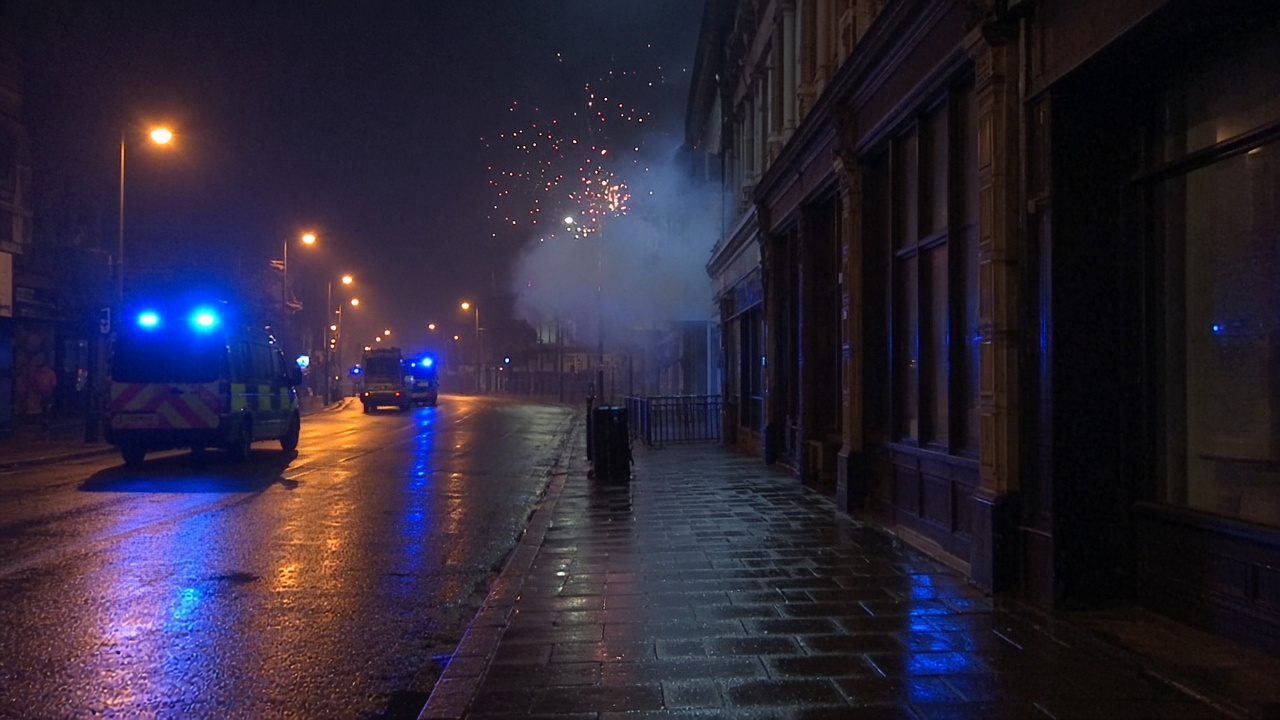
West Midlands Police arrested seven people after fireworks were fired toward officers and vehicles in Birmingham city centre on Saturday night, the force said, deploying extra patrols to prevent a repeat of last year’s Bonfire Night disorder.
Footage circulated on social media showed crowds on Corporation Street with pyrotechnics exploding close to police vans. Chief Superintendent Tom Boyce said officers responded to “pockets of disorder” involving fireworks used in a dangerous manner around Corporation Street and Stephenson Street.
Arrests and offences
Those detained ranged in age from 15 to 26 and were held on suspicion of offences including assault, possession of fireworks and possession of an offensive weapon, the force said. All remained in custody for questioning on Sunday. Police did not identify individuals because inquiries were continuing.
Boyce warned that misusing fireworks is illegal and can lead to fines, arrest and criminal charges. Birmingham had already been on edge after 21 people were arrested on 6 November last year when officers were attacked with fireworks on Dale End and Staniforth Street, incidents that prompted senior officers to promise firm action this season.
Expanded powers
Officers invoked Section 60 of the Criminal Justice and Public Order Act, allowing stop-and-search without reasonable grounds in designated areas while the disorder unfolded. Civil liberties groups often scrutinise such orders, but police argued they were necessary to seize fireworks before they could be aimed at passers-by or transport hubs.
Extra officers were sent to key locations across the city centre, including routes toward New Street station, as Halloween and Bonfire weekend crowds overlapped. Retailers along Corporation Street reported temporary closures while police cleared debris and checked shopfronts for damage.
Context for the city
Firework misuse has become a recurring flashpoint in several English cities, not only Birmingham. West Midlands Police had publicly warned parents and retailers in the days beforehand that supplying fireworks to minors would be targeted. Trading standards teams said they were working with convenience stores to prevent under-age sales, though many of the devices used on streets are bought legally elsewhere and then transported into city centres.
Local councillors urged community leaders to reinforce messages about safe Bonfire Night events at organised displays, which generate fewer emergency calls than street-level pyrotechnics. Ambulance services in the region reported no serious injuries linked to Saturday’s disorder by midday Sunday, though hospital trusts still planned for the traditional spike in burns cases through Bonfire Night itself.
What comes next
Detectives were reviewing body-worn video and social media uploads to identify additional suspects. Boyce said the force would maintain heightened visibility through the weekend, with dogs and public order units on standby if new gatherings form.
For Birmingham’s retail core, the immediate cost is reputational as much as physical: images of fireworks arcing toward police lines travel quickly online, potentially deterring Sunday shoppers even after streets reopen. Police said the city centre was operational again by Sunday morning, but the seven custody blocks show how quickly Bonfire season can escalate from celebration to criminal investigation when projectiles are aimed at officers rather than the sky.