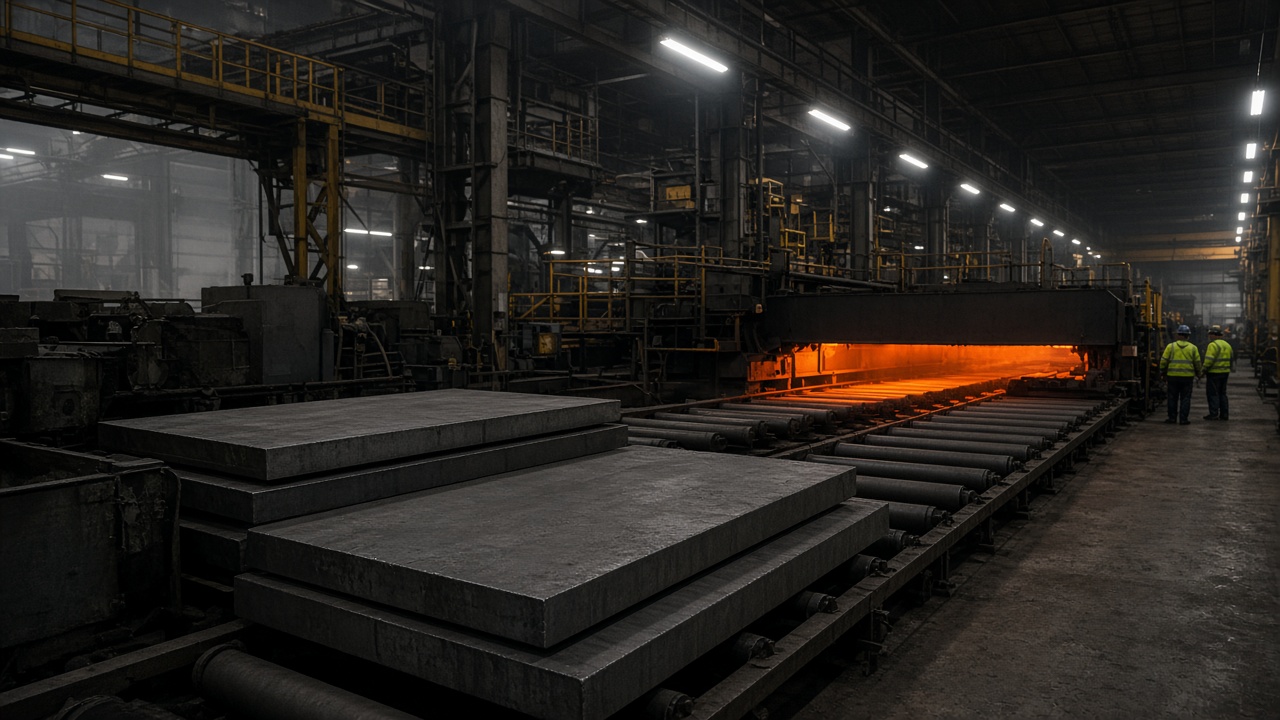
BlueScope Steel lifted spot quotes on XLERPLATE structural plate by forty-five dollars a tonne effective Monday, telling distributors the move follows completion of repairs on a four-day outage at the Port Kembla plate mill.
The notice, circulated to merchant customers on Sunday afternoon, applies to AS/NZS 3678 grade 250 and 350 plate produced at the New South Wales steelworks. Account managers were instructed to reset list prices before the first Sydney-session deliveries on Monday, according to two distributors who received the memo. A third merchant said BlueScope tied the increase explicitly to lost tonnes during the hydraulic fault rather than to a fresh iron ore surcharge, which matters for buyers trying to separate mill disruption from raw-material swings.
Outage drove tight supply
A hydraulic fault on the plate mill’s finishing line forced a controlled shutdown last Tuesday, trimming weekly plate output by an estimated eighteen thousand tonnes, one distributor said. Maintenance crews replaced a failed pump set and recertified the line overnight Saturday, allowing hot trials to resume before the Sunday pricing reset. During the outage, some fabricators switched to thinner-gauge coil where engineering permits allowed, but bridge and heavy-industrial jobs that require certified plate had few substitutes without waiting on import vessels.
BlueScope did not publish a public price list; Australian plate is typically quoted through distributors rather than on an exchange. The company’s half-year outlook, released to investors, already flagged plate-mill upgrade work and a shift from low-margin export tonnes toward domestic construction demand. Internal planning slides shown to analysts in September noted that domestic plate margins had improved relative to bulk hot-rolled coil sold into Southeast Asia, giving Port Kembla an incentive to protect local supply even when export arbitrage looked thin.
Merchant stocks in Sydney and Newcastle were already lean before the pump failure, according to inventory surveys from two service centres. One said its yard held roughly ten days of fast-moving grades versus a normal fifteen-day cover, which meant the outage hit spot buyers before any buffer could absorb the gap.
Construction buyers feel the pass-through
Fabricators on the east coast said the increase landed just as tender packages for warehouse and bridge jobs were being repriced for November starts. One Newcastle steel service centre said it would pass the full forty-five dollars through on spot orders while holding contract tonnes that were fixed before the outage. Another Brisbane cutter quoted a forty-dollar rise on cut-to-length orders, citing freight on top of the mill circular.
Import offers from northeast Asia remain competitive, but lead times on seaborne plate have stretched after recent anti-dumping activity on certain flat-rolled products. BlueScope’s submission to the Anti-Dumping Commission argued that undercut Korean offers had already influenced domestic pricing during the investigation period. Buyers who pivoted to imports during the outage said documentation for traceability and weld procedure requalification added weeks, which made the spot surcharge easier to accept on urgent civil jobs.
Engineering firms on the Pacific Highway upgrade corridor said they would absorb the increase inside contingency lines for now, but warned that repeated plate shocks would flow into December bid prices. Residential high-rise contractors, already juggling labour costs, said they would seek indexation clauses on any new structural packages signed after Monday.
What happens next
Distributors expect BlueScope to review the surcharge after two full production weeks. If the plate mill hits nameplate output and iron ore costs stay near recent levels, some merchants said a partial rollback is possible before Christmas shutdowns. For now, buyers budgeting structural steel for December pours should assume the higher spot base until BlueScope sends its next circular.
Investors will watch December shipment data for signs that export tonnes were cannibalised to refill domestic plate orders. Union delegates at Port Kembla said overtime rosters were cleared for the next fortnight to rebuild order backlogs, a signal the mill treats the outage as a temporary hole rather than a longer capacity cut. If overtime slips or a second mechanical fault appears, merchants said the forty-five-dollar lift could harden into a quarter-end baseline rather than a one-off recovery charge.