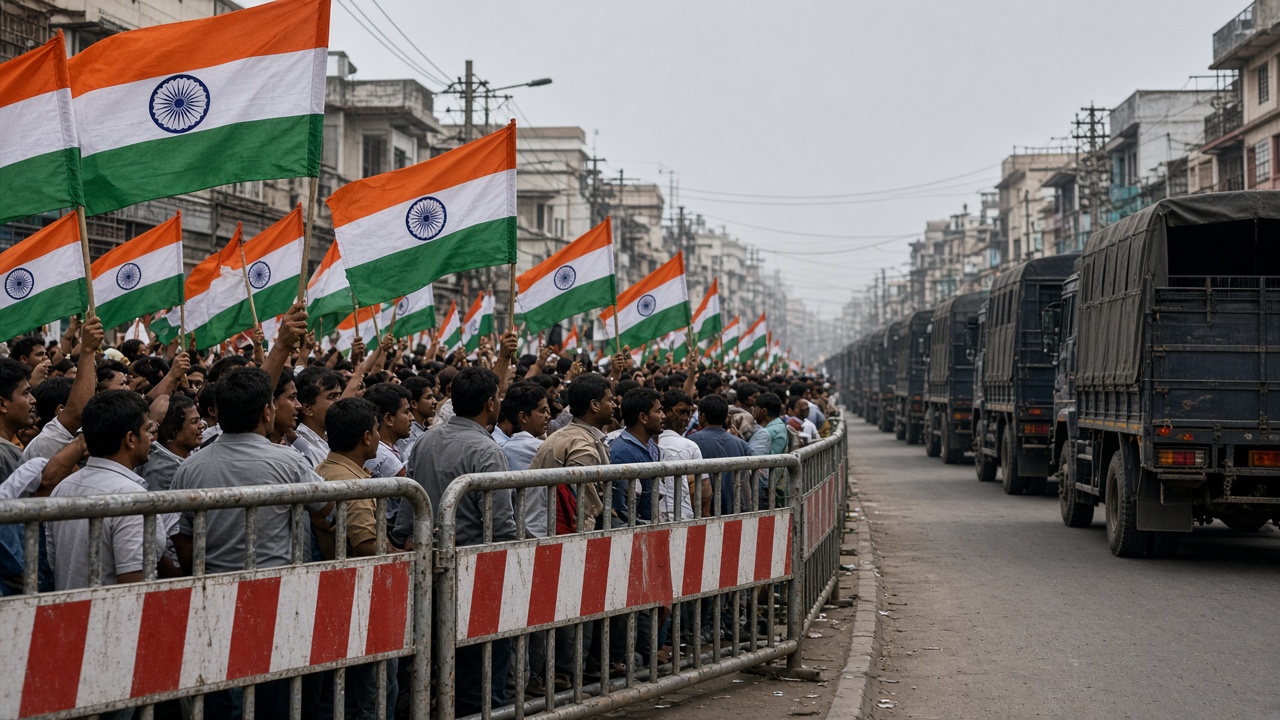
India’s opposition INDIA bloc filled Ramlila Maidan on Sunday with a “Chalo Dilli” rally demanding the resignation of Chief Election Commissioner Gyanesh Kumar, while the ruling Bharatiya Janata Party staged counter-marches on the anniversary of the 1984 anti-Sikh riots and deployed nearly 10,000 police and paramilitary personnel across central Delhi.
Congress leader Rahul Gandhi rode in an open jeep toward the maidan alongside Sonia Gandhi, West Bengal Chief Minister Mamata Banerjee, and Samajwadi Party chief Akhilesh Yadav, waving to supporters who had waited since morning behind metal detectors. The Indian Youth Congress asked participants to wear white to symbolize voters allegedly marked dead or deleted in the revision exercise, which the Election Commission says is meant to purge duplicate and relocated entries.
Two marches, one calendar
Delhi police granted permission for the opposition rally but imposed conditions: no march beyond the designated ground, CCTV coverage, and a hard stop at 5 p.m. Traffic police closed key arteries from Netaji Subhash Marg to ITO from 10 a.m., snarling Diwali shopping in Chandni Chowk barely a kilometer away. Traders there split over the disruption—some closed shops in solidarity, others blamed both parties for hitting sales during the festive week.
The BJP’s parallel program framed the day differently. Party workers marched in west Delhi from Hari Nagar toward Tilak Nagar metro station to honor victims of the 1984 violence, accusing the Congress of insulting Sikh memory by scheduling its rally on the same date. BJP president J.P. Nadda led a separate “Loktantra Bachao” procession in Rohtak, Haryana, mirroring the government’s claim that the opposition was destabilizing institutions.
Charges against the election chief
On Saturday the INDIA bloc held a symbolic “public impeachment” of Kumar, adopting six charges including conspiring with the BJP and deleting 13.2 crore voter entries through the Special Intensive Revision. Kumar and the commission deny bias; the BJP calls the allegations “vote theft” rhetoric designed to mask the opposition’s electoral weakness ahead of state polls.
Inside the maidan, speakers repeated demands for Kumar to step down before the next round of revision hearings. Rahul Gandhi told the crowd that shopkeepers near Connaught Place had been pressured to close—a claim the BJP rejected as fabrication. Organizers said they hoped for lakhs of attendees, though senior police officers told reporters they expected closer to 50,000 given seating layouts and security enclosures that reduce standing capacity.
Security and what comes next
Delhi Police, Central Reserve Police Force, and Rapid Action Force units manned barricades to prevent any spillover toward Jantar Mantar, where Gen Z-led protests were violently broken up on 10 October. Officers said they would enforce the 5 p.m. deadline to avoid a repeat of those clashes. Paramilitary teams also watched BJP routes in west Delhi to keep rival processions apart.
The immediate political test is whether Sunday’s show of opposition unity translates into parliamentary numbers for an impeachment motion, which requires a two-thirds majority the bloc does not currently hold. For voters removed from draft rolls, the more concrete deadline is the commission’s ongoing revision schedule in Bihar and other states, where court challenges are already piling up. Until those cases move, Delhi’s streets may stay loud—even when the maidan empties.