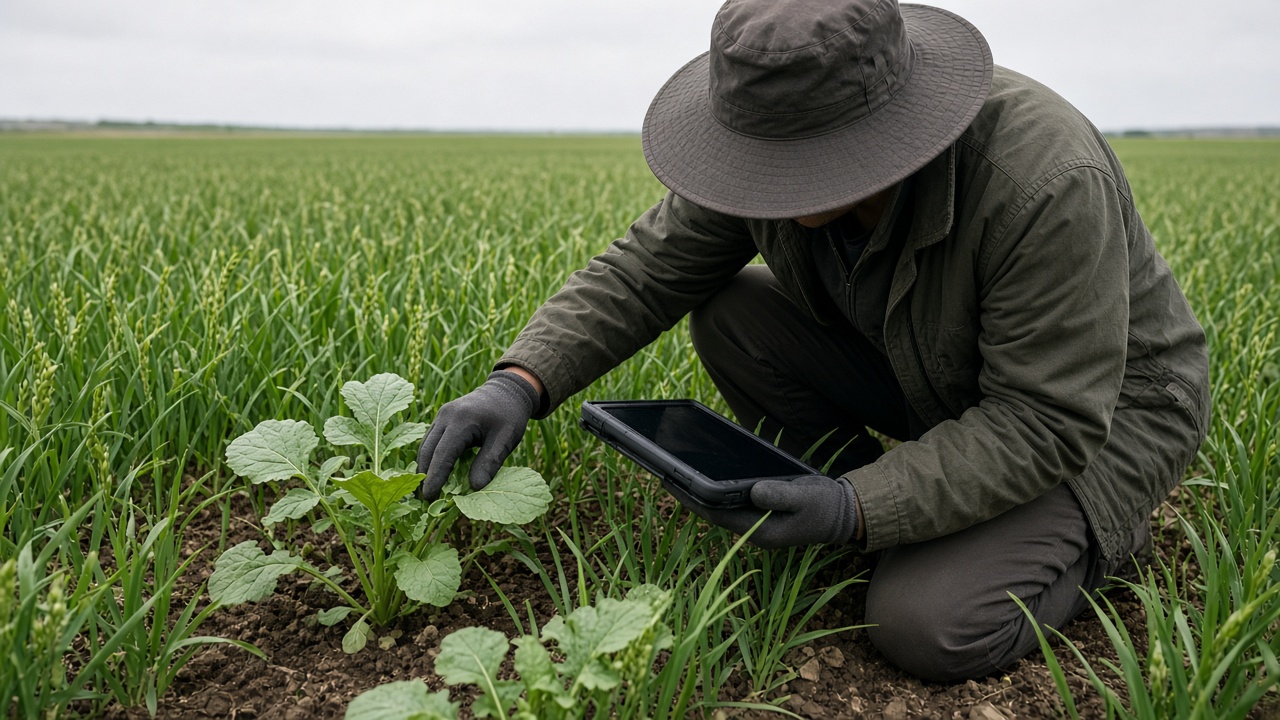
CSIRO open-sourced a compact vision model that identifies twelve high-priority crop weeds from smartphone photos, training the weights on labelled images from Victorian field plots collected over two growing seasons.
The release, posted to the agency’s code repository Sunday, targets agronomists and extension officers who work in areas where mobile coverage drops out mid-paddock and cloud upload is unreliable. The download bundle includes inference code, model weights, and a field checklist for lighting and distance so users capture images the training set actually saw.
Built for offline paddocks
The model runs on a mid-range laptop or tablet without calling external APIs, a deliberate choice after pilots in the Wimmera and Mallee showed consultants refused tools that required live connectivity. Weights come in under four hundred megabytes so they can ship on USB sticks during field days. Pilot agronomists reported sub-second inference on a three-year-old rugged tablet once images were cropped to the agency’s recommended frame.
Accuracy on held-out Victorian images averaged ninety-one percent on the twelve species, including fleabane, sow thistle and annual ryegrass populations that cost grain growers millions in lost yield and herbicide spend. False positives clustered on frost-damaged leaves, which the readme flags as a known edge case rather than hiding behind headline accuracy.
Training images were captured at consistent times of day where possible to reduce shadow bias; CSIRO said future retrains will add dawn and dusk frames because consultants often walk paddocks outside mid-morning windows.
Limits the agency stresses
CSIRO cautions the model is not a substitute for laboratory seed testing or regulatory submissions. It can misclassify stressed plants after frost or waterlogging, and it was not trained on northern pasture weeds. Export hay growers near ports were told not to rely on the tool for phytosanitary paperwork without lab confirmation.
Developers included uncertainty flags in the output so users see when the softmax score drops below seventy percent—a cue to collect a physical sample rather than spray on autopilot. Extension trainers plan to demo those flags at November workshops so growers understand a low score means “send a sample,” not “guess and spray.”
Herbicide resistance groups welcomed the open licence but noted resistance status still requires separate testing; identifying ryegrass visually does not reveal which chemistry still works on a given paddock.
Adoption path
Agriculture Victoria said it would demo the tool at November extension workshops, while private agritech vendors are free to embed the weights under the published licence. CSIRO plans a summer retrain with South Australian plots once harvest imaging wraps up.
Universities running plant-science courses said they would add the model to field practicum kits so students compare human IDs with machine output on the same row. If the South Australian retrain lifts accuracy on border-region weeds, CSIRO may publish a version two weights file without changing the inference code, lowering the upgrade burden for vendors who embedded version one.