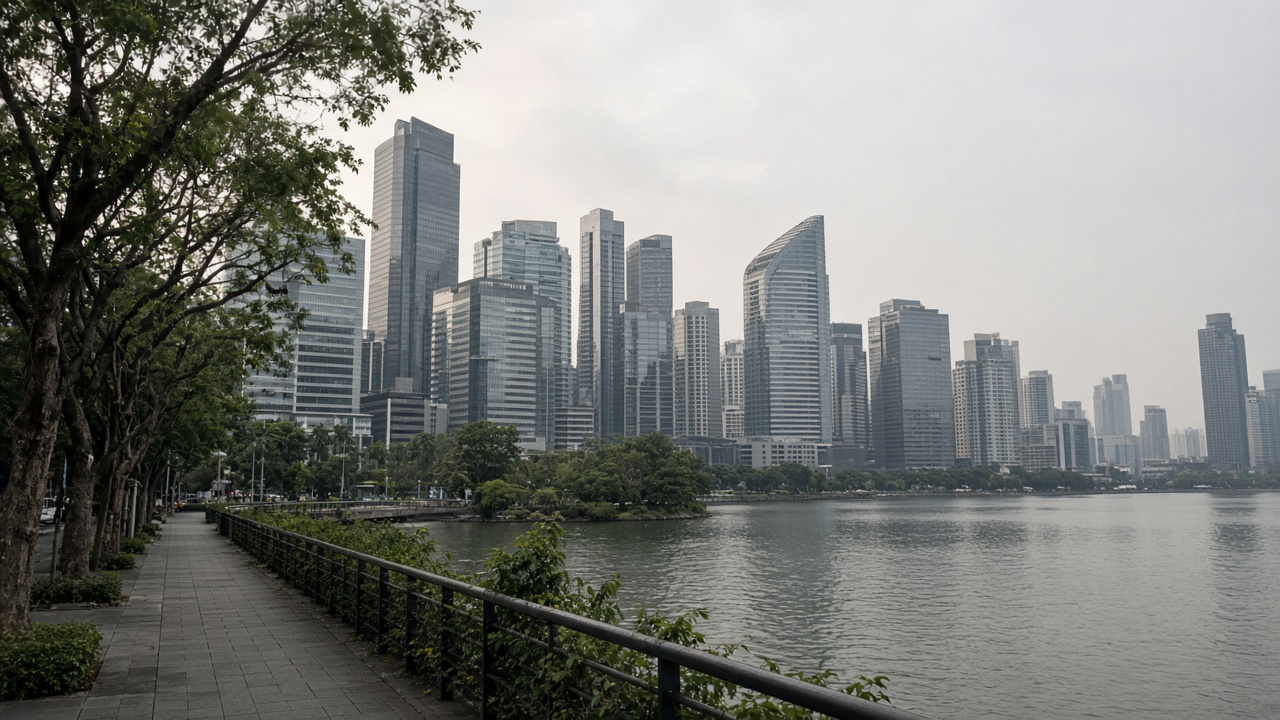
DBS Group Holdings shares slipped 0.9 percent to S$73.13 on Friday, matching the drag on the three local banks as the Straits Times Index fell 19.29 points, or 0.4 percent, to close October at 5,376.74. The month-end session was dominated by semiconductor and AI-linked losses after U.S. megacap earnings shook Wall Street, pulling Singapore equipment names lower even as REITs and some consumer counters posted gains.
Index and liquidity
Friday’s decline capped a choppy October that still left the STI well above levels seen earlier in the year. Mapletree Logistics Trust rose 2.8 percent to S$1.10 and led gainers among the thirty-component gauge, while Wilmar International fell 3.2 percent to S$3.01 as the weakest blue chip. OCBC ended 0.2 percent lower at S$29.29 and UOB shed 0.3 percent to S$41.37 alongside DBS. Volume on the broader market exceeded 242 million shares on the STI session according to exchange data, with losers outpacing gainers across the midcap board.
Chip supply chain hit
AEM Holdings closed 8.6 percent lower at S$7.45, UMS Integration lost 7.8 percent to S$2.01 and newly listed Mi Material dropped 16.1 percent to S$1.51 after a U.S. tech selloff sparked by Alphabet’s largest one-day drop since its listing and a weak outlook from Intel, a longtime customer for test gear. Analysts on local desks linked the moves to profit-taking on AI narratives as much as to Singapore-specific order books. Frencken Group and PC Partner also finished lower, extending a month in which several semiconductor names are down more than twenty percent from their recent peaks.
Bank read-through
DBS’s modest slip came despite net interest margin commentary that remains supportive in third-quarter previews from regional brokers. Investors treated Friday’s move as beta to global tech rather than a statement on asset quality. Wealth-management inflows tied to Hong Kong and regional diversification have underpinned DBS’s market capitalisation above S$200 billion; Friday’s price still sat near record territory even after the daily loss. Traders noted that bank options activity was light ahead of November U.S. jobs data and the next AMD earnings call, which local semiconductor analysts flagged as a secondary risk for Singapore peers.
October scorecard
The STI’s October finish at 5,376.74 compares with a September peak above 5,750, meaning the gauge gave back part of its third-quarter rally without breaking the uptrend that began after mid-year rate-cut hopes. REITs benefited from falling Singapore dollar yields on some sessions, while commodity-linked names tracked palm oil and iron ore swings. Seatrium and offshore marine counters were not the primary drag on Friday but remain on watchlists after earlier volatility when oil services orders shifted.
What comes next
Fund managers heading into November said they would split exposure between defensively yielding banks and selectively traded chip packagers with visible HBM or advanced packaging revenue. DBS shareholders face an ex-dividend window later in the quarter; income funds that bought banks for yield treated Friday’s dip as noise. For retail investors on the OCBC and DBS mobile platforms, the actionable detail is position sizing: the STI’s top five names still account for a large share of index moves, so a tech rout will continue to surface in apparent “bank days” even when loan books are quiet.
FX and regional flows
The Singapore dollar’s moves against the yen and won influenced how offshore funds hedged Friday’s session; dealers said real-money accounts trimmed Asia tech beta while keeping dividend plays in telcos and REITs. DBS treasury desks benefit from volatility but do not guide stock price day to day. Cross-listings such as Hongkong Land and Jardine Matheson added minor drag as property sentiment in Greater China stayed cautious. None of that displaced semiconductors as the session narrative, yet it explained why the STI did not fall as sharply as Seoul benchmarks that are heavier in memory chips. Wealth clients asking relationship managers about rotation into Singapore banks heard the same message: dividends remain intact even when global tech wobbles.