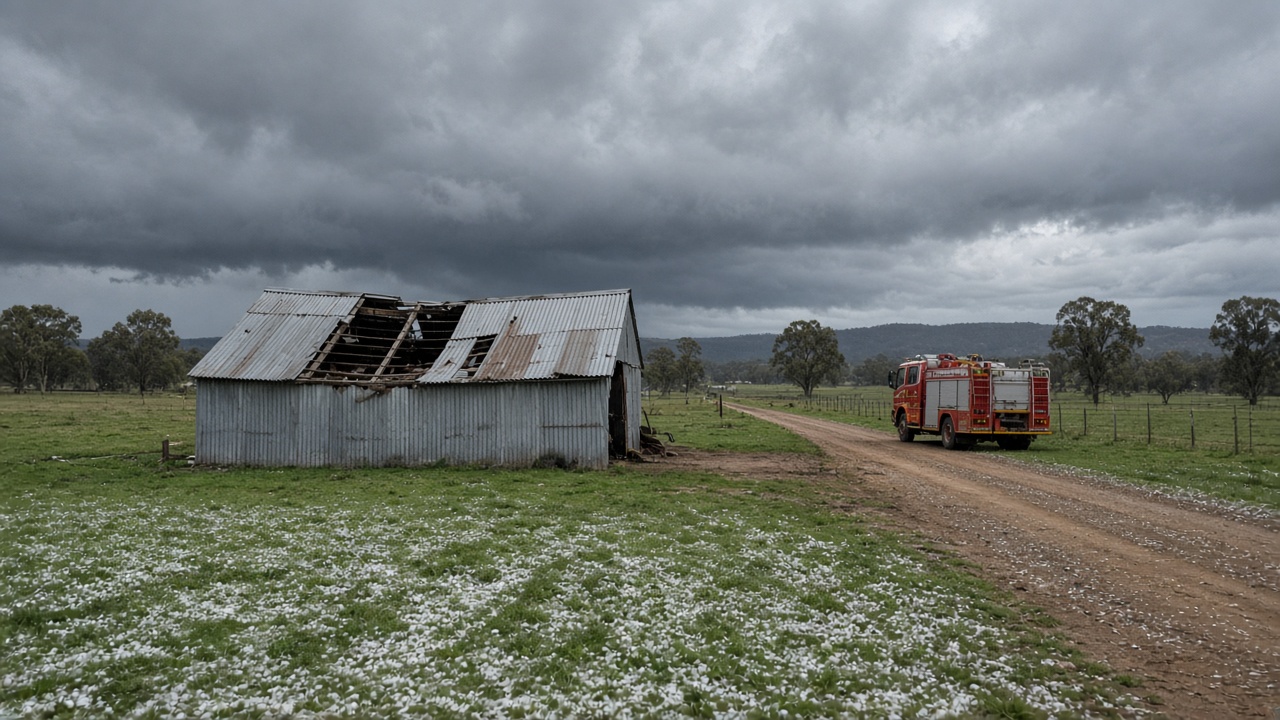
A tornado-like storm cell tore roofs from buildings, snapped trees and pelted the small Southern Tablelands settlement of Good Hope with golf-ball-sized hail on Saturday afternoon, according to residents and footage released by the New South Wales Rural Fire Service.
The community sits about 12 kilometres outside Yass, roughly midway between Canberra and the NSW south-west slopes. Emergency services said the cell moved quickly through a lightly populated grazing district where many properties rely on tank water and metal roofing that is vulnerable to hail impacts and wind uplift.
What residents saw
Video distributed by the Rural Fire Service shows twisted sheet metal, flattened paddock fences and debris scattered across access roads. No deaths had been reported by Sunday afternoon, but local volunteers were still cataloguing structural damage house by house because mobile coverage in the area can be patchy during storms.
NSW State Emergency Service units were placed on standby across the broader Yass Valley as follow-up thunderstorms remained possible. The Bureau of Meteorology had warned that spring heat over inland NSW could fuel supercell development when a cold front approached from the west, a pattern that often produces short-lived but intense wind damage on the Tablelands.
Why the label matters
Meteorologists caution that “tornado-like” damage does not always mean a classic funnel cloud touched down. Survey teams may take days to confirm a tornado rating using radar archives and ground tracks. Even without a formal rating, the outcome for farmers and smallholders is the same: compromised shelter for livestock, water ingress into hay sheds and insurance assessments that can stretch into harvest season.
Good Hope is not a major town centre, which means recovery depends heavily on neighbouring brigades and council road crews rather than a dense network of contractors. Yass Valley Council said it was opening its disaster coordination line for residents who needed help clearing fallen trees from public roads.
Broader storm week
The cell arrived during a week of volatile weather across eastern Australia. Central Australia saw deadly flood rescues near remote communities, while other NSW districts reported large hail without the same wind damage. Insurers said it was too early to estimate aggregate claims from Good Hope alone, but brokers were already fielding calls about roof replacements and damaged solar arrays.
Federal and state disaster relief rules hinge on whether an event is declared an eligible natural disaster, a process that requires verified damage thresholds. Until then, primary producers can lean on existing farm hardship programs, but those pathways move slowly compared with the immediate need to tarp exposed rooms before the next rain band.
Next steps on the ground
Rural Fire Service captains said aerial reconnaissance would continue while ground crews door-knock isolated properties. Power distributor Essential Energy reported no major network outages tied to the cell by Sunday morning, though individual connections on long rural feeders may still fail if poles were leaning after the hail burst.
For now, the picture from Good Hope is one of sudden violence in an otherwise quiet grazing district: roofs peeled back, hail stones littering paddocks like white gravel, and emergency services urging anyone who saw further damage to log it through the SES hotline so the next forecasted storm does not catch repair crews off guard.