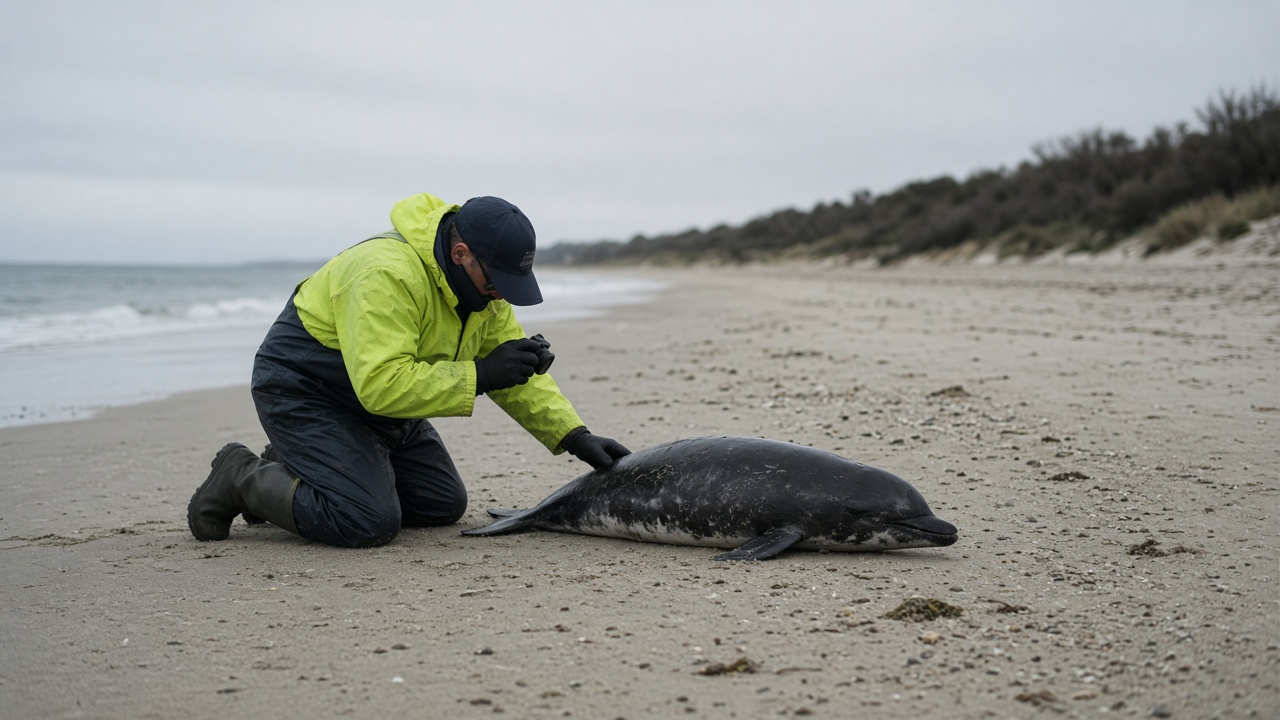
South Australia's chief veterinary officer confirmed Saturday that a dead common dolphin washed ashore at Encounter Bay on the Fleurieu Peninsula had tested positive for H5 bird flu, marking the second dolphin detection in the state and pushing confirmed H5 events to 340 since the virus arrived in local wildlife in mid-2026.
What authorities found
Dr Skye Fruean said the animal was reported this week near Victor Harbor and that laboratory testing returned a positive result for the same H5 subtype circulating in wild birds along the state's coast. South Australia counts "events" rather than individual animals, meaning one event can cover multiple birds or mammals at a single location; the dolphin case stands alone but adds to a tally that now includes crested terns and other species.
Fruean told ABC Radio that the risk of a large dolphin die-off remains low. "You're not going to see a big die-off of dolphins from bird flu," she said, describing the likely route as a chance encounter with an infected wild bird rather than sustained transmission within pods. She said land-based marine mammals such as seals and sea lions remain a higher concern because they haul out near colonies where avian outbreaks have already been severe.
How the outbreak is trending
State updates show 2,874 diagnostic tests conducted since 1 January and more than 15,800 reports to the Emergency Animal Disease Hotline since 20 June. No H5 infections have been detected in poultry or other livestock in South Australia, and health officials maintain that the risk to the general public is low.
Fruean said officials have been "really pleased" to see a slowdown in the frequency of new positives, even though detections continue weekly. She noted significant impacts on crested tern populations but no recent events involving mass mortality across multiple species at one site.
Public health and reporting
The Department for Environment and Water urges residents not to touch sick or dead birds or marine mammals and to keep pets away. Suspected cases should be reported to the national hotline at 1800 675 888 with date, time, location and species information.
Clinical signs in infected wild mammals can include incoordination, tremors, seizures, breathing difficulty and sudden death. The state's birdflu.sa.gov.au portal maps confirmed events and stresses that H5 has not become established in commercial poultry anywhere in Australia, though agricultural agencies treat every wildlife detection as a sentinel for potential spread to farms.
Vaccination push near Encounter Bay
While the dolphin case drew headlines, wildlife managers are focused on preventive work across the same coastline. A captive vaccination program has finished for selected birds at Cleland Wildlife Park and is halfway complete for birds housed at Zoos SA facilities.
Authorities plan to expand shots to wild little penguin populations at three locations, including Granite Island off Victor Harbor, where an estimated 46 adult penguins remain after years of drought and dog attacks thinned the colony. Vaccination teams say the goal is to protect a species that nests within kilometers of beaches where terns and gulls have already carried H5.
What happens next
Biosecurity teams will continue testing stranded marine mammals and seabirds, with Fruean promising transparent weekly updates. Fisheries and tourism operators at Encounter Bay have been briefed to treat any new carcass as a reportable event rather than a private cleanup task.
Federal agriculture officials coordinate with South Australia because a sustained mammal-to-mammal chain could trigger tighter movement rules for livestock exports, even without a farm detection. For now, the dolphin case reinforces guidance issued since June: the virus is present in the environment, vigilance matters, but household risk remains low if people avoid contact with wildlife.