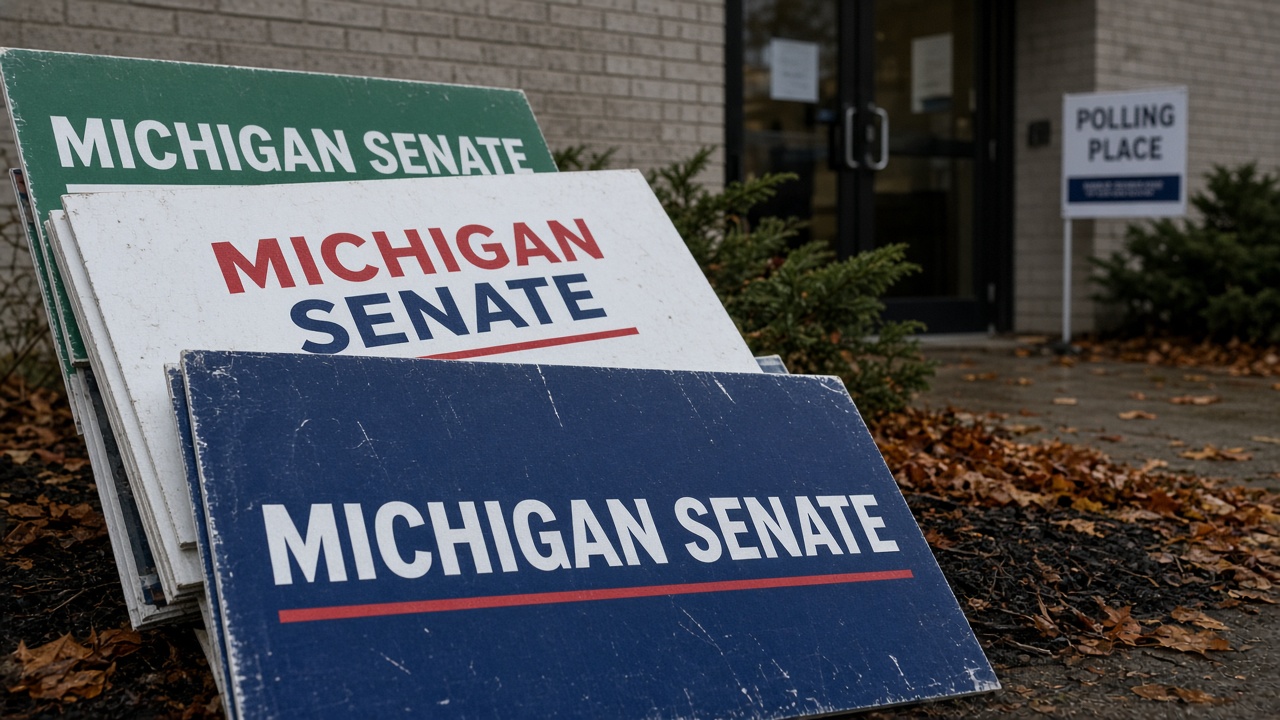
Rep. Haley Stevens, a Michigan Democrat who represents Detroit’s northern suburbs, endorsed Republican Mike Rogers for U.S. Senate on Sunday, a late break that party officials in both camps said could reshape a race tied to control of the chamber with four days left before the midterm election.
Stevens, who won a competitive primary against Abdul El-Sayed after a bruising summer of mailers and debates, told supporters in a statement that Rogers would “protect Michigan workers and keep the auto supply chain competitive.” El-Sayed’s allies called the move a betrayal of the coalition that elevated Stevens in August; Rogers’s campaign said it welcomed “any Michigander who wants secure borders and stable factory jobs.”
Why the endorsement landed now
The Senate contest between Rogers, a former House Intelligence Committee chairman, and El-Sayed, a progressive physician who led Detroit’s health department, has stayed within polling error for weeks. Democratic leaders had counted Stevens as a surrogate for El-Sayed after she cleared the primary, but tensions spilled into public view when Stevens was dropped from a get-out-the-vote rally in Oakland County, according to two organizers who spoke on condition of anonymity because they were not authorized to discuss internal scheduling.
Stevens did not join the GOP. She framed the endorsement as a judgment about who could win in November and deliver for autoworkers facing tariff uncertainty. “This isn’t about national Twitter fights,” she said in her statement. “It’s about who can sit across from the White House and the Big Three and keep investment here.”
What Republicans and Democrats say changes
Republicans need a net gain of one seat to reclaim the Senate majority if they hold the vice presidency, or two if they do not. Michigan is one of a handful of states where both parties are spending on television into the final weekend. Rogers has campaigned on border security and energy costs; El-Sayed has emphasized abortion access and manufacturing credits in the Inflation Reduction Act.
Democratic Senatorial Campaign Committee officials declined to say whether Stevens would face formal consequences, but one senior strategist said the endorsement “complicates turnout math in Macomb,” the swing county north of Detroit. Rogers’s team said it would cut a digital ad featuring Stevens by Monday morning.
What happens next
Early in-person voting in Michigan continues through Sunday, and election officials expect heavy turnout on Tuesday. Stevens said she would still vote for Democrats down the ballot and would not campaign alongside Rogers, but her name and likeness could appear in his materials unless she objects in writing. El-Sayed scheduled a Monday press conference in Detroit to respond; Rogers planned a closed-door fundraiser in Grand Rapids the same evening.
Party strategists in Washington will watch whether Stevens’s move encourages other cross-pressured Democrats in industrial states to break with their nominees, or whether it remains a single-state shock driven by a personal primary feud.