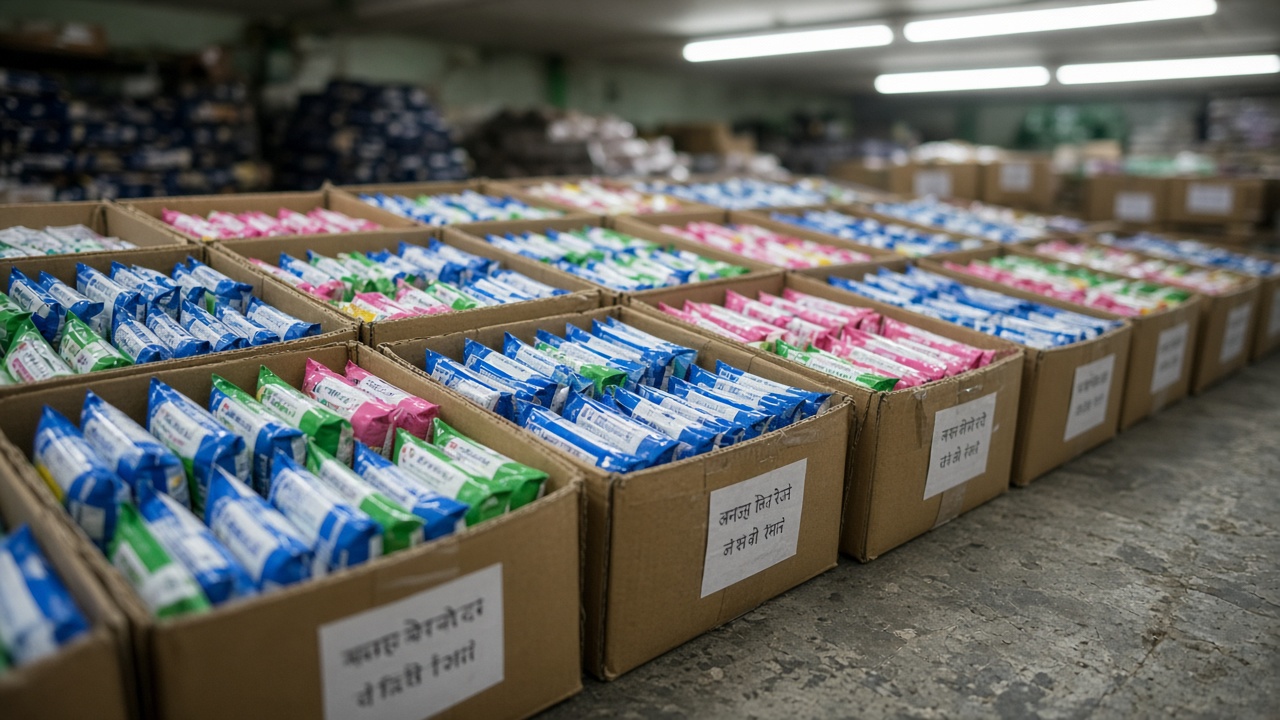
Hindustan Unilever is repacking several mass-market detergent SKUs in smaller sachets and refreshed bar codes so a recent goods-and-services tax slab shift does not show up as a visible price jump on kirana shelves, according to trade circulars distributors began circulating over the weekend.
What changed on the tax line
Consumer companies had weeks to map which household cleaners moved into lower GST brackets after the September rate rationalisation. For detergents sold in one-rupee and five-rupee sachets, the effective tax saving is meaningful only if pack weights and declared prices align with the new slabs. HUL’s answer is to adjust gram weights and outer-carton counts while keeping the printed maximum retail price unchanged on key lines, distributors in Uttar Pradesh and Maharashtra said.
The move is as much about compliance as about psychology. Rural and semi-urban households often buy detergents in single-use sachets; a five-paisa or ten-paisa move on a one-rupee pack reads louder than the same percentage change on a two-kilogram box. By repacking rather than re-stickering, HUL avoids a burst of consumer complaints while still passing through the tax benefit where regulators expect it.
Supply chain timing
Two large distributors said fresh cartons started leaving HUL depots in Haridwar and Silvassa in the last week of October, timed to reach wholesalers before Diwali stocking peaks. Modern-trade partners received parallel SKU master updates through the company’s retailer portal. A Mumbai-based wholesaler said old inventory is being exhausted first, with repacked stock tagged through new batch numbers on case labels.
Competitors are watching closely. ITC and Nirma have not announced identical repacks, but trade associations in Gujarat said smaller regional brands are evaluating gram-weight tweaks on economy sachets. If HUL’s approach sticks, it could set an informal template for how large FMCG firms handle micro-price GST transitions without headline price cuts.
Investor read-through
For equity investors, the story is margin-neutral to slightly positive. HUL does not need to fund a broad MRP reduction campaign; instead it absorbs repacking costs that are far smaller than a brand-wide price war. Volume growth in sachets has been soft this year as rural wage growth cooled, so holding shelf prices steady while improving unit economics may help volume without eroding brand premium on larger packs.
Analysts on the sell side said the repack is unlikely to move consolidated revenue guidance on its own, but it signals disciplined execution on a policy change that tripped up smaller players in prior GST rounds. HUL shares were little changed in Friday’s session, in line with the broader FMCG index.
What retailers should watch
Kirana owners should expect mixed cartons for a few weeks as old and new batches overlap. Point-of-sale systems that scan older bar codes may need manual overrides until master data updates propagate. HUL’s field teams have been asked to prioritize high-turnover outlets in tier-two towns where sachet mix is highest, one distributor said.
Regulators have not flagged the repack as problematic so long as declared weights and tax invoices match. Consumer affairs bureaus in two states said they will spot-check sachet grammage after festival sales, a routine step when pack sizes shift.
Tax pass-through audits
Chartered accountants advising kirana federations said GST input credits on repacked cartons must reconcile with outbound invoices; mismatches trigger notices even when consumer prices stay flat. HUL’s distributor notes include batch-level tax breakdowns to simplify retailer filings during the November return cycle.
Export-oriented detergent lines are unaffected; the repack applies to domestic sachet SKUs that dominate rural numeric distribution. Urban modern trade already saw larger-pack tax adjustments in September.
Modern-trade chains scanned repacked SKUs without major point-of-sale downtime after HUL pushed SKU masters over EDI on October 28. Rural wholesalers relying on manual registers may take longer to reconcile old bar codes sitting in back rooms.
Market participants and local officials will update guidance as more data arrives through the week; check primary sources linked above before acting on single figures quoted in early reports.