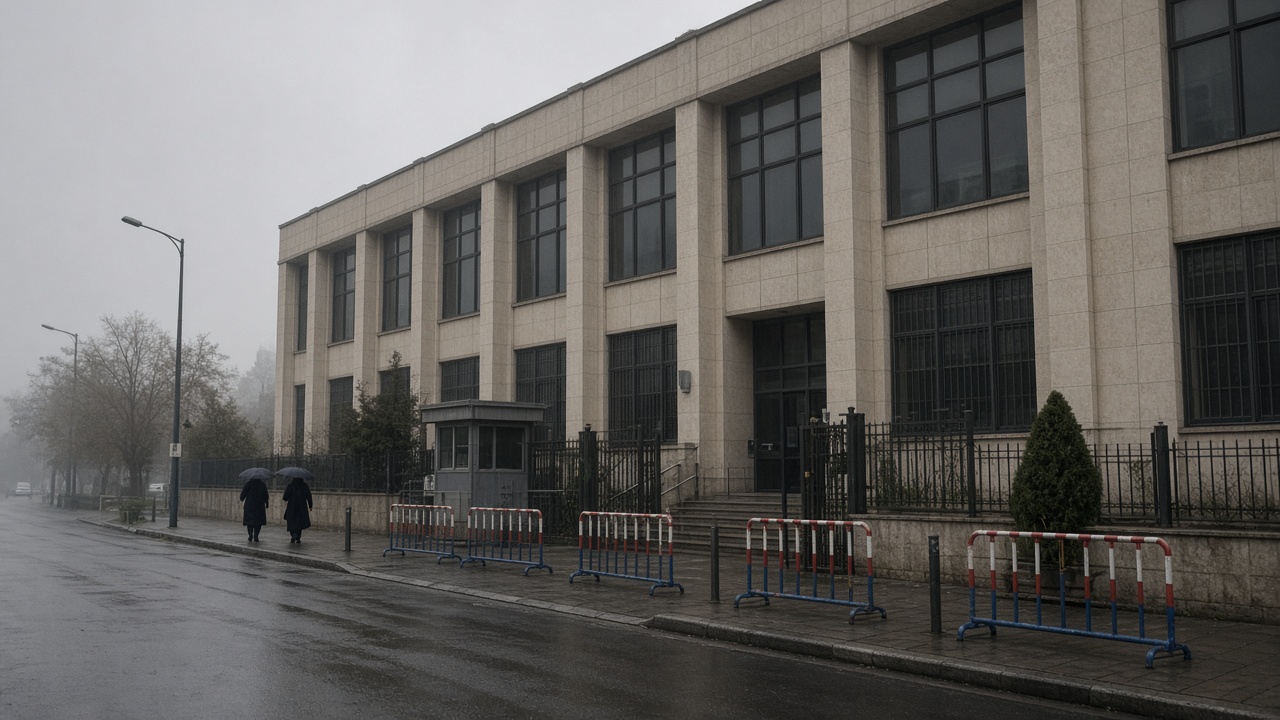
Tehran designated Britain’s Royal Navy and Royal Air Force as terrorist organizations and classified MI6 as a hostile group on Sunday, the Iranian foreign ministry said, framing the step as a direct answer to London’s listing of the Islamic Revolutionary Guard Corps under the State Threats Act 2026.
The ministry said the measures took effect when the statement was published and rested on a Supreme National Security Council resolution. Officials tied the move to Britain’s July 13 decision to treat the IRGC as a threat to national security and to what they described as British participation in the U.S.-Israeli war against Iran, including access to bases and logistics facilities under UK jurisdiction.
What Tehran changed on the books
Under the published order, MI6 falls under Iran’s law on intensifying penalties for espionage and cooperation with hostile states, listed as a hostile group rather than a terrorist organization. The Royal Navy and RAF are covered instead by Iran’s countermeasure law linked to the U.S. designation of the IRGC, which Tehran now applies to the two services as terrorist entities.
Foreign Minister Seyed Abbas Araghchi had told Al Jazeera a day earlier that Iran had no plans to meet U.S. officials while consultations with Qatari and Pakistani mediators continued. Sunday’s UK-focused step adds a separate axis of escalation between Tehran and a European permanent member of the UN Security Council at a moment when G20 foreign ministers in Atlanta failed to issue a joint communique over divisions on Ukraine and Iran.
London’s July IRGC listing
Britain’s State Threats Act route marked a sharp break from prior EU-wide hesitation over proscribing the entire IRGC. Iranian statements on Sunday repeatedly cited that July designation as the trigger, alongside allegations that UK territory was used to support strikes on Iran. London has not yet published a full public response to the reciprocal labels at the time of this bulletin.
Legal scholars note that national terrorist lists are political instruments as much as court findings. Iran’s ministry nonetheless insisted the reciprocity was consistent with international law and warned that Britain would bear responsibility for consequences—a phrase diplomats read as cover for further banking, travel, or detention policies affecting UK nationals or flagged vessels.
Operational questions for shipping and bases
The Royal Navy maintains a persistent Gulf presence through Combined Maritime Forces and bilateral exercises; the RAF flies tanker and surveillance missions across the Middle East from bases that include Cyprus and Oman. Tehran did not spell out enforcement mechanics in the initial statement, leaving open whether Iranian ports, airspace controllers, or militia-linked trackers would treat flagged units as lawful targets or simply as barred from Iranian-controlled facilities.
MI6 officers operate under diplomatic cover; a hostile-group label could complicate any thin cover arrangements and increase risk for local fixers Tehran already prosecutes under espionage statutes. Insurance underwriters and flag registries will watch for secondary sanctions language in coming days, especially if Iran mirrors U.S.-style asset freezes on institutions that transact with listed entities.
Regional context after Atlanta
The UK step lands while U.S. Secretary of State Marco Rubio told reporters after the G20 session that participants were far from universal solutions on Hormuz navigation, Black Sea grain corridors, and critical minerals. Iran’s designation of British services does not replace those supply-chain fights, but it gives hardliners in Tehran a domestic win and may stiffen British backing for continued IRGC sanctions in any future European coordination.
Araghchi’s separate insistence that Tehran is not seeking meetings with Washington suggests Iran wants bargaining room through mediators rather than a quick bilateral thaw. Sunday’s UK blacklist is the kind of reciprocal gesture that keeps escalation bounded to symbolism—until an incident at sea or an arrest in Tehran tests whether the labels have teeth.