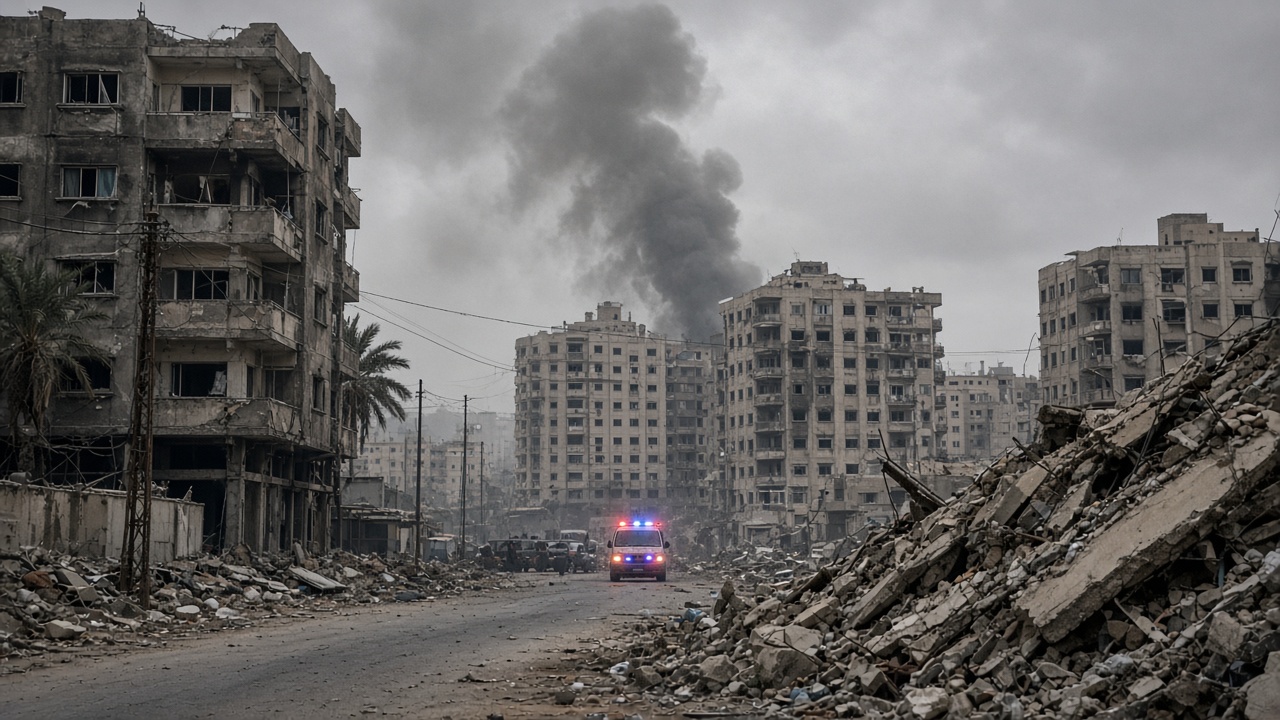
Israeli airstrikes killed at least eight Palestinians in two separate attacks on Sunday, according to hospital medics and the Hamas-run interior ministry in Gaza, puncturing a weekend in which diplomatic attention had shifted toward localized ceasefires and Black Sea shipping talks far from the strip.
Medical workers said an Israeli strike in Gaza City killed three people. In a second attack, the interior ministry said five police officers died in western Khan Younis, in the southern part of the enclave. The ministry did not immediately publish further details on targets or weapons used, and the Israel Defense Forces had not issued a detailed statement on either strike by early Sunday afternoon GMT.
Two cities, one day of strikes
The dual toll underscores how fragmented the battlefield remains even as negotiators pursue limited pauses elsewhere. Aid groups have warned for months that strikes on police and municipal workers degrade basic order inside Gaza, complicating traffic control, crowd management and the security of convoys that move food and medicine.
Khan Younis has absorbed repeated bombardment since the war expanded across the strip, while Gaza City remains one of the most densely populated urban fronts. Sunday’s deaths add to a casualty count that local health authorities say already exceeds tens of thousands since the conflict escalated in 2023, figures that Israeli officials dispute in part because they say Hamas figures blend combatants and civilians.
Context beyond the strip
The strikes landed as Pope Leo said he hoped cooperation around a separate, localized truce in the Russian-occupied Ukrainian town of Oleshky could encourage broader peace efforts. That ceasefire, brokered with involvement from U.S. first lady Melania Trump’s office and the Vatican, is unrelated to Gaza but shares the same diplomatic pattern: narrow humanitarian corridors while wider wars continue.
In Israel, political leaders face parallel pressure from families of hostages still held in Gaza and from security hawks who argue that any pause allows Hamas to regroup. Prime Minister Benjamin Netanyahu’s coalition has resisted a full cessation of operations unless Hamas disarms and releases all remaining captives, conditions the group has rejected.
What happens next
Humanitarian officials say the immediate need is sustained access for fuel and medical supplies, not just short openings around single towns. The United Nations and Red Cross teams have repeatedly flagged collapsed sanitation and hospital capacity in Khan Younis and Gaza City, warning that even brief interruptions to aid routes can tip clinics into crisis within days.
Israeli military spokespeople typically release strike summaries hours after events, citing intelligence on militant activity. When those statements arrive, they will be scrutinized against the interior ministry’s account of police deaths, a recurring flashpoint because Gaza’s civil police have been targeted throughout the war on grounds that Hamas integrates security services with its armed wing.
For now, the confirmed count stands at eight dead in two strikes on one Sunday, a reminder that the war’s daily rhythm of air attacks has not paused even as world leaders trade proposals on grain corridors, Hormuz shipping and Ukrainian front-line towns hundreds of miles away.