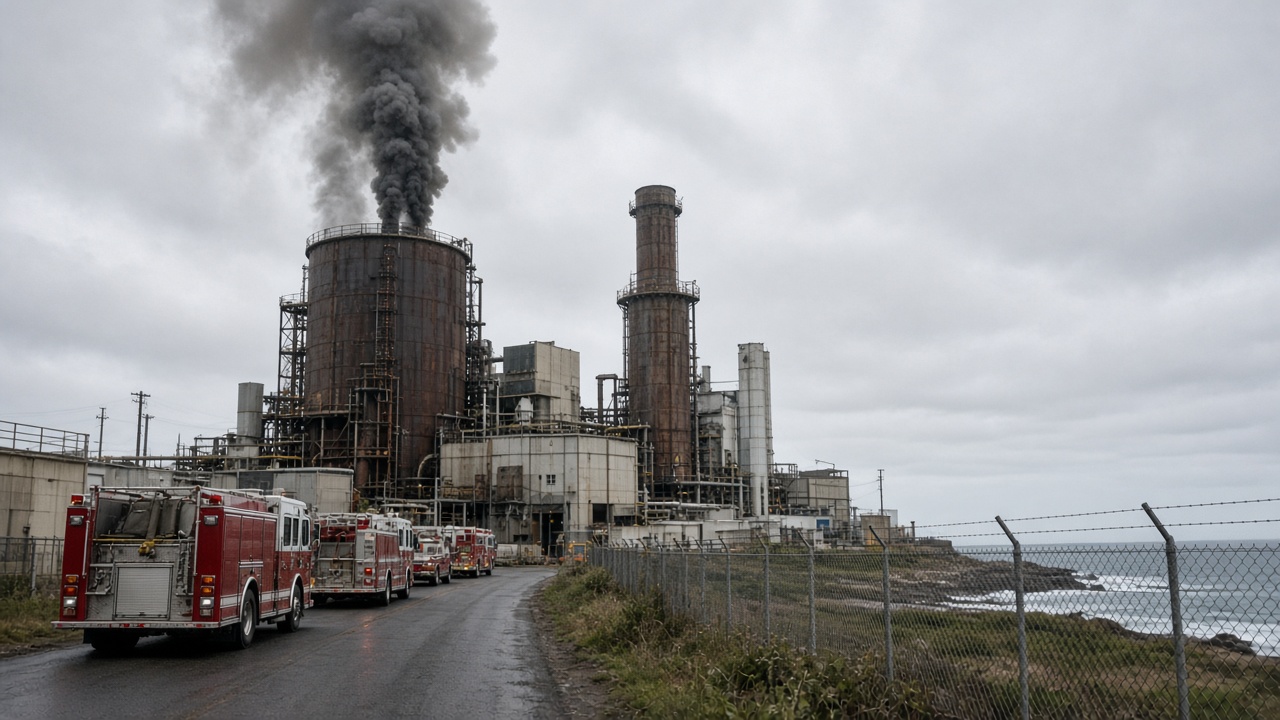
A fire at Taiwan Power Company’s Hsing Ta complex in Kaohsiung’s Yongan District sent a column of black smoke visible for kilometers on Friday, forcing an emergency response at the site of one of the island’s largest fossil-fuel plants and opening a fresh air-pollution enforcement case against a roofing contractor.
The blaze broke out around 11:52 a.m. in the boiler house for the new gas-fired “Unit 3” rebuild, where workers were laying waterproof membranes on the roof, according to Taipower and city officials. Kaohsiung firefighters dispatched 16 vehicles and 40 personnel; they controlled the fire by 12:23 p.m. and extinguished it a minute later. No injuries were reported.
Contractor torch linked to burning membranes
Kaohsiung’s Environmental Protection Bureau said its AI smoke-monitoring network flagged the plume at 11:51 a.m. Inspectors found that a contractor, identified in local reports as Ru Jin Construction, was using a gas torch during waterproofing work when the material ignited.
The bureau said visible particulate pollution resulted and that it would fine the contractor under Article 32 of the Air Pollution Control Act, with penalties ranging from NT$100,000 to NT$5 million depending on severity and prior record.
Taipower apologizes but says generation was safe
Taipower said the incident did not threaten operating units or grid stability and that equipment in unaffected areas remained secure. The utility cordoned off the work zone, promised a joint review with the contractor, and issued a public apology for alarm the smoke caused in surrounding communities.
The company did not say how long the Unit 3 boiler-house construction would be paused. The rebuild is part of a broader gas modernization program at Hsing Ta, which has faced heightened public attention since a separate natural-gas leak and explosion in September 2025 that prosecutors are still investigating.
Why the plant matters beyond Kaohsiung
Hsing Ta sits on the coast southwest of Kaohsiung city center and has long anchored southern Taiwan’s power balance, switching between coal and gas units depending on fuel prices and maintenance schedules. Any visible incident there quickly becomes a political story because the complex abuts fishing communities and because Taiwan’s reserve margins tighten during summer peaks.
Friday’s fire was confined to construction materials — waterproof blankets and related debris — rather than fuel lines or turbines, but the images recalled the 2025 blast and fed opposition questions about contractor oversight on major Taipower projects.
What regulators will watch
The environmental fine process typically moves on a separate track from Taipower’s internal safety review. City inspectors will examine hot-work permits, fire watches, and whether the torch method matched approved plans. Taipower will face pressure to show that gas-unit expansion work can proceed without repeated contractor lapses.
For households in Kaohsiung and Pingtung, the immediate supply impact appears limited, but the episode is another data point in the ongoing debate over how fast Taiwan can retire older coal while keeping large coastal plants safe during multi-year retrofits.