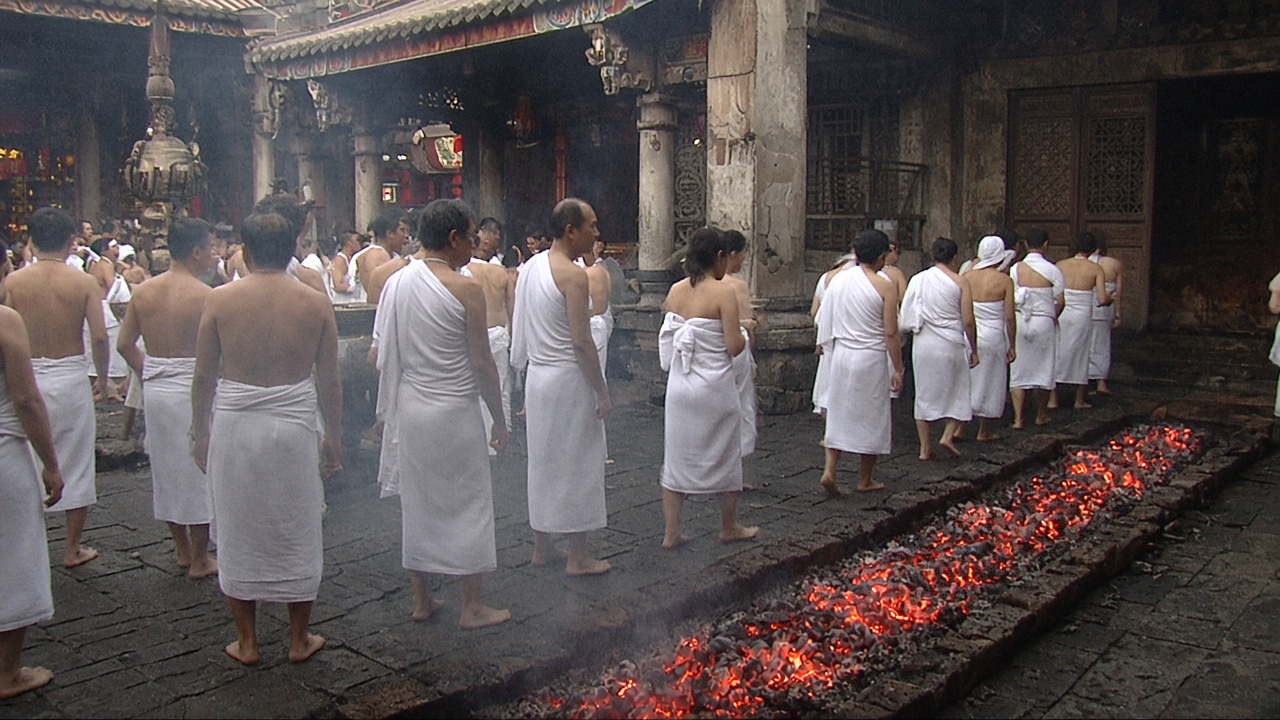
Twenty people received medical treatment for burns to their feet after taking part in a firewalking ceremony at Dingfuyen Temple in New Taipei’s Linkou District on Sunday, city authorities said. The injuries occurred during a crowded folk ritual that draws faithful who believe crossing hot coals brings blessings, and they quickly became the most discussed local safety story on a day otherwise dominated by cross-strait military activity.
What happened at the temple
According to the Central News Agency, participants walked across a bed of burning coals as part of a scheduled rite at the temple, a well-known venue for Mazu-related festivals in northern Taiwan. Emergency medical teams dispatched by New Taipei’s fire department treated twenty people on site for foot burns; none required hospitalization in the initial tally, though several limped away with bandaged soles.
Organizers had laid out the coal pit along the temple courtyard’s usual procession route, and video aired by local television showed long queues of worshippers waiting barefoot with towels draped over their shoulders. Temperature checks on the coal bed are typically performed by temple volunteers, but officials had not released a cause finding by Sunday evening.
Recurring risks at firewalking events
Firewalking is legal in Taiwan and common during Mazu pilgrimages and temple anniversaries, yet burn cases surface almost every festival season. Physicians at Linkou Chang Gung Memorial Hospital, located minutes from the temple, have previously warned that uneven coal depth or residual embers outside the pit edge can cause deep partial-thickness burns, especially when crowds push participants to move faster than trainers recommend.
New Taipei’s civil affairs department said it would interview temple leaders about whether they filed the required mass-gathering notice and whether licensed medical staff were present. Taiwan’s Ministry of Health and Welfare has issued guidance urging temples to keep fire lanes clear and to station ambulances when more than a few hundred people register to walk, but enforcement remains largely local.
Community reaction
Worshippers who completed the rite without injury told reporters they felt spiritual relief, while family members of those burned questioned why the coal bed remained open after the first injuries. Linkou District Office staff handed out cold packs and directed the injured to nearby clinics, praising firefighters for responding within minutes.
Politicians from both major parties avoided turning the incident into a campaign issue ahead of next month’s local elections, though public-health advocates said the burn count—twenty in a single afternoon—should prompt a review of insurance requirements for high-risk rituals.
What officials will review next
Fire investigators will inspect whether propane torches used to ignite the pit were stored safely and whether wind screens were used to keep embers from scattering onto grass nearby. Temple management told CNA it would cooperate with any inquiry and pray for the injured’s recovery, a statement faithful echoed online.
For residents in Linkou, the episode is a reminder that folk devotion carries physical risk even when faith runs high. Until regulators publish findings, the temple’s autumn calendar remains busy, and neighboring communities will watch whether Dingfuyen tightens medical staffing before the next firewalking date.