Five Kuki men were killed in Manipur over 48 hours in two linked episodes, police said Sunday, as Kuki-Naga reprisals deepened a security crisis that already overlaps with the longer Meitei-Kuki conflict that has displaced more than 60,000 people since May 2023.
Three men died in an exchange of fire between unidentified armed groups at Kekru Naga village in Noney district on Saturday, according to a police statement. On Sunday morning, joint teams recovered the bodies of Paoginlal Hangsing, 20, and Tinginlun Chongloi, 21, east of National Highway 2 along the Senapati–Kangpokpi road after the pair vanished on October 28 while travelling between villages in Kangpokpi district.
Search teams and shutdowns
Manipur Police said the Sunday operation included CoBRA commandos from the Central Reserve Police Force, Assam Rifles, and Rapid Action Force personnel combing ridgelines above the SP Road corridor. The Committee on Tribal Unity in Sadar Hills had imposed a 48-hour total shutdown in Kangpokpi after the abductions, and markets remained closed as the bodies were taken for post-mortem examinations.
Police pledged continued combing to arrest those responsible but did not publicly name suspects. Kuki Inpi Manipur, the community apex body, blamed Naga armed groups for the Noney killings and called the attack an unprovoked assault in Kuki homeland. Naga organizations have, in earlier cycles, accused Kuki groups of parallel abductions after the killing of three Kuki pastors in May.
Timeline since February
Kuki and Naga tensions reignited in February when a Naga man was allegedly assaulted by Kuki men, according to community accounts catalogued by local press. The pastor killings in May set off a chain of abductions and revenge shootings that security forces have struggled to interrupt because terrain favors ambush and because ethnic enclaves now police their own roads.
Those clashes sit atop the separate Meitei-Kuki war that began in May 2023 over reservation policy and land access. Official counts put total deaths from that broader conflict above 300; relief camps around Imphal and in the hills still house tens of thousands who cannot safely return home.
Protests in Imphal
Sunday’s deaths landed as huge crowds rallied in Imphal and other valley towns demanding that New Delhi abrogate ceasefire arrangements with Kuki armed groups. Organizers framed the protests as a rejection of parallel administrations in the hills; Kuki leaders counter that the state government has abandoned their villages to militia violence.
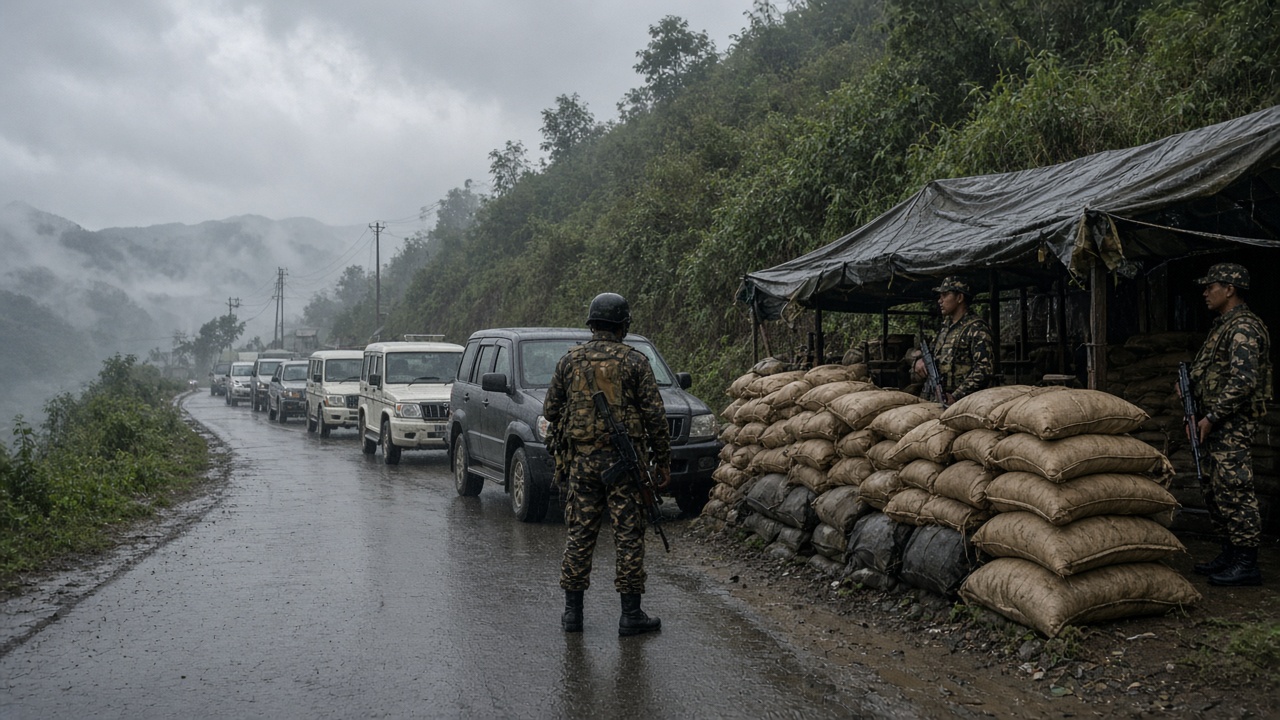
Security forces tightened checkpoints on routes into the Imphal valley, slowing traffic between Senapati and the capital and forcing journalists to rely on police bulletins rather than independent access to the firefight zones. Internet throttling, used repeatedly during prior flare-ups, was not confirmed in Sunday’s statements but remains a tool administrators have deployed when rumors outpace verified casualty lists.
What New Delhi faces
The Union home ministry has rotated additional paramilitary units through Manipur for more than two years, yet simultaneous Kuki-Naga and Meitei-Kuki fronts stretch the same companies thin. Delhi’s political challenge is to keep ceasefire talks with Kuki groups alive while Meitei civil society demands their dissolution—a contradiction that weekend rallies made visible on the streets.
Without arrests tied to identifiable commanders, each new five-victim weekend becomes another data point in a conflict that already behaves like low-grade civil war. Police statements confirm the toll; they do not, by themselves, restore safe passage on NH-2 or persuade displaced families to leave the camps.