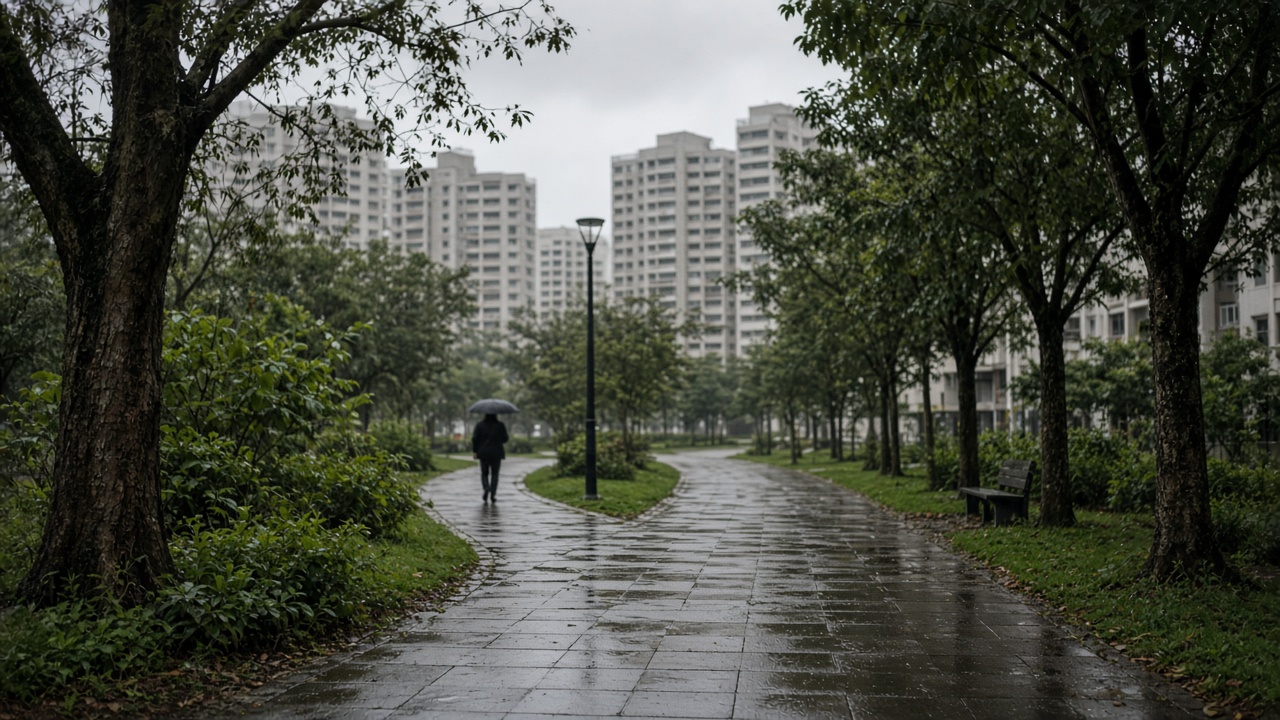
Singapore’s haze outlook for early November stays in the moderate band, with NEA forecasting a 51–80 PSI range for 2 November after showers over Sumatra, Kalimantan and the island kept smoke plumes subdued on Sunday. The reading follows an inter-monsoon shift that Meteorological Service Singapore said should reduce long-range transport of haze compared with the southwest monsoon weeks that brought seven unhealthy and three very unhealthy days between 16 and 28 October.
Sunday conditions
As at 5pm on 1 November, 24-hour PSI readings ranged from 71 to 89, moderate, while one-hour PM2.5 sat in the normal band at 15–41 micrograms per cubic metre across regions. NEA noted localised smoke plumes in Kalimantan even as rain fell over parts of Singapore. The agency advised using PSI forecasts for next-day outdoor planning and one-hour PM2.5 for immediate activity decisions on the haze microsite and myENV app.
Inter-monsoon drivers
Light and variable winds replace persistent southeasterly flows during inter-monsoon periods, making it harder for smoke to track toward Singapore consistently. MSS expects moderate to heavy thundery showers on most afternoons in the first fortnight of November, with total rainfall slightly above the long-term average. Daily highs should reach 33–35 degrees Celsius, occasionally higher, so humidity will remain uncomfortable even when air quality improves.
Health guidance
Moderate PSI triggers fewer restrictions than unhealthy bands but still warrants reduced prolonged exertion for sensitive groups. Schools consulted MOH guidelines during October peaks; extracurricular organisers now watch 24-hour PSI rather than only one-hour spikes. Clinics in heartland estates reported elevated haze-related visits in late October; physicians expect tapering if forecasts hold.
Regional fire picture
ASEAN specialised meteorological centre hotspot maps remain cloud-covered on many days, limiting satellite detection. NEA cautioned that dense plumes near source areas can still affect downwind neighbours when wind aligns, even during inter-monsoon transitions. Indonesia’s fire response continues to influence whether improvements persist beyond a fortnight.
Planning for the week ahead
Event organisers scheduling outdoor National Day rehearsal analogues or community runs should keep contingency indoor venues while PSI forecasts stay near the top of the moderate band. Employers with outdoor work crews should rotate breaks and provide masks when PM2.5 enters the elevated band intraday. If showers fail to materialise, PSI could climb quickly; NEA updates forecasts daily during haze season. For most residents, Sunday’s moderate readings mean routine activity with apps checked before long jogs.
Schools and clinics
MOH guidance for schools shifts when 24-hour PSI enters unhealthy bands; moderate readings keep outdoor recess open but allow principals to shorten activities if one-hour PM2.5 spikes. Polyclinics stock additional respiratory visits during haze peaks and schedule follow-ups when inter-monsoon rain improves air. Employers offering flexible work during October unhealthy days are winding those policies back, yet HR teams keep masks available for staff who commute by open-air bus stops without shelter.