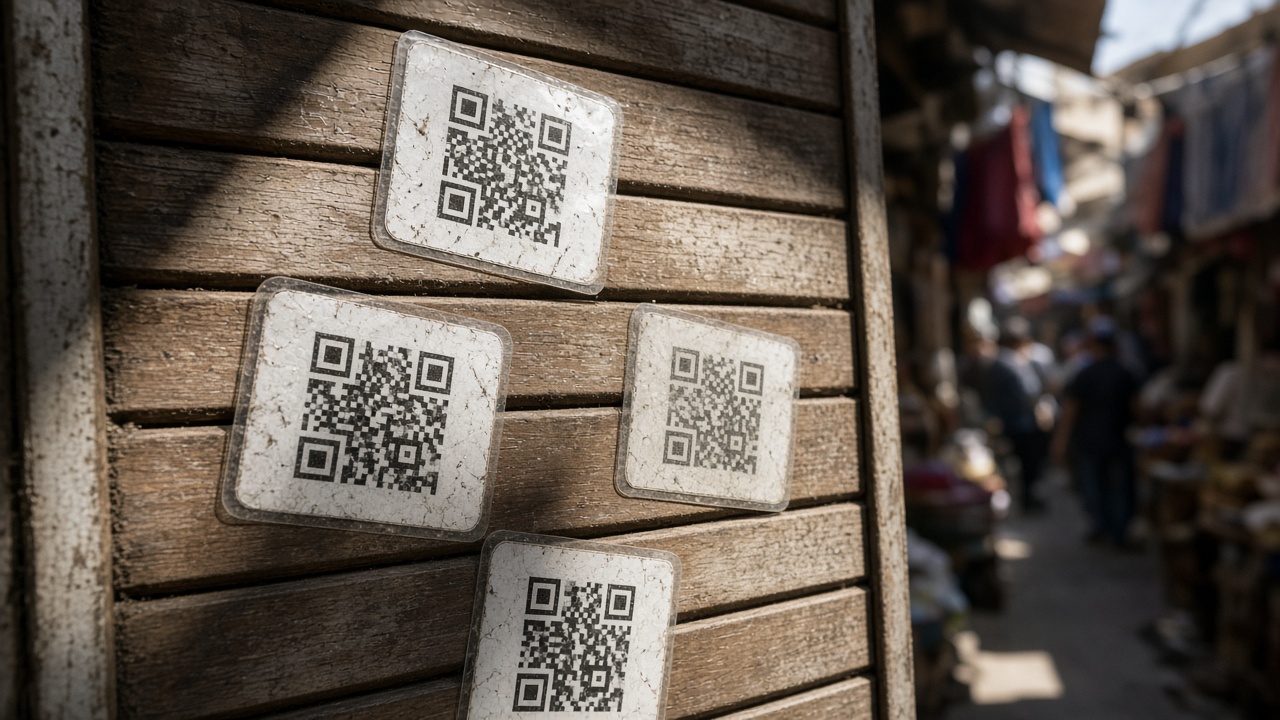
The National Payments Corporation of India tightened merchant onboarding rules for Bharat QR after law enforcement in Jaipur seized hundreds of spoofed payment stickers pasted over genuine codes in wholesale bazaars.
What went wrong in Jaipur
Jaipur cyber police said payment diversion groups printed laminated QR stickers that routed UPI payments to mule accounts, then pasted them atop legitimate merchant codes in textile and jewelry lanes. Shopkeepers noticed discrepancies only when settlements failed to hit their bank accounts. Officers recovered sticker rolls, portable laminators and phones loaded with multiple UPI handles during raids last week.
The case was not the first Bharat QR spoofing incident, but the volume of stickers in a single market triggered a coordinated response from acquirer banks and NPCI’s risk team.
NPCI response
NPCI’s circular to member banks raises verification steps for new Bharat QR deployments in high-risk merchant categories, including mandatory geotagged photos of storefronts and callback confirmation to registered mobile numbers before activation. Existing merchants with sudden change-of-account requests face enhanced holds. Payment apps must display merchant legal names more prominently at scan time, a UI tweak several banks promised to ship in November releases.
Bank and fintech role
Acquirers that onboarded the affected merchants without site visits face internal audits. Industry executives said low-ticket onboarding flows designed for speed during the pandemic are being rolled back for certain MCC codes. That may slow QR expansion in informal retail, but regulators prioritize settlement integrity over growth metrics after a year of elevated UPI misuse complaints.
Merchant guidance
Trade associations in Rajasthan issued Hindi-language advisories telling shop owners to scratch-test stickers and verify settlement SMS messages daily. NPCI recommends merchants use sound-box confirmations and avoid letting third parties paste codes on their behalf.
Consumers should check the payee name displayed in banking apps before authorizing high-value transfers in busy markets. A mismatched name is a stronger signal than a faded QR print.
Broader risk picture
UPI remains dominant for retail payments, which makes sticker spoofing attractive even as banks deploy device fingerprinting and velocity checks. NPCI’s tighter onboarding is one layer; sustained enforcement in wholesale hubs is another. Cyber police in Gujarat and Uttar Pradesh said they are running parallel sweeps ahead of festival foot traffic.
Consumer verification habits
Payment apps are testing louder audio cues when scanned merchant names differ from saved favorites, a feature rolled out in beta to Android users in Rajasthan last week. Customer education videos in Hindi and Marwari will run on state broadcaster slots before Diwali shopping peaks.
Acquirer banks said settlement disputes tied to sticker swaps fell after a similar sweep in Surat wholesale markets earlier this year, suggesting enforcement plus onboarding friction can move the needle without halting QR adoption.
Wholesale associations plan chalk-mark verification shifts where volunteers compare printed merchant names against banking app screens during peak evening sales, a low-tech layer atop digital onboarding rules.
Market participants and local officials will update guidance as more data arrives through the week; check primary sources linked above before acting on single figures quoted in early reports.
Executives briefing investors said the next disclosure window will clarify whether the trends described here persist into the December quarter. Households and traders should separate one-off festival effects from structural shifts in pricing, coverage or capacity. State regulators have not announced additional rule changes beyond what is cited in primary documents, though consultation drafts sometimes circulate informally in trade groups before public release.
Executives briefing investors said the next disclosure window will clarify whether the trends described here persist into the December quarter. Households and traders should separate one-off festival effects from structural shifts in pricing, coverage or capacity. State regulators have not announced additional rule changes beyond what is cited in primary documents, though consultation drafts sometimes circulate informally in trade groups before public release.
Executives briefing investors said the next disclosure window will clarify whether the trends described here persist into the December quarter. Households and traders should separate one-off festival effects from structural shifts in pricing, coverage or capacity. State regulators have not announced additional rule changes beyond what is cited in primary documents, though consultation drafts sometimes circulate informally in trade groups before public release.