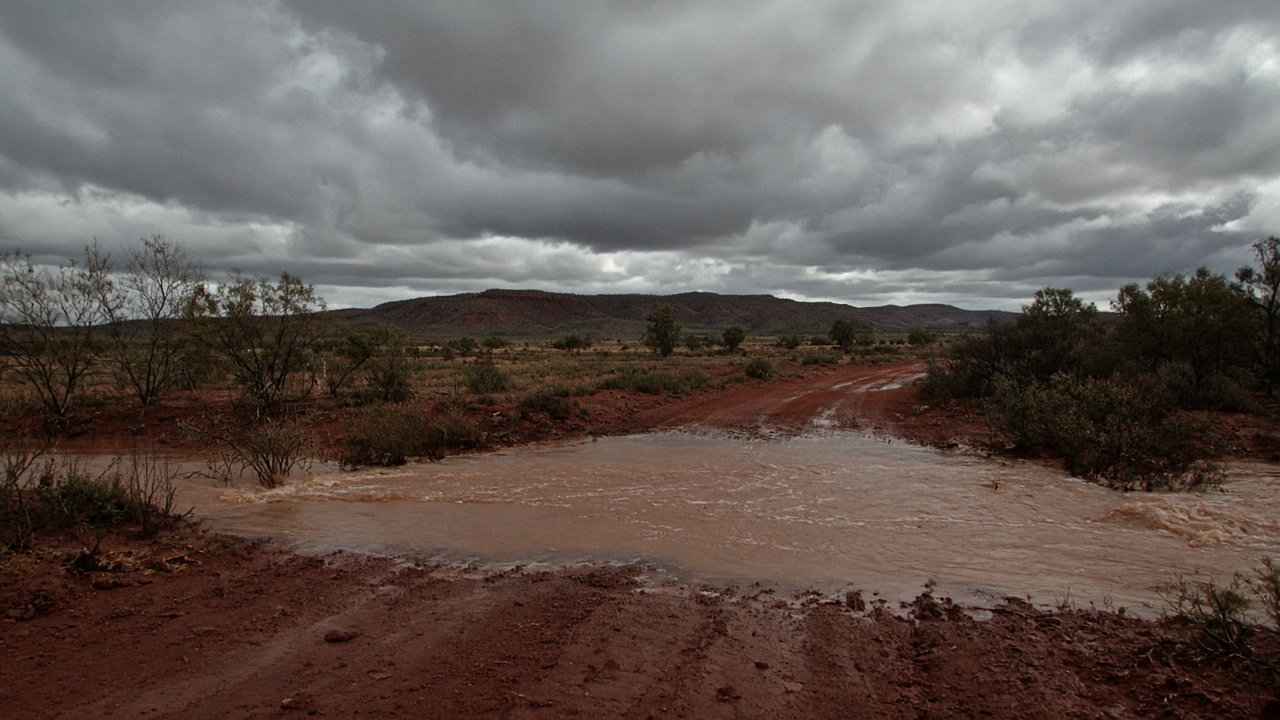
Northern Territory police said searchers recovered the body of a 60-year-old man on Saturday afternoon, about ten kilometres from where floodwater swept him off the roof of a stranded vehicle near Santa Teresa, the remote Aboriginal community roughly 80 kilometres south of Alice Springs.
The man had been missing since Wednesday, when he and a woman became stuck in a creek on Phillipson Bore Road. Both climbed onto the car roof; the current took the man while the woman walked to Santa Teresa to raise the alarm, police said. Volunteers from the Northern Territory Emergency Service and the police air wing joined ground teams across difficult country until the body was found at 1:40 p.m. local time.
How the creek rose
Central Australia has absorbed widespread thunderstorms and heavy rain this week, flooding tourist tracks at Uluru and pushing local creeks from dry beds to fast channels within hours. Phillipson Bore Road, a unsealed route used by pastoral stations and community traffic, is exactly the kind of crossing where depth gauges are absent and satellite phone coverage is patchy.
Police said a report on the death would be prepared for the coroner. They offered condolences to the man’s family and did not release his name pending notification. The woman who reported him missing was not physically injured in the initial stranding, according to the earlier police account.
Search logistics in red-dirt country
NTES volunteers trained for remote flood response often coordinate with pastoral leaseholders who know which clay pans hold water and which tracks remain passable after a cell moves through. The police air wing can spot heat signatures and debris lines, but ground teams still carry the recovery when cloud base drops or when winds whip up dust that hides tyre tracks.
Santa Teresa, also known as Ltyentye Apurte, sits on sealed and unsealed links toward the Stuart Highway. When creeks on the apron of the MacDonnell Ranges fill, communities can be cut off for a day even if Alice Springs itself stays dry—a pattern emergency planners rehearse each wet season but which still traps travellers unfamiliar with NT hydrology.
Broader wet pulse this week
The Bureau of Meteorology had flagged unstable tropical moisture feeding through the interior, producing local totals that look modest on district maps but concentrate in narrow storm cores. Pastoralists reported bogged cattle and damaged fence lines; tourism operators rerouted convoys away from usually reliable shortcuts.
This death is separate from the violent storm cell that tore roofs near Yass in New South Wales on Saturday, but it sits in the same national weather pattern that has kept state emergency lines busy from the tablelands to the Red Centre. Authorities repeat the same advice after each event: do not enter floodwater, even in a four-wheel-drive; if trapped, stay with the vehicle unless water is already inside the cabin.
What happens next
Coronial staff will examine whether signage, road closure gates, or phone coverage gaps contributed to the outcome. Community leaders in Central Australia often ask for better real-time closure data on social channels used by remote workers. NT Police said they would release no further detail until the coroner’s process allows.
For Santa Teresa residents, the priority is supporting the family and ensuring supply trucks can still reach the store once creeks fall. The recovery closes one search, but the wet season has months to run, and every renewed thunderhead will test the same crossings again.