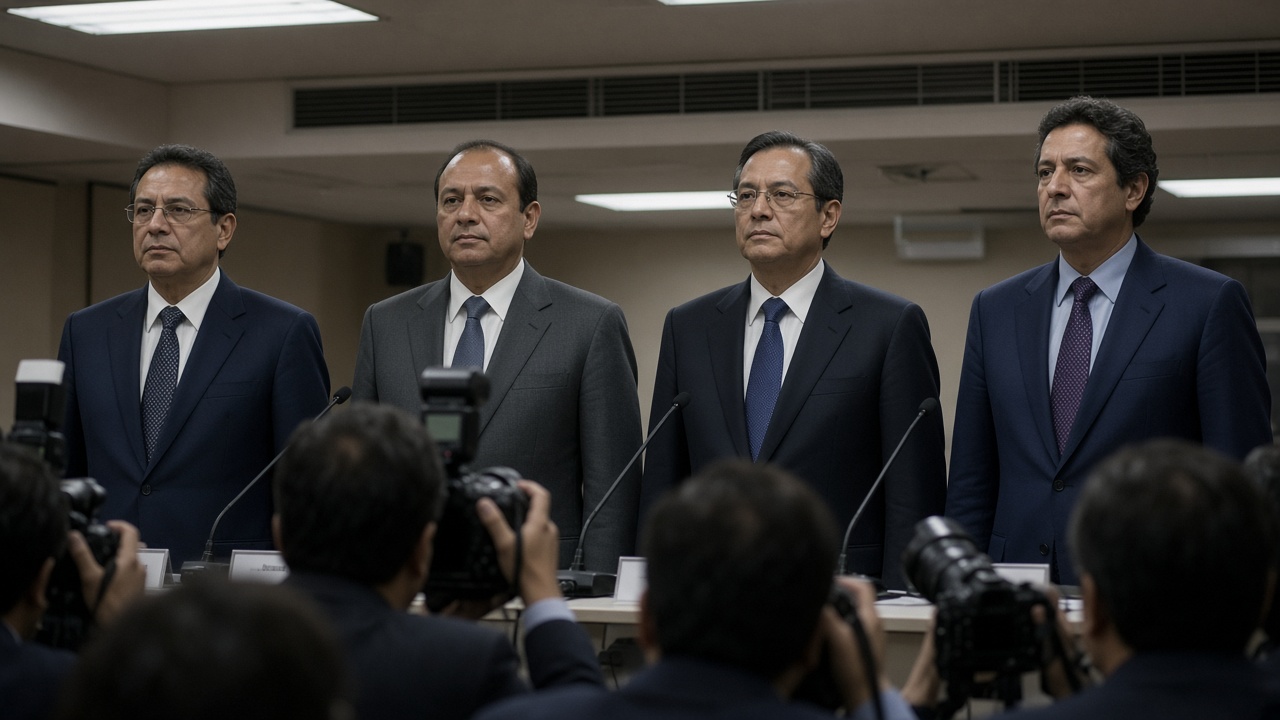
U.S. Secretary of State Marco Rubio and his Quad counterparts closed a side meeting in Atlanta on Oct. 31 with a joint pledge to bankroll trusted superintelligence across the Indo-Pacific, putting a dollar figure on a tech rivalry that has shadowed this weekend’s fractured G20 foreign ministers’ session.
The four ministers — Rubio, Japan’s Toshimitsu Motegi, Australia’s Penny Wong and India’s Subrahmanyam Jaishankar — said they would provide more than $85 million in technical and financial support through initiatives including a “Quad SI Accelerator,” using President Donald Trump’s preferred label for advanced artificial intelligence. The communique also tied the bloc’s economic security agenda to critical minerals, online crime networks and freedom of navigation in the Strait of Hormuz, the Red Sea and Bab el-Mandeb.
Supply chains without naming Beijing
Although no country was named, the language tracked repeated Western complaints about arbitrary export controls and industrial overcapacity. Rubio told reporters that “one country” repeatedly engages in coercive practices, while insisting the Quad is “not an anti-China alliance.” The ministers nonetheless expressed “serious concern” about non-market policies that, they said, disrupt global supply chains in key industries through export restrictions and excess production.
On minerals, the Quad reiterated plans to recover critical materials from electronic waste, scrap and other streams so members can reduce reliance on single suppliers. Washington has previously committed $10 million toward recovery facilities in India and ASEAN states under a May cooperation framework. Motegi, according to Japanese outlets, also stressed joint action against malicious cyber activity, including North Korean hacking.
Trusted AI versus cheaper models
The superintelligence package lands as U.S. officials promote Pax Silica, a U.S.-led AI supply chain grouping that includes South Korea, alongside Trump’s “SI” branding. Japanese media have framed the Quad push as a counterweight to low-cost Chinese models such as DeepSeek gaining traction in developing markets — a dynamic the ministers addressed by promising broader access to systems they consider trustworthy.
Beyond AI, the statement flagged a first Quad business leaders’ forum, cooperation on open radio access networks and 5G/6G pilots, and a meeting of export-credit agencies in Tokyo on Nov. 18. Rubio’s G20 chairmanship had already ended without a full-group communique on Saturday, underscoring how mini-lateral coalitions are filling gaps when the wider forum splits over Ukraine and Middle East wars.
The ministers also said they would work to dismantle transnational online crime networks that, they argued, threaten public safety — language Motegi linked in Tokyo coverage to coordinated responses against state-linked hacking.
What comes next
Quad leaders are expected to coordinate ahead of their next summit, with ministers saying they will keep aligning maritime security, mineral recycling and digital infrastructure funding. For Indo-Pacific capitals, the immediate question is how much of the $85 million reaches local firms versus U.S. vendors — and whether the SI accelerator can move faster than the export-control fights that dominated Atlanta hallway conversations.