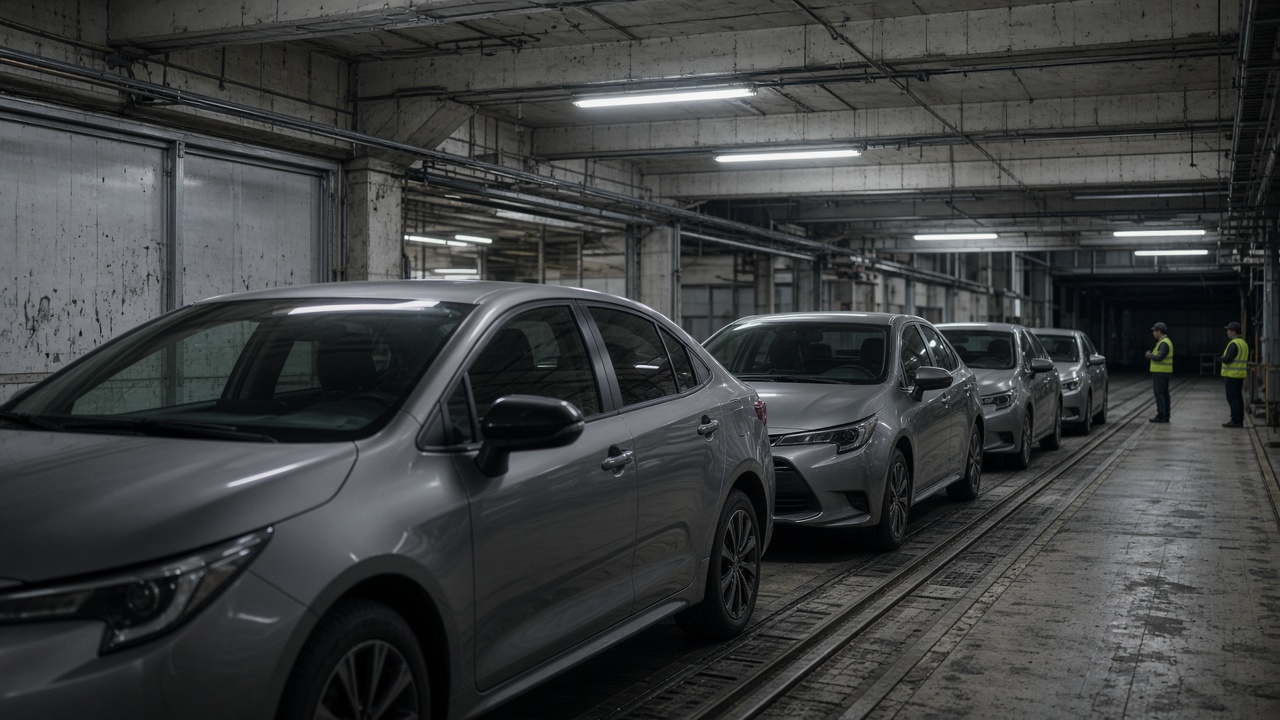
Toyota Motor told dealers on Sunday that its Tsutsumi plant will build roughly 8,400 fewer hybrid units in November after a fire destroyed part of a tier-two brake-hose supplier’s paint and curing line in Toyota City.
What broke in the supply chain
The blaze started shortly after midnight Saturday at Nishio Rubber’s Kakamigahara finishing site, which hoses Prius and Corolla hybrid brake circuits before they reach Tsutsumi’s final assembly hall. Fire crews contained the damage to one building, but the curing ovens that certify each hose batch will stay offline for at least three weeks, the company said in a filing to the Nagoya Stock Exchange.
Toyota’s purchasing office redirected emergency stock from a sister plant in Shizuoka, yet the volumes cover only about half of Tsutsumi’s weekly hybrid run rate. That gap is what forced the November cut, according to a memo distributors saw Sunday afternoon.
Which nameplates take the hit
Tsutsumi builds the Prius, Corolla hybrid, and several Lexus compact hybrids for domestic and export markets. Toyota said it will prioritize customer orders tied to fleet contracts and mobility-service partners, then retail buyers who already paid deposits. Export-bound Corolla hybrids for Australia and Southeast Asia face the longest slips—dealers in those markets were told to expect one-to-two-week delays on certain paint codes.
The company is not idling the entire plant. Conventional gasoline Corolla lines keep running on a separate supplier map, and Lexus hybrid output at Miyata in Kyushu is unchanged. Still, Tsutsumi is Toyota’s largest hybrid hub in Japan, so any trim shows up quickly in domestic delivery calendars.
Financial and labor ripples
Analysts at SMBC Nikko estimate the lost volume could shave about 18 billion yen from Toyota’s domestic revenue in the quarter if the supplier cannot restart curing by mid-November. The figure assumes Toyota avoids overtime premiums by spreading work across Miyata and Tahara rather than running Tsutsumi on costly weekend shifts.
Union officials at Tsutsumi said Sunday they expect short-shift adjustments rather than layoffs, because Toyota historically redeploys line staff to quality audits when assembly slows. Temporary workers on six-month contracts may see fewer hours, the union added, calling on management to publish a day-by-day schedule by Tuesday.
How Toyota is responding
Toyota engineers flew to the supplier site Saturday to validate whether uncured hoses can be finished at a Toyota-owned prototype shop in Okazaki. That workaround would require fresh safety certification from Japan’s transport ministry, a process that usually takes ten business days. Until then, Toyota is air-freighting finished hoses from a Thai subsidiary that normally serves Southeast Asian assembly plants.
The automaker also activated its “business continuity” clause with other brake suppliers, asking them to quote expedited runs on compatible hose specs. None has confirmed capacity yet, but executives told reporters they would rather pay rush fees than miss year-end tax-incentive deadlines for hybrid buyers.
What dealers and buyers should expect
Major dealer chains said Sunday they will contact buyers with VINs already assigned before adjusting delivery promises. Used-car markets may firm slightly on fuel-efficient models if the shortage lasts into December, according to USS auction data from the past two supplier shocks in 2023 and 2024.
For now, Toyota is holding its full-year profit guidance steady, arguing the November cut is small against a global production plan above nine million units. Investors will watch whether the supplier restarts curing on schedule—or whether Toyota must declare a wider impact when it reports fiscal third-quarter earnings later this month.
Supplier recovery timeline
Nishio Rubber executives told local media they hope to restart one curing line by November 18 if fire investigators clear the site and replacement parts arrive from Nagoya equipment vendors. A second line may wait until December, which would keep Toyota on reduced schedules unless Thai imports fully cover the gap.
Insurance adjusters estimated property damage at 2.1 billion yen, a figure the supplier said is preliminary. Credit rating agencies placed the firm on watch for downgrade if customer penalties from Toyota materialize in quarterly earnings.