President Donald Trump said on Friday that he would talk directly with North Korea about the record theft from cryptocurrency exchange Binance if U.S. investigators confirm Pyongyang’s involvement, hours after the Federal Bureau of Investigation named a North Korean hacking crew as the culprit. The pairing of a marquee attribution and a sitting president’s off-the-cuff diplomacy offer turns a market-moving cyber incident into a security and sanctions story three days before U.S. midterm elections.
What the FBI said
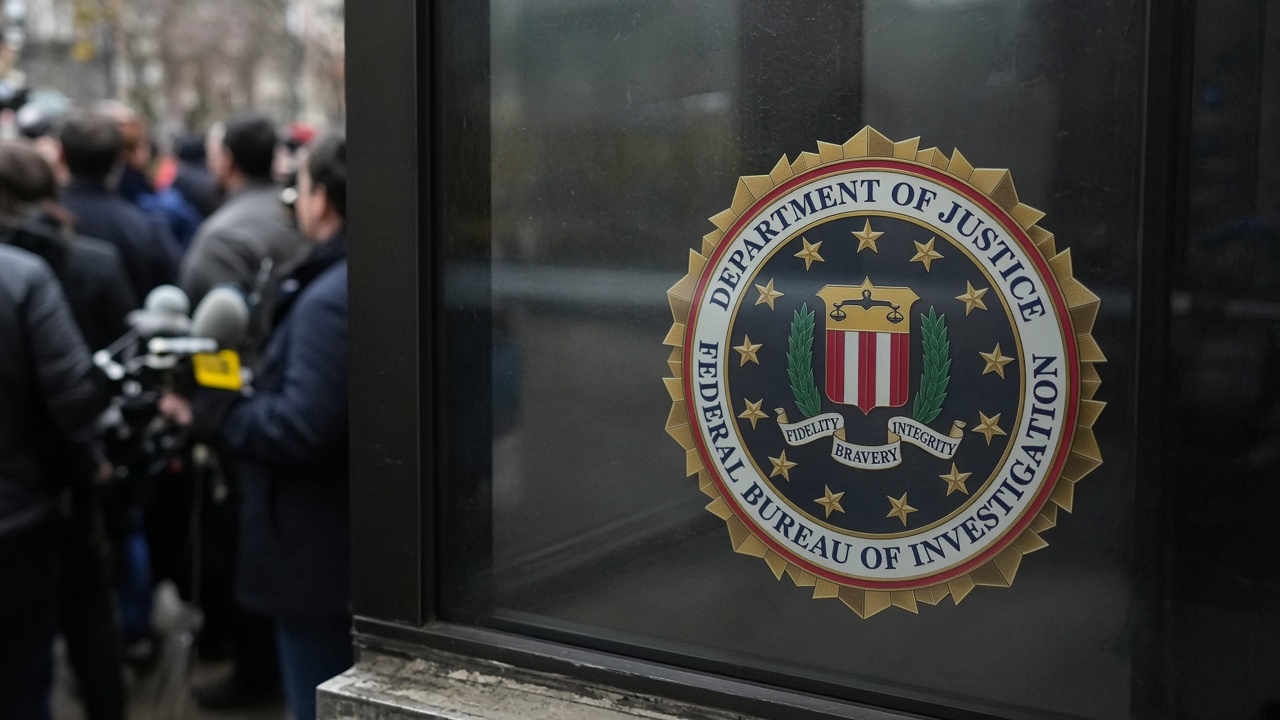
The FBI said Saturday that North Korea was behind the breach at Binance, the world’s largest crypto exchange by volume, and identified the activity with the hacker label “TraderTraitor.” U.S. officials did not release a full technical indictment in the initial statement, but they urged exchanges and wallet providers to block laundering paths tied to stolen assets and asked the public to report suspicious transfers.
South Korea’s state broadcaster KTV, summarizing the bureau’s announcement, put the stolen value at roughly 8.4 trillion won, or about $6.3 billion at prevailing rates—a scale that would rank among the largest known crypto thefts. Binance has said it is replenishing customer balances and began a phased restart of withdrawals on Saturday after pausing them during the investigation.
Trump’s Mar-a-Lago remarks
Speaking to reporters at his Mar-a-Lago residence in Florida on Friday, Trump was asked whether North Korea was responsible for the Binance hack. “I’m looking into it. I’m not worried about it,” he said, according to pool reports carried by Yonhap and other outlets. Pressed on whether he would engage Pyongyang, he added: “I don’t know that it’s them, but if it is, I will be talking to them about it.”
The comment does not amount to a policy shift on its own. The United States has sanctioned North Korean cyber units for years and publicly blamed Pyongyang for the 2014 Sony Pictures hack, the 2017 WannaCry outbreak and repeated cryptocurrency thefts that fund weapons programs. What is new is the explicit link Trump drew between a live FBI attribution and a hypothetical bilateral conversation on a specific heist, rather than on nuclear or missile talks.
Why the timing matters
North Korean hackers have long targeted crypto firms because stolen tokens can be moved quickly across borders and mixed through decentralized services, complicating seizure efforts. U.S. Treasury and Justice Department actions against laundering networks have recovered only fractions of past thefts. An FBI statement that names TraderTraitor gives banks, exchanges and analytics firms a shared label to hunt related wallets—if the attribution holds up in court-quality evidence.
For Trump, the remark lands as his party fights to keep congressional majorities on Tuesday. Crypto markets remain politically salient after years of lobbying over regulation, and any signal that the White House might negotiate with Pyongyang—even on a narrow cyber issue—will be parsed by allies in Seoul and Tokyo who rely on U.S. pressure to counter North Korean missile tests.
What comes next
Investigators will face pressure to show how they linked TraderTraitor to North Korean operatives, whether through blockchain tracing, infrastructure seizures or intelligence sharing with partners. Binance customers will watch whether withdrawal queues clear without further pauses. And North Korea’s mission in New York, its main channel to the United Nations, has not commented on the FBI statement or Trump’s words.
If the administration treats the attribution as settled, expect Treasury to update sanctions listings and for U.S. cyber commands to coordinate takedown requests with private firms. If Trump follows through on his conditional offer to “talk,” diplomats will need to decide whether stolen-crypto recovery is a negotiable item—or a law-enforcement matter that cannot be traded for sanctions relief.