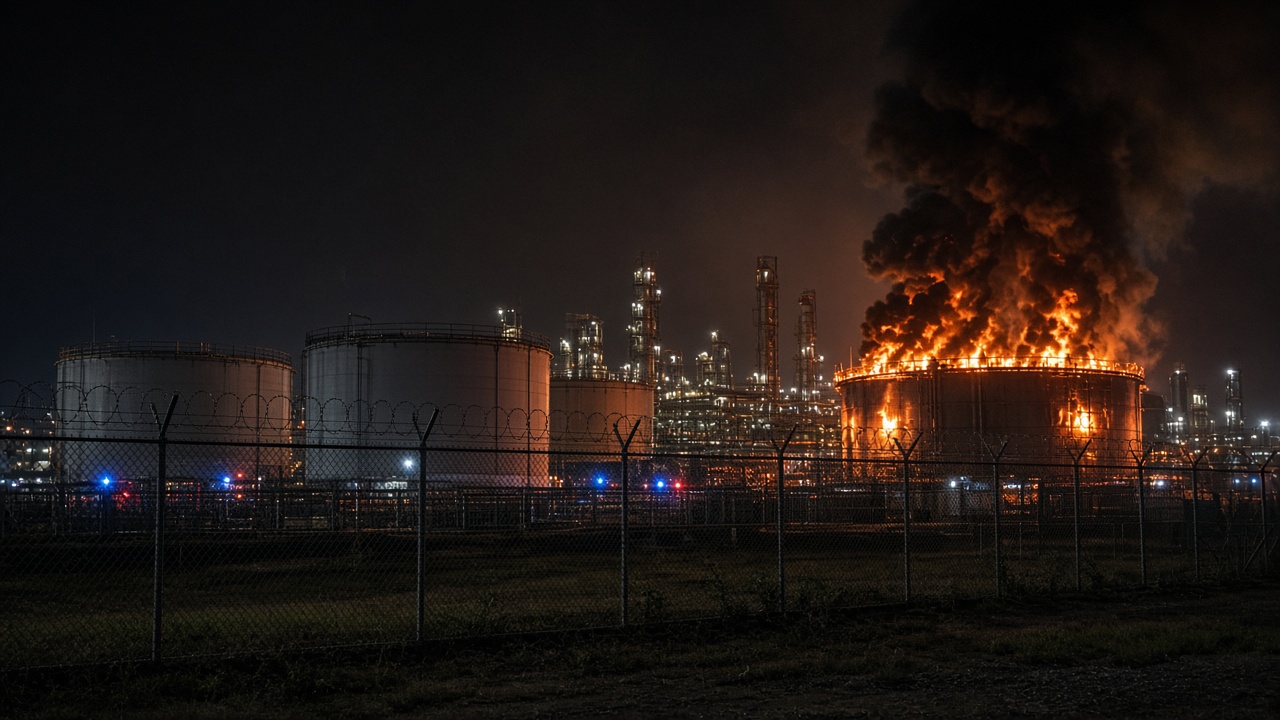
Ukraine’s long-range campaign against Russian oil refineries is active again, Russian officials and independent monitors said Sunday, directly challenging White House pressure to hold fire until after Tuesday’s U.S. midterm elections.
State-run Russian media reported that Ukrainian drones set the Kstovo refinery in Nizhny Novgorod region ablaze overnight, shortly after a separate strike against a large Rosneft-owned plant in Samara region. Thick smoke over industrial sites in both oblasts circulated on Telegram monitoring channels, which Ukrainian and Russian outlets treated as confirmation that the pause many Washington observers thought they saw never took hold in Kyiv’s targeting cells.
What Kyiv says about a pause
The Wall Street Journal reported on October 29 that Ukrainian strike planners had effectively halted refinery missions until after the U.S. vote, citing people familiar with the operations. Ukrainian officials told the Kyiv Independent that no such order existed. A senior official said U.S. envoy Jared Kushner had suggested a 30-day halt but that Kyiv never accepted it.
“Nobody had given such an order,” the official told the outlet, adding that the newsroom’s sources were unknown to the government. Less than a day after the Journal story, monitoring channels published footage of multiple plumes above the Novokuibyshevsk refinery in Samara, with flames visible at processing units Ukrainian drone makers later claimed to have hit.
How Moscow and Washington are reading it
Russian Deputy Prime Minister Alexander Novak told reporters that attacks resumed after a brief lull and that damage was recorded at one of three refineries and a gas-chemical complex struck on the night of October 29–30. Kremlin spokesman Dmitry Peskov said Kyiv was “simply ignoring” U.S. wishes, while presidential aide Yuri Ushakov accused Ukraine of again disobeying President Donald Trump.
Trump has publicly tied Ukrainian refinery strikes to record diesel prices ahead of the midterms, though analysts note Iran-related disruption and broader market swings as larger drivers. Ukraine has argued the drone campaign is one of its few tools to answer years of Russian strikes on power plants and cities, and that Moscow ignored Trump’s unilateral “energy truce” announcement in October within days.
Ushakov said Ukraine had again disobeyed Trump by striking a Russian refinery, according to Russian business outlets, while Peskov told reporters the strikes did not call ongoing negotiations into question.
What happens next
The timing collides with a localized ceasefire around evacuations from Russian-occupied Oleshky, which Ukrainian officials said was due to expire late Sunday. Novak said Russia was preparing to extend a diesel export ban through January, signaling that Moscow expects the refinery ledger to keep growing.
Ukrainian security officials have not detailed which sites were authorized this weekend, but the pattern—Samara and Nizhny Novgorod fires after a disputed pause—matches the campaign’s focus on export-oriented capacity. Whether U.S. fuel prices move before Tuesday’s vote may matter as much to Washington as Kyiv’s strike calculus does to the general staff.