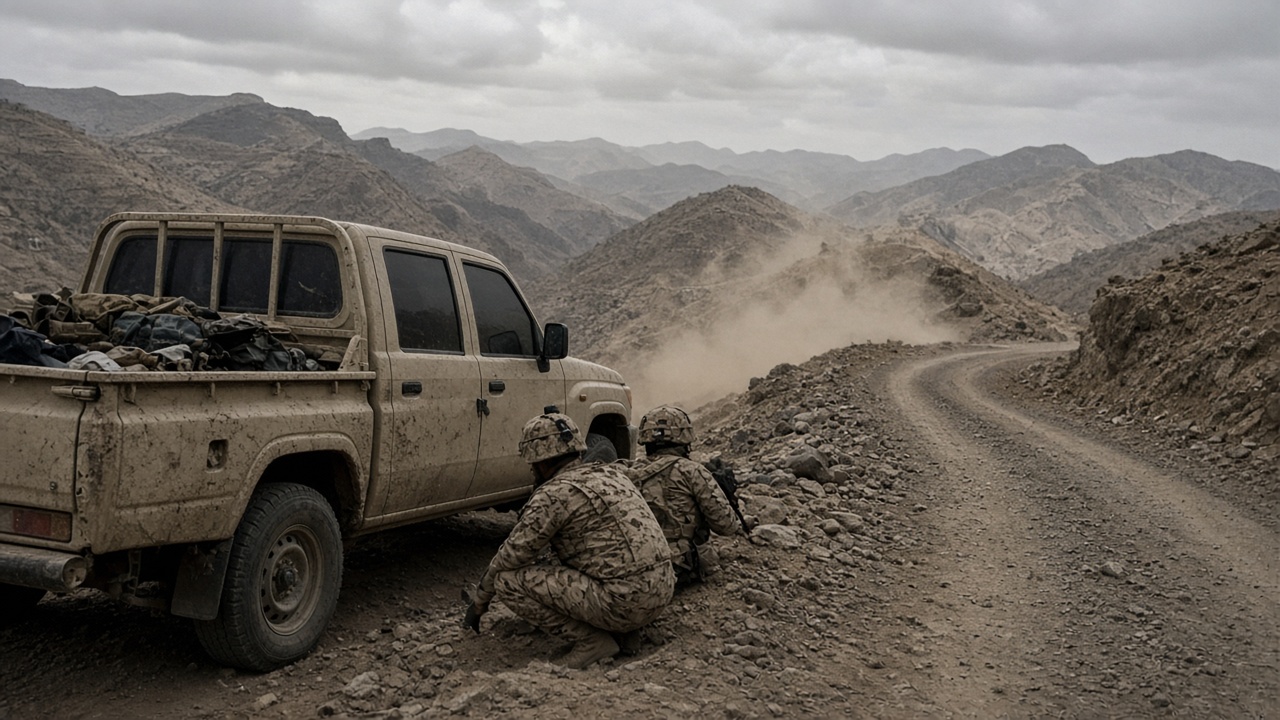
Yemen’s internationally recognized army said Saturday that it had completed the capture of the Huwayshian mountain range east of Al-Hazm, the provincial capital of Al-Jawf still held by Houthi forces, after two days of ground fighting backed by airstrikes. Field commanders described the ridgeline as the first defensive belt guarding the city and said holding the high ground would let government units interdict Houthi resupply routes across a governorate that sits between Saudi Arabia and Houthi-controlled Saada and Sanaa.
What changed on the ground
Col. Rabie al-Qurashi, an army field commander in Al-Jawf, told Anadolu Agency that government forces secured the entire range by Saturday following clashes that began Friday, when units took partial control of the peaks. He said warplanes destroyed dozens of Houthi vehicles during the push and that the broader operation remained active as troops pressed toward Al-Hazm.
The army’s media center said on X that the 1st Emergency Brigade seized weapons and ammunition depots after killing, wounding and capturing Houthi fighters and destroying armored vehicles. Separate army statements cited more than 1,100 strikes in recent hours across Al-Jawf, with claims of hundreds of fighters “neutralized” and more than 140 vehicles or pieces of equipment damaged — figures that could not be independently verified and that the Houthis routinely dispute.
Why Al-Jawf matters
Control of Al-Jawf has been split for years: the Houthis hold Al-Hazm and pockets elsewhere, while the recognized government retains other districts and links to oil-producing Marib and Hadramout. The governorate’s location — bordering Saudi Arabia and flanking the Houthi north — makes any shift in the mountains around Al-Hazm a test of whether the government’s autumn counteroffensive, branded Operation Dawn of Yemen, can translate territorial gains into pressure on the group’s core areas.
Al Jazeera reported that the Houthis said they had thwarted government advances in Al-Jawf and neighboring Marib, underscoring that both sides often issue competing claims while journalists’ access to front lines remains limited. Humanitarian agencies have warned that renewed fighting in northern Yemen continues to compound displacement and aid constraints even as separate battles grind on in Taiz, where the army said Saturday that air and artillery support targeted Houthi movements.
What happens next
With Al-Hazm still under Houthi control, the immediate question is whether government forces can hold the Huwayshian heights under counterattack and use the vantage point to choke routes into the city. Saudi-backed coalition air support has shaped past government offensives in the north; al-Qurashi’s account of strikes on Houthi convoys suggests that pattern continues, though neither Riyadh nor Washington issued detailed statements on this specific push by late Saturday.
Diplomatic efforts to end the wider war remain stalled while the recognized government, based in Aden, tries to claw back territory lost since the Houthis seized Sanaa in 2014. For now, the measurable shift is geographic: a ridgeline that overlooked Houthi positions is, according to multiple military statements, in government hands — and both sides appear prepared to contest the ground beneath it again.