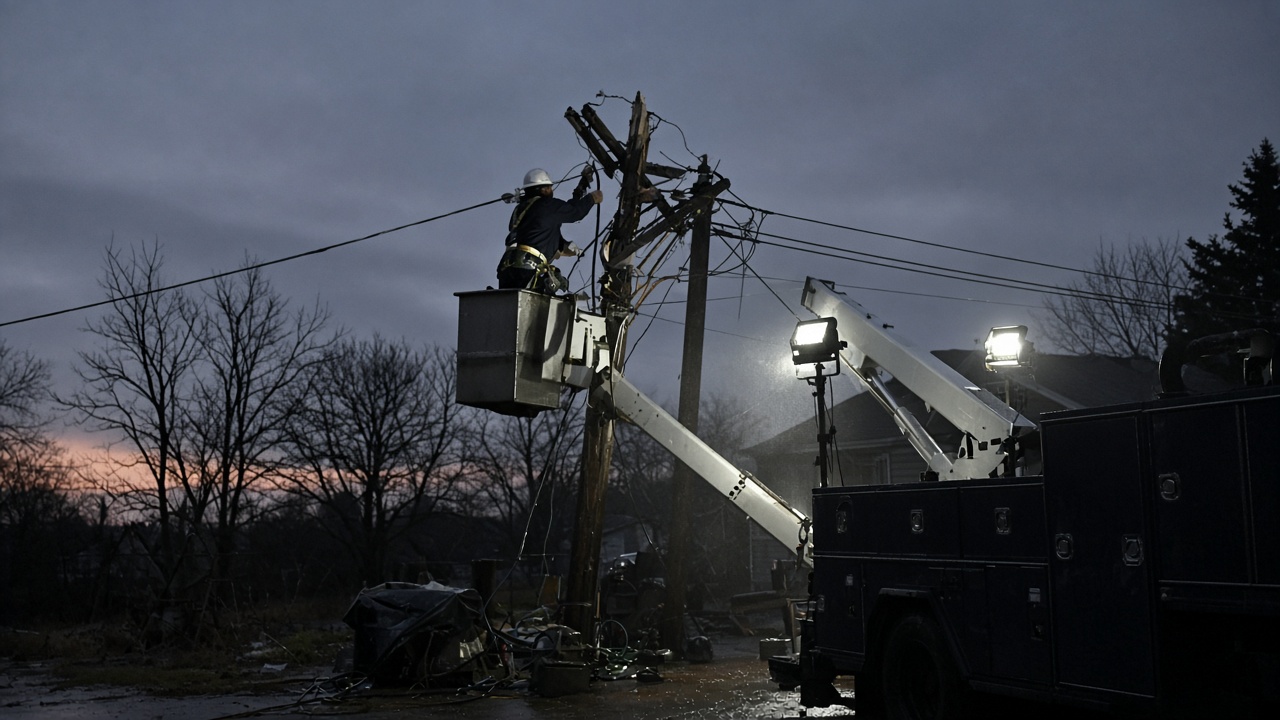
Hundreds of thousands of Ukrainian households were without electricity on Sunday after overnight Russian strikes damaged energy infrastructure in four regions, President Volodymyr Zelenskyy said, even as a rare six-day ceasefire around Russian-occupied Oleshky in Kherson expired without an extension.
What the grid lost overnight
In a post on X, Zelenskyy said substations, transformers and power lines in Dnipropetrovsk, Vinnytsia, Zhytomyr and Khmelnytskyi regions had been hit. Repair teams were working across the country, he added, but "hundreds of thousands of families remain without power" as of Sunday afternoon local time.
Ukraine's Air Force said Russia launched 433 drones overnight, including jet-powered Shahed attack drones, and that Ukrainian forces downed 371 of them. Debris from interceptions fell in 14 areas, and strikes landed in 16 locations, the military said. Regional authorities reported one person killed and at least 47 injured over the past day.
Private energy company DTEK said three of its workers were injured in the campaign against the grid and that emergency outages were introduced in Kyiv while crews tried to restore equipment "when it is safe to do so." The national energy ministry confirmed fresh outages nationwide, part of a winter pattern of rolling cuts even in the capital, where many residents now receive power for only part of each day.
Oleshky truce ends
Separately, a localized ceasefire brokered by U.S. officials and announced by First Lady Melania Trump expired at 10:59 p.m. Ukrainian time on Sunday. The truce, which began Tuesday, applied to Kherson region and allowed humanitarian access to Oleshky, a Russian-held town on the Dnipro river where an estimated 2,000 civilians remained when the pause took effect.
Neither Moscow nor Kyiv reported violations inside the Oleshky zone during the six days. Ukraine's general staff said it evacuated 167 more civilians from Kherson on Sunday, including 22 children and 21 people with limited mobility, before the deadline. Kherson Governor Oleksandr Prokudin urged residents to stay alert and avoid areas near the Dnipro.
A senior Ukrainian official told AFP that Kyiv offered to extend the Kherson pause but that "the Russians don't want to." Russian Human Rights Commissioner Yana Lantratova said Friday that the humanitarian mission had ended and proposed making similar first-lady-coordinated missions a regular channel with Ukrainian ombudsman Dmytro Lubinets.
Fighting elsewhere
While the Oleshky arrangement held locally, combat continued along other sections of the front and through long-range strikes. BBC reporting noted that Ukrainian attacks on Russian-held Luhansk killed at least four people since Sunday evening, according to Moscow-installed authorities. Russian-backed officials in Nizhny Novgorod region, far from the border, also reported damage to an industrial site after a Ukrainian drone wave.
Zelenskyy accused Russia of maintaining "very high" strike intensity and of exploiting Ukraine's shortage of interceptors against ballistic missiles. Emergency services in Vinnytsia said an overnight attack killed two people, including a 13-year-old girl.
What comes next
Utility officials in Dnipropetrovsk region said most customers had power restored by early evening Sunday, though more than 60,000 connections were still down. National emergency schedules mean further cuts are likely even after repairs, because repeated damage has outpaced replacement of large transformers.
Western diplomats had hoped the Oleshky model might be replicated elsewhere; without a Russian agreement to extend it, attention shifts back to nationwide grid defense before freezing weather. Ukrainian officials continue to press partners for additional air-defense missiles, arguing that energy workers cannot safely restore lines while Shahed drones remain overhead.
For civilians in Oleshky, the expired truce leaves the same choices as before the pause: remain under occupation with limited supplies, or attempt evacuation across mined routes and river crossings that Kherson authorities still describe as extremely dangerous.