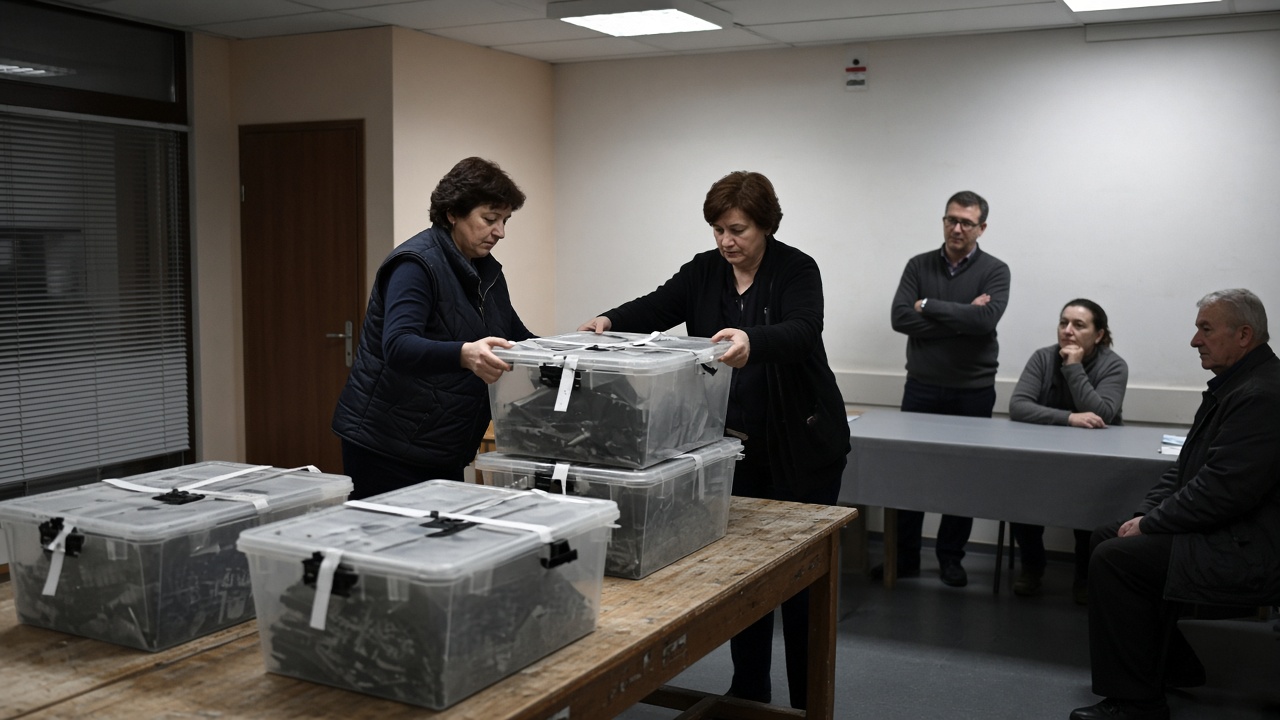
Bulgaria’s Central Election Commission said on Monday that it had processed 100 percent of polling-station protocols from Sunday’s presidential runoff, awarding the ticket led by acting President Iliana Iotova and Kiril Valchev 1,093,852 votes, or 57.566 percent of ballots cast. Challenger Andrey Gyurov, running with Georgi Kandev, took 750,251 votes, or 39.483 percent, while 56,080 voters, or 2.951 percent, selected the option to support neither candidate.
What the final tally changed
The commission published the consolidated figures shortly after 9:15 a.m. local time on November 2, closing out a runoff that had been too close to call for many Bulgarians when they went to bed on election night. Exit polls had pointed to a narrower advantage for Iotova, but the official count widened her margin to more than 343,000 votes over Gyurov, according to Sofia-based Novinite.
Gyurov, a liberal opposition figure who served as caretaker prime minister before the campaign, conceded defeat once the near-complete results were public. “This is how the Bulgarian citizens have voted,” he said, adding that the outcome had to be accepted as it stood. Iotova, who has been serving in an acting capacity, told supporters she would seek national consensus and work across Bulgaria’s fractured party blocs.
Geography and the diaspora split
The commission’s map showed Iotova winning in 28 of the country’s electoral districts, while Gyurov led in three, including Sofia’s 23rd and 24th districts and Kardzhali. That pattern underscored how the runoff turned less on a single region than on competing coalitions in a system where turnout has often been weak.
Overseas voting told a different story. With all foreign protocols processed, Gyurov and Kandev led among Bulgarians abroad with 60,413 votes, or 56.363 percent, compared with 44,413 votes, or 41.435 percent, for Iotova and Valchev. The split was stark by country: in the United States, Gyurov’s ticket took about 67.5 percent, while in Russia, Iotova and Valchev won roughly 84 percent, Novinite reported.
Turnout and what comes next
Official turnout for the runoff stood at 19.33 percent as of 4 p.m. on November 1, with 1,282,848 people voting out of 6,637,274 eligible, according to the commission. A parallel estimate by pollster Trend put participation higher, at about 27.5 percent, highlighting how different measurement methods can diverge even after the count is finished.
Iotova’s victory makes her Bulgaria’s seventh president and the first woman elected to the office, national broadcaster BNR noted in its English service. She enters a term shadowed by the war in Ukraine, inflation across the European Union, and recurring disputes over Black Sea security and energy imports. Her first-round showing in October had been pluralities rather than majorities, which is why Sunday’s runoff was necessary.
Political context in Sofia
Western news agencies framed the vote as a test for Prime Minister Rumen Radev’s Progressive Bulgaria movement and its orientation toward Moscow, against Gyurov’s pro-European opposition ticket. Iotova’s win keeps an incumbent-aligned figure in the largely ceremonial but diplomatically visible presidency, while parliament remains the arena for budget fights that have recently toppled coalitions elsewhere in Europe.
The president’s office in Bulgaria does not run day-to-day government spending, but it does shape alliances, veto legislation in limited cases, and represent the country abroad. Iotova said she would emphasize dialogue, a message aimed at a public exhausted by repeated snap elections and caretaker administrations. Gyurov’s quick concession may ease the transition, though his supporters abroad are likely to press for continued influence in diaspora politics.
Formal inauguration timing will follow constitutional procedure once the commission’s results are promulgated. Opposition leaders who backed Gyurov will now pivot to municipal and parliamentary battles, while Iotova’s team begins staffing a permanent presidency after months of acting status. For Brussels and Washington, the question is whether her term will reinforce Bulgaria’s Western security commitments or reopen debates that Radev’s allies have kept on the agenda.