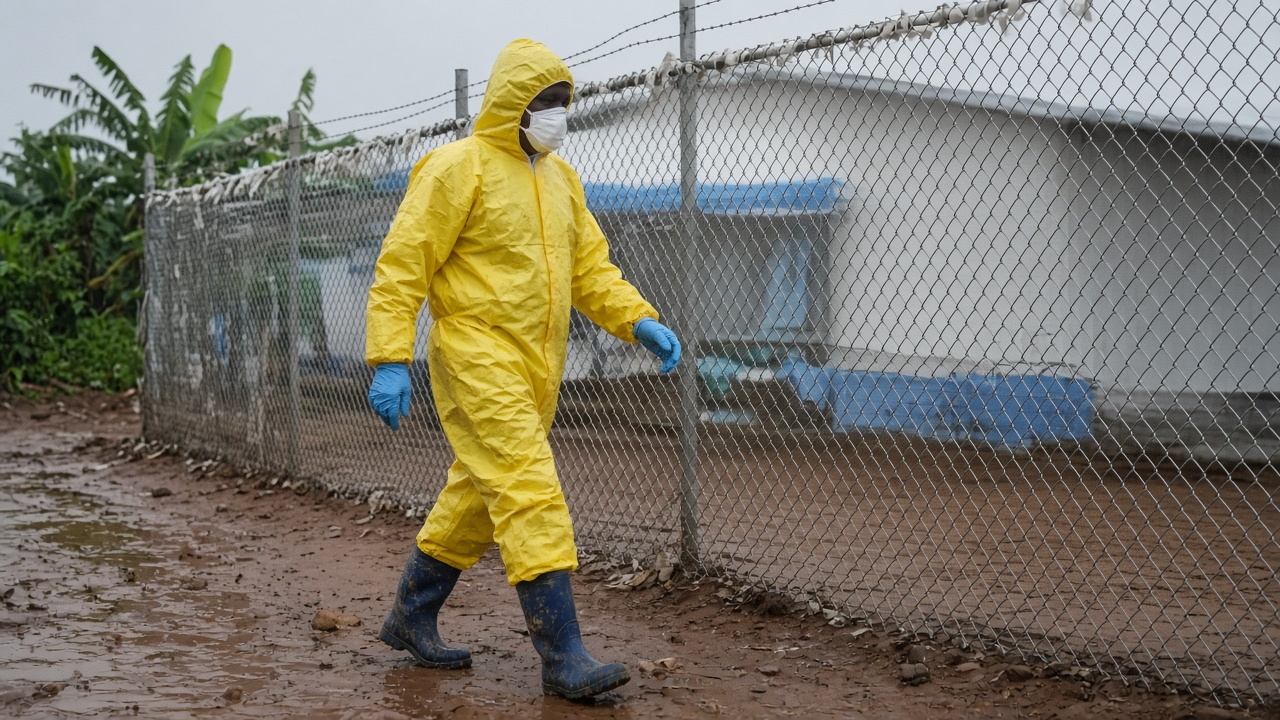
The continent's deadliest Ebola surge on record has crossed 5,300 fatalities, Africa Centres for Disease Control and Prevention officials told reporters on Monday, even as World Health Organization leaders used the same day's briefings to argue that outbreaks like this one show why a global pandemic treaty cannot wait.
Africa CDC put the cumulative death toll at 5,376, including 5,372 in the Democratic Republic of the Congo and two each in Kenya and Uganda. More than 10,000 infections have been logged since the Bundibugyo virus outbreak was declared in mid-May, with Congolese data through 31 October showing a case fatality rate above half.
A strain with no approved shot
Unlike the Zaire ebolavirus that Ervebo targets, Bundibugyo has no licensed vaccine or antiviral. Congolese teams have begun urgent trials of Ervebo doses anyway, hoping cross-protection might blunt transmission, while clinicians continue supportive care for hemorrhagic fever symptoms. The virus spreads through contact with infected bodily fluids, and responders say a large share of new cases still arrive outside known contact chains—roughly four in five, by Africa CDC estimates—signalling hidden transmission in communities.
Cross-border spread
Uganda cleared its linked cluster after 20 mostly imported cases, but Kenya recorded nine infections in October, its first domestic Ebola detections. Nigeria confirmed an imported case in Abuja involving a traveller from Uganda, underscoring how quickly the strain can move along air routes. WHO's latest disease outbreak notice, dated 23 October, listed 9,704 confirmed cases and 4,687 deaths inside the DRC as of 20 October and urged countries not to impose travel or trade bans that would starve response corridors.
Why Geneva is talking treaty again
Speaking in Geneva on Monday, WHO Director-General Tedros Adhanom Ghebreyesus pointed to simultaneous Ebola and hantavirus emergencies as proof that national silos fail when pathogens cross borders. Negotiations on a pandemic agreement—covering surveillance, equity in medical countermeasures and rapid financing—have dragged for years; Tedros warned that every month of delay leaves lower-income countries buying response kits on ad hoc terms. For Congo, that debate is already physical: treatment centres in North Kivu and Ituri remain overloaded, and retrospective reconciliations between provincial and national databases continue to revise daily death reports upward rather than down.
What responders watch next
Health ministers from the African Union bloc meet this week to align deployment of laboratory teams and burial protocols. Independent analysts say the decisive metric is whether community deaths fall as mobile labs reach eastern districts still reporting hundreds of symptomatic patients who never reach clinics. Vaccine donors have promised additional cold-chain flights into Goma, but airport backlogs mean some vials sit on tarmacs for days. Until then, the 5,300-death milestone is less a ceiling than a checkpoint on a curve that has outpaced every prior Bundibugyo event on the continent.