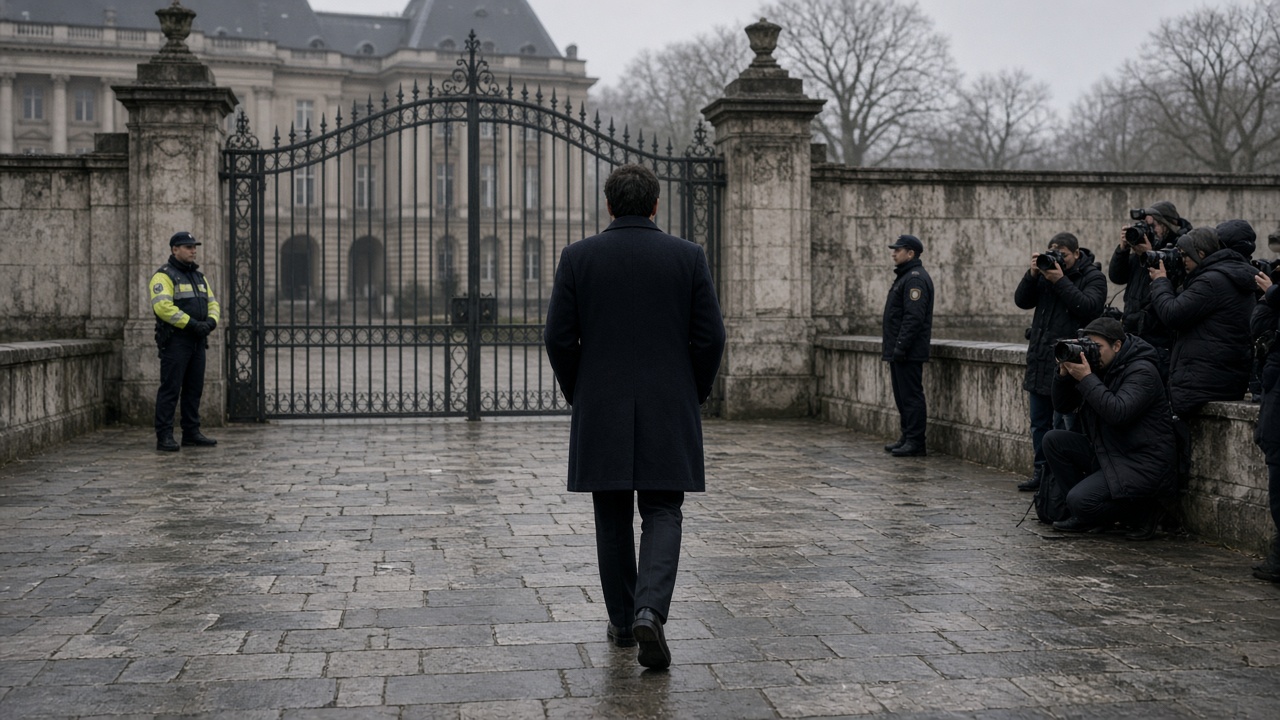
Belgian Prime Minister Bart De Wever will ask King Philippe on Monday to accept the resignation of his government after the core cabinet broke up around 1 a.m. without a budget deal, deputy prime ministers and public broadcasters said, pushing one of Europe’s most indebted states toward either a last-minute fiscal compromise or early elections.
De Wever is scheduled to see the monarch at 9:30 a.m. Central European Time, VRT and RTBF reported, following a night of negotiations at Wetstraat 16 that failed to bridge a €10 billion gap between spending cuts and tax increases his coalition says are needed to stabilise public finances.
What broke overnight
The Arizona coalition has argued for months over how to shrink a deficit that reached 5 percent of gross domestic product last year, well above the European Union’s 3 percent ceiling. National debt stands above €735 billion, more than 110 percent of GDP, and Belgian bond yields have climbed as investors demand a higher premium to hold the paper.
De Wever had set Tuesday, 3 November, as the deadline to avoid presenting an emergency budget built on provisional twelfths for 2027. After the kern reconvened at 9 p.m. Sunday, Liberal MR vice premier David Clarinval told reporters on his way out that the situation remained blocked, with too many tax measures still on the table. Socialist Vooruit and centrist Les Engagés pressed for more revenue from capital gains and stock-exchange levies; De Wever’s Flemish nationalist N-VA and MR wanted deeper spending restraint.
Belgian media including De Morgen reported that De Wever also proposed symbolic pay cuts for ministers to underline urgency, a step other parties rejected before he decided to offer his resignation. Clarinval pointed to Vooruit as the main obstacle; other sources said disagreements ran across the table, not through a single party.
What the king can do
Under Belgium’s constitutional monarchy, Philippe may accept the resignation, refuse it, or hold it while parties keep talking. De Wever used a similar audience last year to win fifty extra days for budget talks that eventually produced an agreement, and Reuters cited De Tijd sources saying the king might not immediately accept a resignation this time either.
If the resignation is accepted, the government falls and elections would follow within forty days. Recent polling shows far-right Vlaams Belang leading in Flanders and the Socialist PS dominant in Wallonia, a split that would complicate any quick reassembly of the current five-party majority.
Markets and the Tuesday clock
Interest costs are the pressure point. Belgium’s debt agency and the National Bank warned in October that a “interest snowball” could force the state to borrow simply to service existing debt as soon as 2028 or 2029. De Wever’s proposed “debt brake” package — roughly €4 billion in spending freezes — failed to win coalition backing as an alternative to provisional twelfths.
Union leader Bert Engelaar of ABVV has not ruled out industrial action if value-added tax rises or attacks on wage indexation remain in play. For now, negotiators have until Tuesday midday to salvage a 2027 budget text; De Wever’s trip to the palace is both a real exit and, in past Belgian crises, a lever to force late concessions.
European finance ministers watching euro-area compliance will see Monday’s drama as a test of whether Belgium can still self-correct without Brussels intervention, even as Poland’s parallel constitutional confrontation and France’s fiscal debates crowd the continent’s political calendar.